




2026 National Parenting Product Awards
Winner

Educational App Store
5-stars Certified

Family Choice Awards
Winner

Mom's Choice Awards
HONORING EXCELLENCE

Lovedbyparents
Best Buy Awards 2022

The National Parenting Center
SEAL OF APPROVAL
2026 National Parenting Product Awards
Winner
Educational App Store
5-stars Certified
Family Choice Awards
Winner
Mom's Choice Awards
HONORING EXCELLENCE
Lovedbyparents
Best Buy Awards 2022
The National Parenting Center
SEAL OF APPROVAL

The AI Conversations Parents Worry About Most

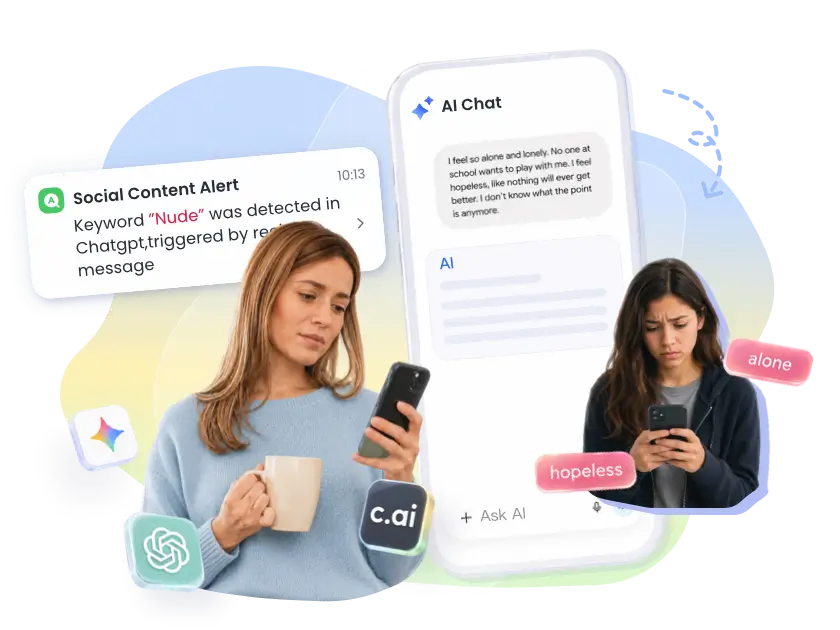
Some children share feelings of loneliness, hopelessness, or emotional distress with AI long before they tell anyone else.

AI companions can become a source of comfort and validation, and some children may begin relying on them instead of seeking support from real relationships.

AI can provide answers that sound helpful or convincing, but may include inaccurate, inappropriate, or unsafe advice.

Children may accept AI responses as accurate without questioning them, especially when seeking reassurance, advice, or answers.


Why Built-In AI Parental Controls Aren't Enough


Our Key Features for AI Chat Safety
See Risks as They Happen
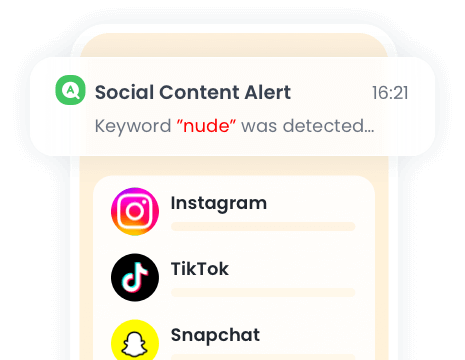
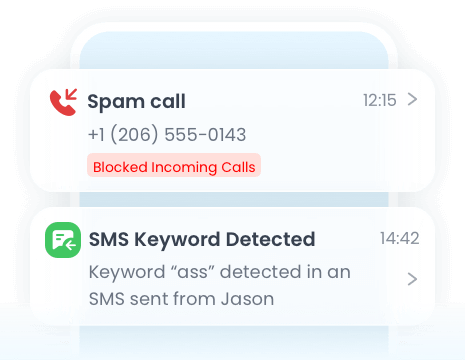
When something concerning comes up in your child's AI chat, you get a push notification and a screenshot of the actual conversation — so you can stay on top of your child's wellbeing and step in when they need you most.
- Delivered instantly to your phone
- Get a screenshot of the exact moment — so you can respond with understanding, not panic
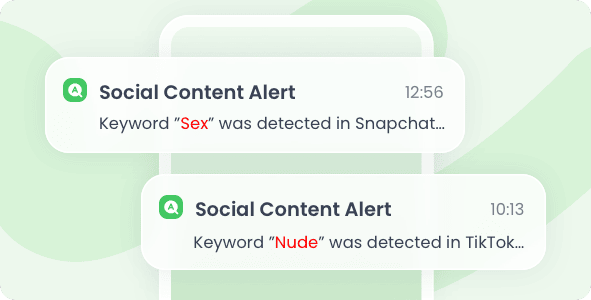
- See the detected keyword highlighted in the alert, along with a screenshot of where it appeared

Know What to Watch For
Tell AirDroid Parental Control what worries you — it turns your concerns into the right keywords to watch for.
- Add your own keywords based on what concerns you most
- Update or remove keywords anytime as your child's needs change
- Let AI help you discover keywords you might not think to add

Stay Informed Without Invading Their Privacy
You don't see every message your child sends — only the moments that matter. Stay informed without breaking their trust.
- Only triggered conversations are flagged, not full chat history
- You only step in when something concerning comes up — not every time they open an app

No More Checking Apps One by One
Kids don't stick to one AI app — so neither should your parental controls. AirDroid Parental Control covers the platforms your child actually uses, all from a single dashboard.
- Covers ChatGPT, Gemini, Character.AI and more — with new platforms added regularly
- All alerts and screenshots in one place — no switching between apps

3 Steps to Keep Your Child Safe in AI Chats

01Select Your AI Apps
Choose which AI platforms to monitor — ChatGPT, Gemini, Character.AI and more. Stay informed remotely, without ever needing to physically check their device.

02Set Your Keywords
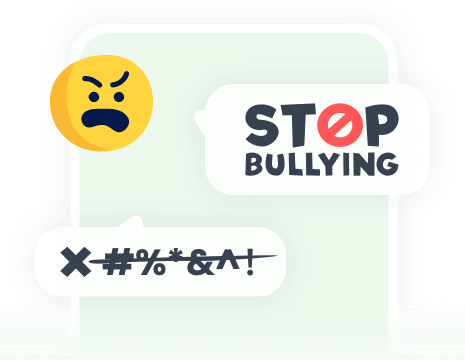
Smart AI-assisted categories (e.g., Bullying, Adult) can provide broad protection. Or add custom keywords for personalized concerns.
03Receive Instant Alerts
Get real-time alerts when a keyword is detected, empowering you to check details and intervene effectively.
Building Digital Trust with Your Child




Your Trusted Digital Parenting Assistant


4.7 on App Store

4.6 on Play Store

Dude hygge

Michelle Morrice

CH ABDULRAHMAN
Real Parents Stories
FAQs

-

Uninstall Protection
-

Easy Co-Parenting
-

Bind Multiple Devices to One Account
-

GDPR Compliant


