Snapchat Family Center: What Works and What’s Missing
- What Does Snapchat Family Center Actually Monitor?
- Why Snapchat Is So Hard for Parents to Monitor and Control
- What Snapchat Family Center Actually Lets Parents See and Do
- Snapchat Parental Controls and Privacy Settings
- Reporting, Blocking, and Safety Tools
- What Snapchat Parental Controls Cannot Do
- Tools That Go Beyond Snapchat Parental Controls
It is natural for parents to worry about the risks of interactions with strangers on this app. Given the reason that teens messages automatically disappear, many wonder whether Snapchat parental monitoring is even possible—a concern that digital safety studies confirm is entirely well-founded.
To address this, the platform provides a Snapchat Family Center feature that lets parents see what their teens do on their accounts. And yet the question is, are these Snapchat parental controls really sufficient to keep them safe?
This guide breaks down what you can actually see and control as parents. We will also discuss its limitations so you can stay informed and establish healthy Snapchat parental monitoring at home.
Pressed for time? Take this entire guide on the go! We’ve distilled all the hidden setup pipelines and functional maps into a print-ready document.
📄Free Snapchat Family Center Guide & 5-Min Privacy Checklist (PDF)
Snapchat Family Center Guide
What Does Snapchat Family Center Actually Monitor?
Snapchat Family Center focuses on interaction data records without revealing the actual conversation content. You can see a clear comparison of Snapchat parental controls in the table below.
| What It Can Do (System Capabilities) | What It Cannot Do (System Limitations) |
|---|---|
| View the child's contact list over the past 7 days. | Read texts or the content of private messages sent. |
| Identify members within group chats. | View photos, videos, or the hidden My Eyes Only gallery. |
| Filter sensitive content in Stories and Spotlight. | Set screen time limits or lock the app. |
| Restrict responses from the My AI virtual assistant. | Read the child's conversation history with My AI. |
| Report accounts or content that violate rules. | Track the child's location if Ghost Mode is enabled. |
Why Snapchat Is So Hard for Parents to Monitor and Control
Understanding how this app works is crucial for effective Snapchat parental monitoring, as there are many real safety risks for kids and teens. To figure out why do Teens use Snapchat, we know the platform is designed for private messaging, so it's not surprising that Snapchat parental monitoring often feels challenging.
This design that prioritizes privacy poses special challenges for navigating together as a family, even with Snapchat Family Center. As a result, applying Snapchat parental controls and relying on Snapchat parental monitoring often collides with the following safety gaps:
- Disappearing Messages: Can trigger impulsive behavior in teens, as they believe their digital footprint will be instantly erased.
- Private and Fast-Paced Communication: Allows sensitive information to be exchanged rapidly before it can be discussed.
- Social Pressure and Unknown Contacts: Encourages teens to accept interactions from strangers to maintain their social presence.
- Location Sharing via Snap Map: Broadcasts the user's exact position, which can easily expose your teen's daily routine.
- Privacy vs. Safety Paradox: Often limits the effectiveness of your Snapchat parental monitoring efforts.
These risks explain why additional tools are essential, but also highlight why effective Snapchat parental controls are so difficult to design. Should you let your child have Snapchat? Understanding these technical limits will help you build a better Snapchat parental monitoring strategy to support safer use and digital habits.
What Snapchat Family Center Actually Lets Parents See and Do
The app introduced the Snapchat Family Center, a system that functions much like looking at a phone bill. You know who your child contacts and for how long, without ever knowing the actual content of their conversations.
With this built-in tool, the app helps you understand activity related to your child's social dynamics and adjust some of their basic settings. The functionality that you can actually navigate and discuss with them is as follows:
- Contacts: Shows a list of contacts your child has messaged in the past 7 day
- Group Members: Displays who is in your child's active group chats.
- Content Restrictions: Allows you to restrict exposure to sensitive content on the Stories and Spotlight pages via the Content Controls menu.
- My AI: Enables you to restrict responses from the My AI assistant, but prevents you from seeing the conversation content.
- Snap Map Location Sharing: Requests real-time location and sets arrival or departure alerts.
- Reporting Accounts: Flags suspicious accounts directly to the moderation team.
According to the Snapchat official Family Center guidelines, parents must link their accounts to their teens' accounts to enable the feature. Nonetheless, despite constant updates, this tool might not be adequate as it is not capable of showing personal messages and thus cannot substitute open communication.
Consequently, this level of Snapchat parental monitoring might feel less comprehensive for younger teens around 13 to 14 years old. Nevertheless, it can serve as a positive symbol of mutual respect for older teenagers as you work together to support safer use.
Snapchat Parental Controls and Privacy Settings: What Parents Can Really Control
The default settings for teen accounts on this app are private, with the mandatory basic security systems and customization. However, you still need to review these Snapchat parental controls with your child to ensure the protections match their age and maturity.
1Who Can Contact Me
Teens often receive friend requests from strangers, so you need to discuss their boundaries for interacting with strangers. Ensure this option is locked to "Friends Only" so that unknown individuals cannot suddenly message or call your child.
For children aged 13 to 15, this agreement is crucial to prevent initial contact with potentially malicious parties. For older teens, you can begin guiding them to independently screen profiles before accepting new interactions.
2View My Story
The Story feature allows users to share their daily lives, making it essential to guide them in choosing the right audience. Direct your child to select the "Friends" option so their personal footprint is not freely broadcast to outsiders.
The app does not automatically allow teens under 16 to have public profiles. However, for older teens nearing adulthood, ensure you continue to navigate the boundaries between public content and private material together.
3See My Location
The map feature broadcasts exact locations, creating a severe risk for predators to track and target minors. However, if your child simply switches to "Ghost Mode," you instantly lose all tracking capabilities, making this physical safety protection very fragile.
For younger children, keeping their location completely private is an essential rule that cannot be compromised. When older teens travel, guide them to adjust their settings so their whereabouts are only shared with immediate family members.
4Find Friends (Quick Add Visibility)
The app frequently promotes your child's account through the Quick Add feature to instantly expand their network. To avoid interactions with unknown people, you should guide them to disable the "Show me in Find Friends" option in the privacy menu.
This is an essential step when dealing with younger teens, who are more likely to accept a friend request to get social validation. Support your child by disabling this feature, so they can spend more time creating more valuable digital relationships with friends in real life.
5Sensitive Content
The explore pages of the app present visual media that can expose children to inappropriate content. You can control this by turning on the "Hide Sensitive Content", but keep in mind this filter is not truly effective and can stll let through disturbing content.
For younger children, always keep these strict filters active and closely monitor the types of media they consume. For older teens, foster open communication so they know exactly how to handle and report any disturbing content they might accidentally encounter.
6My AI Interaction
The My AI virtual assistant is often treated like a chatting friend, even though its advice can sometimes be age-inappropriate and risky. If this interaction does not seem beneficial, you can use the Snapchat Family Center to restrict responses from this artificial intelligence.
For younger teens, restricting this function is a preventive measure to avoid misinformation or conversations that are difficult to navigate. As your child grows older, you can help them understand how algorithms work so they do not blindly trust machine-generated advice.
7Two-Factor Authentication
Account security should be the primary foundation in the online world. Ensure the two-factor authentication feature is active so that any login attempt from a new device will always require a verification code from their phone.
This dual-security setting should always be applied across all age groups because personal data protection is critical. Guide your child to understand that this step is just as important as locking the front door to protect their privacy.
Most of these privacy layers must be configured manually, as the app's system will not adjust them automatically. The built-in Snapchat parental controls are often insufficient on their own; it is your constant communication that truly determines your child's digital safety.
Reporting, Blocking, and Safety Tools: What Happens After Something Goes Wrong
Even as you guide your child's digital habits to support safer use, the Snapchat risks of encountering negative content or interactions remains. Therefore, you need to discuss the safety tools they can use when facing unpleasant situations.
Reporting Inappropriate Users or Content
The app provides a reporting feature accessible directly from the chat screen or while viewing a piece of content. Once a report is submitted, the moderation team will review it for community guideline violations.
You should discuss this feature so your child feels confident taking independent reporting steps if necessary. Understanding this process will make them feel safer when dealing with unknown accounts sending threatening messages.
Blocking Unwanted Contacts
Beyond reporting, blocking disruptive accounts must be done directly from your child's phone. This completely blocks communication, and strangers can no longer reach your child.
Show your child how to block contacts that are emotionally disturbing. Help them understand that maintaining peace of mind on the Internet is far more important than keeping unhealthy friendships.
These safety features are reactive tools and fall outside the scope of your Snapchat parental monitoring. Therefore, they are not proactive prevention solutions and must always be combined with ongoing family communication.
What Snapchat Parental Controls Cannot Do (Limitations Parents Should Know)
The app may offer built-in tools, but these security systems do not apply to the web version of the platform or to other social platforms including a child's "finstas". Therefore, you need to understand the technical limits of these features to avoid falling into a false sense of security.
1The Content Visibility Gap
Snapchat Family Center is purely a metadata one, displaying the list of contacts of your child, but never the messages themselves. It becomes very hard to notice cyberbullying, improper language, or sexting, which are usually present in closed chats due to this lack of transparency.
This challenge is magnified by the "vanish" trap; since the app automatically deletes messages once read, you will never see the red flags. Anxieties about these secret chats frequently spark discussions in the Reddit Parenting community.
2The "Opt-in" Loophole
This guidance feature requires your child's consent before their account can be linked to your device. If your child suddenly decides to revoke this consent, you will be notified, but you instantly lose all visibility.
According to reports citing Dr. Dimitri Christakis, 45% of teens attempt to bypass these digital limits to avoid supervision. This two-way consent mechanism tends to create a tiresome cat-and-mouse game rather than fostering mutual trust in the end.
3AI Safety Blind Spots ("My AI" Risks)
The app may alert you when your child is chatting with the My AI assistant, but you cannot look at the chat history. This limitation puts you totally in the dark about the kind of advice that they are given.
AI chatbots also do not have actual empathy, and they may offer poor advice on mental health, body image, or risky behaviors. A CNBC investigation revealed this blind spot, as the system provided inappropriate advice to a user posing as a 13-year-old.
4Limited Control Over Media and "My Eyes Only"
The built-in system does not allow you to monitor the photos or videos (Snaps) being exchanged daily. Furthermore, you cannot access or audit the secret "My Eyes Only" gallery, which is where the most sensitive content is usually hidden.
Without this access, you miss out on the vast majority of the actual interaction context. The danger of this hidden space was revealed in a New Mexico lawsuit, where these very privacy features were shown to facilitate child sextortion schemes.
5Absence of Real-Time "Hard" Restrictions
The built-in guidance tools serve purely as an observer panel and cannot enforce screen time limits. You cannot set an automatic pause to ensure your child follows a digital curfew at home. The lack of a hard block function is concerning because the design keeps teens hooked.
Litigation documents from the Social Media Victims Law Center have noted that this addictive design, combined with a lack of external limits, is a primary trigger for sleep disorders in children. It shows where built-in Snapchat parental controls fall short as a management tool.
6The "Ghost Mode" & Location Privacy
Location tracking via Snap Map operates entirely based on your child's willingness to share their location settings. If your child switches to "Ghost Mode," you immediately lose all geographic tracking capabilities.
The ease of turning off this tracking makes physical safety protections very fragile when you need them most. This danger was demonstrated in an Elberta arrest case, where a man exploited the app's location features to target and lure a minor.
The built-in Snapchat Family Center is handy, yet the app does not focus on parental control, but user privacy. To ensure more protection, you need to understand the platform's native Snapchat 3 layer security protection and combine your Snapchat parental control with an app like AirDroid in order to obtain the transparency that you really need.
A Smarter Approach: Combining Parental Controls with Open Communication
Helping your child navigate the online world requires a proactive approach through regular, open family communication. According to the Pew Research Center, 85% of parents now take this positive step by actively discussing social media use with their teens.
You can also invite your child to establish a Snapchat family digital agreement together so they feel involved. Through these shared guidelines, it becomes much easier to guide their online behavior positively without making teens feel restricted as you work to support safer use.
39% of parents have also started using digital guidance instruments to complement these conversations. You can use support tools like AirDroid Parental Control as an additional safety net, provided its function remains to reinforce mutual trust rather than replace the family's role.
Tools That Go Beyond Snapchat Parental Controls
To address the gaps in the app's built-in features, there should be a solution that can support families. AirDroid Parental Control bridges the visibility gap left by basic Snapchat parental monitoring with a more detailed perspective on what your child is doing in their daily digital life.
The following are the key features that can assist you in navigating their digital habits in a safe manner:
- Risk Alerts: Helps you quickly identify sensitive keywords so you can immediately discuss the situation with your child.
- Activity Insights: Provides a clear overview of device usage duration, making it easier for you to evaluate your teen's habits.
- Screen Time Management: Helps guide their daily routine by setting device schedules so the internet does not interfere with their sleep or study time.
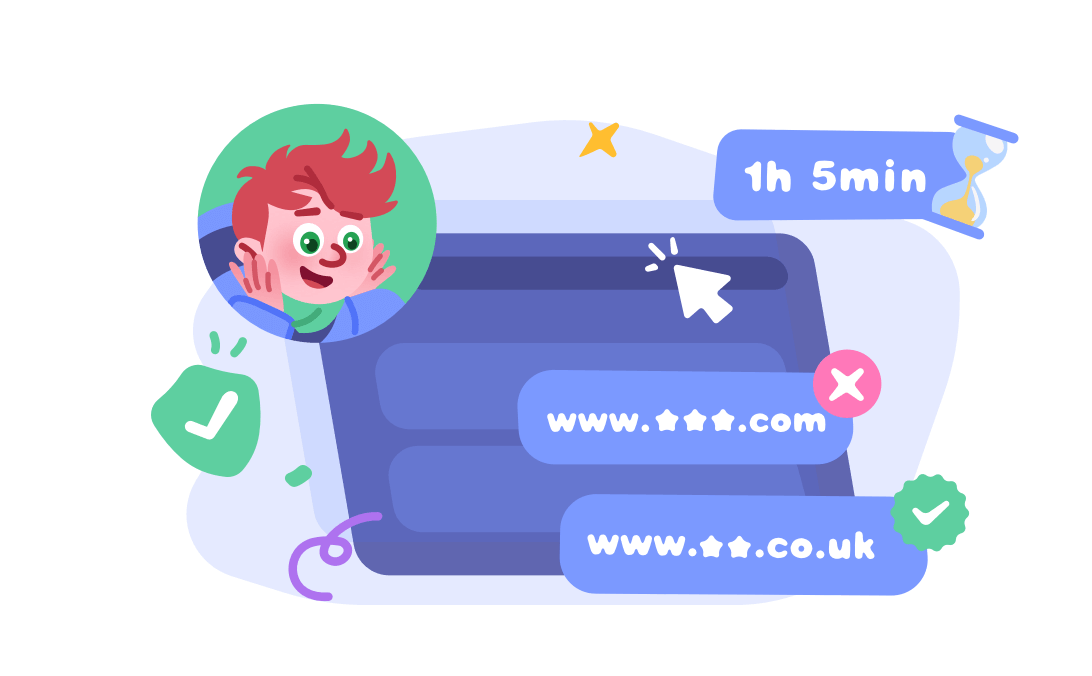
These additional tools are designed purely to fill your visibility gaps, not to act as surveillance tools that destroy privacy. Therefore, always position these technological instruments as a safety net to nurture—not replace—mutual trust within the family.
Conclusion
The app's built-in features do provide decent basic visibility into your child's digital social connections. Yet this system lacks the in-depth oversight capabilities to truly understand the context of such interactions.
Thus, the best course of action is to integrate the existing parental controls in Snapchat with open communication. If the built-in safeguards feel too fragile for your teenager's age, you can also look into a dedicated safe messaging app for kids or add auxiliary tools to help you navigate your child's use of the Internet.
Ultimately, the main purpose of Snapchat parental monitoring is not to dictate every detail of your child's online life. The goal isn't to control everything—but to make sure nothing important is missed.
FAQ
List of Sources
- Snapchat Official Guidance & Family Center
- Snapchat — Family Center official guidelines (https://parents.snapchat.com/family-center)
- Reports & Research on Teen Behavior and Parental Monitoring
- Tech Oversight Report citing Dr. Dimitri Christakis — Teens bypassing digital limits (https://techoversight.org/wp-content/uploads/2026/02/Christakis-report.pdf)
- CNBC — Snapchat My AI inappropriate advice to minor (https://www.cnbc.com/video/2023/03/14/snachat-chatbot-offers-inappropriate-advice-for-a-minor.html)
- CNBC — Snapchat My Eyes Only gallery and child sextortion case (https://www.cnbc.com/2024/09/05/snap-sued-new-mexico-kid-sextortion.html)
- Social Media Victims Law Center — Snapchat addictive design and sleep disorder issues (https://socialmediavictims.org/snapchat-lawsuit/)
- WKRG — Elberta case exploiting Snap Map location features (https://www.wkrg.com/baldwin-county/elberta-man-arrested-on-multiple-charges-after-allegedly-enticing-a-juvenile-through-snapchat/)
- Research on Parental Monitoring & Teen Communication
- Pew Research Center — Parents, teens and digital monitoring (https://www.pewresearch.org/internet/2016/01/07/parents-teens-and-digital-monitoring/)










Leave a Reply.