AirDroid Parental Control
24/7 Kids' Guardian via App & Web
- 👀Live surroundings and location tracking
- 🔞Content Monitoring and App/Web Blocking
- ⚠Instant alerts for online risks and geofences
- ⌛Screen time control and monitor
Should You Let Your Child Have Snapchat? A 4-Pillar Safety Assessment for Parents
It's the "ghost" app that every teen seems to crave. You've likely heard the plea: "But Mom, everyone else is on it!" While parents often struggle to understand why teens use Snapchat, the draw for kids is undeniable.
However, there is a massive gap between being old enough to sign up and being mature enough to handle it.
The app's disappearing messages often create a false sense of security, leading to impulsive behavior and digital drama. Before your child hits "download," you need a framework that goes beyond a birthdate.
To make this easier, I've created a 4-Pillar Checklist PDF that you can print out and go through with your child (download link below).
📄Checklist Before Saying Yes to Snapchat
4-Pillar Assessment Guide • 231 KB
Age & Official Regulations: Legal Minimums vs. Real-World Readiness
Many parents assume that because Snapchat official document allows users to sign up at 13, it must be a "safe" age. In reality, this number is often a byproduct of legal compliance rather than a recommendation based on a child's psychological development.
The Minimum Age Gap & Verification Loopholes
In the United States, the Children's Online Privacy Protection Act (COPPA) prevents tech companies from collecting data on kids under 13, which is why most social platforms set their entry bar there.
The Reality Check: This is a "self-certified" threshold. There is no rigorous identity verification; a child can easily bypass the age gate by entering a fake birth year, and the system does not typically require an ID upload.
Expert Advice: Common Sense Media, a leading authority on child safety, recommends a minimum age of 16+. Their reasoning points to the platform's high-frequency marketing, adult content, and potential risks to mental health.
Global Regulation: A Shifting Landscape
While the U.S. relies heavily on parental discretion, other countries are taking a much firmer stance. Understanding these global shifts can help you gauge your own child's readiness:
| Country/Region | Current Policy & Trends | Key Takeaway for Parents |
|---|---|---|
| United States | 13+ Minimum | Regulation is relatively loose; the burden of supervision falls almost entirely on parents. |
| Australia | Strict 16+ Ban | Prohibited for under-16s even with parental consent. The government cites a lack of maturity to handle addictive algorithms. |
| United Kingdom | 13+ (Under Scrutiny) | Regulators (Ofcom/ICO) are pressuring Snapchat to implement stricter age-verification tech to boot underage users. |
| Italy | Parental Consent under 14 | The law requires explicit parental intervention for younger tweens to access social media. |
| Germany | Consent for ages 13-16 | Emphasizes the family's role and legal consent in decision-making for digital access. |
In one word, 13 is the legal "red line" for Snapchat to operate in the U.S., not a "green light" that your child is developmentally ready for the complexities of the app. Before granting access, it is essential for parents to deeply analyze the specific Snapchat risks that could impact a child's mental well-being and privacy.
Community Pulse: What Parents and Experts Are Really Saying
When you ask the parenting community, "Is my child actually ready for Snapchat?" the response is loud, clear, and surprisingly consistent.
Beyond the marketing gloss, real-world discussions on Reddit and TikTok reveal a deep-seated concern among parents, educators, and safety experts.
| Platform | The Collective Consensus | Key Safety Takeaways |
|---|---|---|
| Reddit (Parents & Teachers) | The majority of Redditors in parenting and teaching subs strongly oppose Snapchat for ages 11–13. The "disappearing" nature of the app is seen as a blind spot for supervision. | Issues reported include stranger harassment, sextortion attempts, and cyberbullying that leaves no "paper trail." |
| TikTok (Experts & Advocates) | Most adults and older teens agree that 10 is far too young for Snapchat. | The reasoning is clear: unfiltered access to strangers, mental health red flags, and the potential for severe exploitation and human trafficking. |
| Real-World Experiences | Threads are filled with "cautionary tales," including stories of police or FBI intervention after kids were lured into dangerous situations through Snap Maps or "Add Nearby" features. | The consensus favors a "Tech + Talk" approach: leveraging native oversight safety hubs like the Snapchat Family Center while maintaining radical transparency with kids. |
The community's consensus is clear: the "disappearing" nature of Snapchat isn't just a fun feature—it's a significant oversight for child safety. While open conversation is the foundation of digital parenting, sometimes "Talk" isn't enough to prevent real-time threats like location tracking or predatory messages.
AirDroid Parental Control
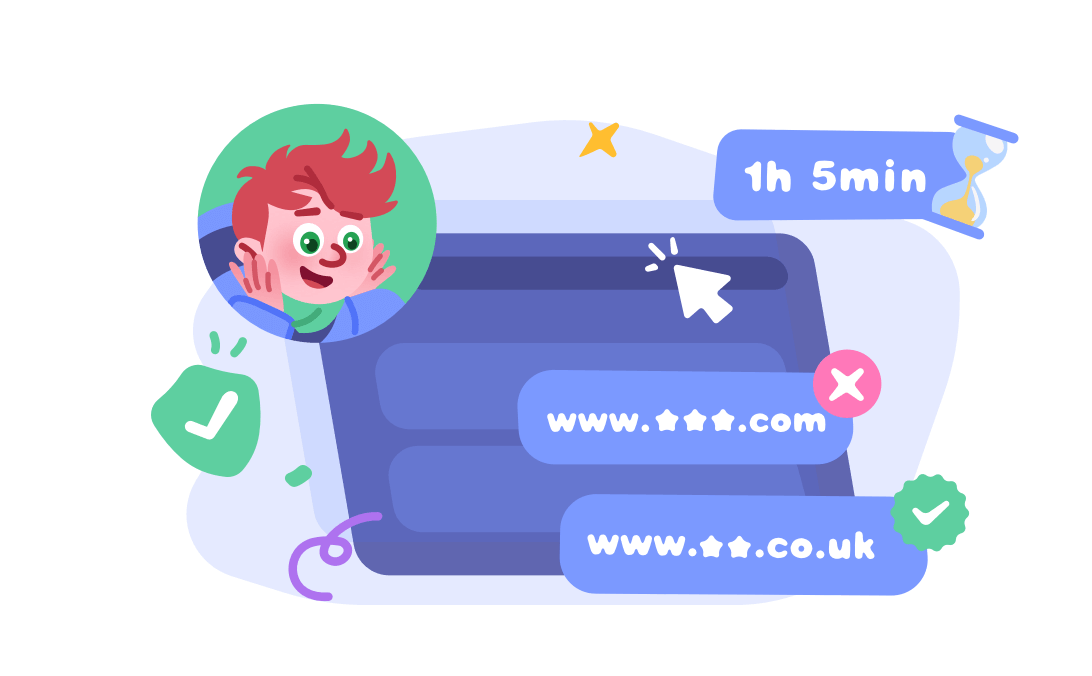
Don't wait for a 'Warning Sign.' Stay connected to their digital world, keep up with their interactions, and ensure their Snapchat journey stays safe in real-time.
Reading these real-world warnings can be overwhelming. But how do you know if your child is the exception or if they are just as vulnerable as the stories suggest? To move from worry to action, use the following assessment to gauge their actual readiness.
Is Your Child Snapchat-Ready? A 4-Pillar Checklist
Give your child 1 point for every "Yes." Be honest—this score helps define your family's digital safety strategy.
Pillar 1: Age & Official Compliance
- Is your child at least 13 years old (the platform's minimum age requirement)?
- Have you reviewed the platform's "Age Restrictions" and "Rules of Conduct" together?
- Have you verified the specific Snapchat regulations in your country (e.g., parental consent requirements)?
Pillar 2: Boundary Awareness
- Does your child understand that they must NEVER send nudity, violence, or content intended to shame others?
- Do they grasp that images can be saved or forwarded even if a "Snap" is set to disappear?
- Do they know how to report content or contact you immediately if they see something inappropriate?
Pillar 3: Communication & Help-Seeking
- Is your child willing to come to you if they are bullied, asked for photos, or harassed by a stranger?
- When asked about their experience on Snap, does your child answer openly rather than avoiding the topic?
- Do you have an established habit of "Problem first, Parent first" for digital issues?
Pillar 4: Home Digital Infrastructure
- Do you have basic phone rules (e.g., no phones before bed or during homework)?
- Have you co-created Snapchat rules (e.g., time limits, off-limits hours, approved friends)?
- Have you enabled safety settings and explored built-in systems like the Snapchat 3 layer security protection on their device?
Total Readiness Score: ______ / 12
The Verdict: Assessing Your Risk Level
Optimal Condition
Category A: Low Risk (10–12 Points)
🟢Status: Ready for Supervised Launch
- Child communicates openly and shares what happens on the app.
- Strong risk awareness; no history of bullying, harassment, or severe screen addiction.
- Foundation of trust and existing home digital rules.
Conclusion: Access granted, but must include safety settings and agreed-upon rules. Continuously monitor for "warning signs."
Precautionary Status
Category B: Moderate Risk (6–9 Points)
🟡Status: Delay & Strengthen Trust
- Child shows mood swings related to the app or is hesitant to discuss their activity.
- Poor self-control; history of "Snapstreak" obsession or late-night scrolling.
- Easily influenced by peer pressure or fear of social exclusion.
Conclusion: Delay access and prioritize digital education. If used, leverage Family Center to prevent issues and monitor signs closely.
Critical Attention Required
Category C: High Risk (0–5 Points)
🔴Status: Not Recommended / Immediate Intervention
- Child is currently experiencing peer exclusion or stranger harassment.
- Usage leads to visible emotional distress or significant behavioral changes.
- Frequent secretive use, deleting history, or hiding the phone.
Note : If your child scored 0 on Pillar 2, consider them High Risk regardless of the total score.
Conclusion: Postpone usage. Native app tools are insufficient here; you need systemic digital boundaries and open communication first.
Warning Signs: When Risk Levels Change
Even if your child seems "Ready," keep an eye on these behavioral shifts. They signal that your safety strategy needs an immediate update.
Usage Habit Shifts
Staying up late or sneaking the phone under covers solely to keep a "Streak" alive; prioritizing Snap notifications over all other social interactions.
Quick Tip: Discuss Snapchat rules and co-create a plan (when, where, and for how long). If necessary, use Family Center or screen-time tools for harder boundaries.
Emotional & Relational Shifts
Visible anxiety or depression after use, yet refusing to explain why; getting defensive or angry when specific accounts or group chats are mentioned.
Quick Script: "I've noticed you seem a bit down after checking Snap. Is there anything happening in your chats that feels overwhelming? Let's check your safety settings together."
Privacy & Safety Behavior Changes
Refusing to let you touch the phone, frequently clearing chat history, or using vague threats like, "You'd be so mad if you saw my messages."
Action Plan: Initiate an honest conversation to find the root cause. Verify if safety features are active and consider whether stronger monitoring tools are required to protect them.
FAQs About Snapchat Safety
Is 13 really a safe age for Snapchat?
Technically, 13 is the legal minimum age in the U.S. due to COPPA laws, not a psychological safety recommendation. Many experts and child safety organizations suggest waiting until 16+ because of high-pressure features. If your child isn't ready, it might be wiser to start them on a dedicated, safe messaging app for kids that prioritizes strict privacy over viral reach.
Can I see my child's deleted or "disappearing" Snaps?
From a technical design perspective, Snapchat's core logic is ephemeral messaging. Once the recipient has read the content and the timer has ended, the system automatically deletes the data from the server and device cache. Therefore, there is no official channel or simple "recycle bin" to view destroyed content.
What is the most dangerous feature on Snapchat for kids?
Most safety experts point to Snap Map (real-time location sharing) and "Quick Add" (which allows strangers to find your child). If you allow the app, ensure "Ghost Mode" is enabled and "Quick Add" is turned off in settings.
Does Snapchat have built-in parental controls?
Yes, Snapchat's "Family Center" allows you to see who they talk to, but not what they say. For many parents, this level of visibility is insufficient, which is why supplemental monitoring tools are often used for younger teens to ensure real-time protection.
Conclusion
Deciding to say "yes" to Snapchat isn't a one-time event; it's the beginning of a continuous conversation. While the 4-Pillar Checklist helps you gauge if your child is ready for the responsibility, it doesn't eliminate the platform's inherent design challenges.
The "ghost" nature of the app—the very thing kids love—is also what creates the most significant hurdles for parental supervision. Even with a high readiness score, it is crucial to remain vigilant about the real safety risks of Snapchat for kids and teens.
Ultimately, no app is 100% safe, but a child who feels empowered to speak up without the fear of having their phone confiscated is always safer than one who navigates the digital world in secret.
Your Next Step: Use the Checklist as a "Social Contract" and formally co-sign a Snapchat family digital agreement with your teen. If they meet the criteria, start with a trial period. If they aren't there yet, focus on building awareness of online safety.
List of Sources
- Snapchat Usage & Teen Behavior Insights
- AirDroid — Why Do Teens Use Snapchat (https://www.airdroid.com/parent-control/why-do-teens-use-snapchat/)
- Snapchat Parents — Safeguards for Teens (https://parents.snapchat.com/safeguards-for-teens)
- Common Sense Media — Snapchat App Review (https://www.commonsensemedia.org/app-reviews/snapchat)
- Reddit — Discussion on Snapchat Age
(https://www.reddit.com/r/Parenting/comments/vyxqgz/what_age_did_you_let_your_
female_child_have/) - TikTok — Teen Experience Video (https://www.tiktok.com/@alexis.almostthriving/video/7522193426360585503)









Leave a Reply.