AirDroid Parental Control
24/7 Kids' Guardian via App & Web
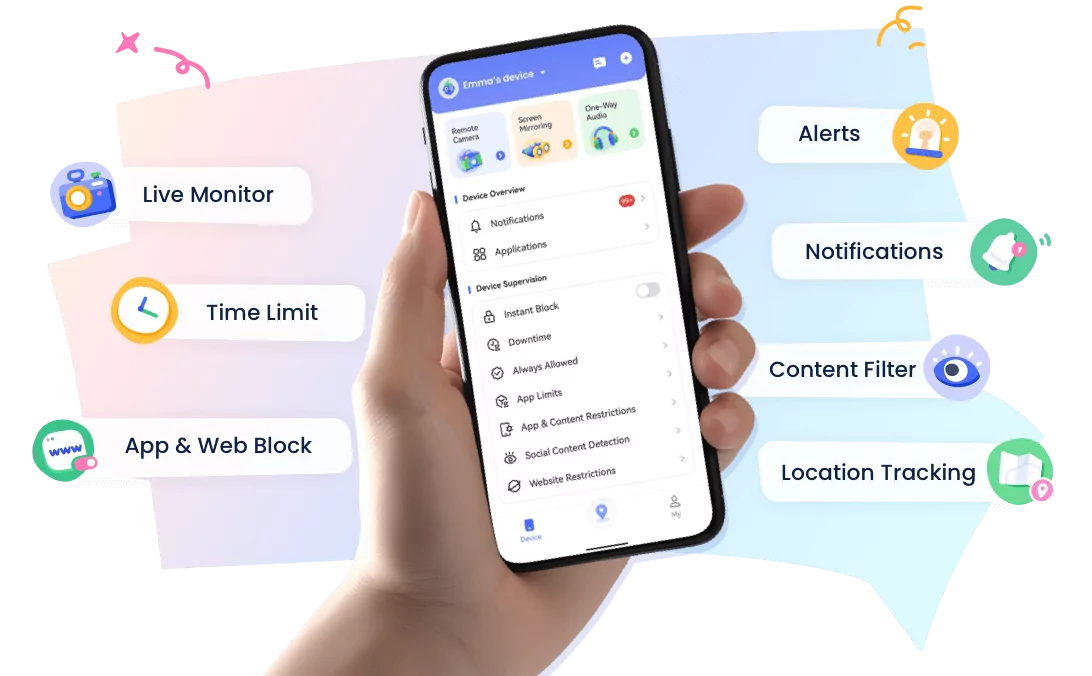
- 👀Live surroundings and location tracking
- 🔞Content Monitoring and App/Web Blocking
- ⚠Instant alerts for online risks and geofences
- ⌛Screen time control and monitor
Why Do Teens Use Snapchat? A Complete Guide for Parents
Parents show anxiety about Snapchat on Reddit, which often leads them to ask: Is Snapchat safe for kids? They are also aware that this platform is now the main place where teens chat and organize their activities with friends.
As you weigh the pros and cons, the ultimate question shifting in your mind might be: should you let your child have Snapchat? The answer isn't a simple yes or no, but rather depends on how well you understand the app's inner workings.
A 2024 study by NORC found that online communication can significantly boost teens' well-being and happiness. This is a call to revise our attitude toward social media psychology by considering the beneficial side of online interactions.
Fundamentally, social media is a necessary tool that meets teenagers' social needs daily. As such, the essential initial step in actually ensuring their safety is to invest in understanding their digital world.
9 Snapchat Features That Hook Your Teen (And the Psychology Behind Them)
Understanding these psychological drivers shifts our focus from debating parental controls vs. trust toward guiding more open discussions about potential Snapchat risks.
This empathetic approach ultimately helps answer the pressing question every parent asks: "Is Snapchat safe for kids?"
Quick Navigation: Understanding Key Features
A 24/7 virtual companion that risk creating emotional dependency.
1Disappearing Messages (Ephemerality)
This feature provides freedom, high privacy, and minimal traceability, which makes online communication much lighter and less stressful. Knowing their digital footprint is temporary allows teenagers to express their authentic selves without the heavy burden of perfection.
Because content disappears automatically, some teens send inappropriate images via disappearing messages or engage in inappropriate behavior such as cyberbullying.
A casual conversation on the living room couch can be an excellent chance for parents to understand how this provisional format can help their digital well-being. Gently guiding them to embrace this communication will help them maintain healthy boundaries without feeling restricted.
2Snapstreaks (Social Proof)
Snapstreaks represented by a fire emoji (🔥) and a number, gamifying friendship loyalty through consecutive interactions that feel mandatory to maintain daily.
Teenagers especially love this feature, and they'll compete online to see who has the longest Snapstreak. Even one young user commented: "We never miss a Snapstreak; we want to keep the number of days until they're in retirement homes."
However, a report on ResearchGate highlights that Snapstreaks provide a visual marker of social engagement that triggers implicit pressure, gradually turning natural communication into a "digital chore."
The constant pressure to maintain these numbers is proven to create a habitual usage cycle that breaks a user's concentration. The fear of losing this proof of social connection ultimately triggers digital fatigue and encourages compulsive device-checking behavior.
If you notice that your child is checking their device to keep streaks alive, we encourage you to have a relaxed discussion to understand the burden of these routines.
Otherwise, simply guide them to value genuine friendships over app metrics to strengthen their future digital well-being.
3Snap Scores
This system shows peer feedback that is often used as a benchmark for a teenager's social status. Having a high number of followers creates an illusion of popularity that feels important during the identity-formation phase.
However, the pressure to constantly raise scores can trigger feelings of unpopularity when teens have significantly lower scores than their friends.
The pressure to constantly maintain this social status pushes children to use the app solely for digital validation.
💡 Real-World Case Study
A high school boy named Jake mentioned his ideal of the Snap Score on a Podcast.
"Basically, you want a higher score, and you do that by sending the most snaps and engaging with the app the most. So, people just send random pictures of anything to other people, and then their Snap Score increases. It keeps you connected with certain people."
"Like, if yours is low, then that might send the message of more of a quiet person with a closer friend group or something."
If a sudden drop in their self-esteem seems directly tied to a lower score than their peers, we encourage you to address this unhealthy validation cycle immediately.
Otherwise, casually bringing up the topic during a weekend drive can help them realize that a virtual number never defines their true self-worth.
4Filters and Lenses (Augmented Reality)
Augmented reality (AR) filters allow teens to add a creative or humorous touch to their photos and videos.
While these features make digital interaction more engaging, they can also influence how young users perceive their appearance. A report from Common Sense Media suggests that frequent use of "beauty filters" may contribute to body image concerns among some teenagers.
If you notice your teen becomes uncomfortable sharing photos without editing or filtering them, it may be a good time to have a casual conversation about self-image and digital standards.
You can also simply review the comparison table below, which can become a relaxed starting point for guiding their authentic identity formation.
| Functional Mechanism | What It Means for Teens | What Parents Easily Overlook |
|---|---|---|
| Visual modification filters (fun & expressive) | Entertainment, humor, and a means for free self-expression | Risks of body image issues, facial dysmorphia, & emotional pressure to look perfect |
5Stories and Spotlight
Snapchat isn't just for messaging; it's also a major source of entertainment. Stories allow teens to see what their friends are doing, while Spotlight offers a feed of viral, short-form videos similar to TikTok.
For many teens, scrolling through this content is a simple way to unwind and feel connected to their social circle.
💡 Real-World Insights: The Appeal of "Presence"
While parents often worry about screen time, many teens use these features for "low-pressure companionship." A viral TikTok captures this perfectly:
"Sometimes you just want to be in contact with someone without always having to say something... It's cute to see what someone's up to."
Why it resonates with teens:
- "It helps me know we're still thinking about each other even if there's nothing to say."
- "I want to talk with people but don't want to text—I like seeing what they're doing!"
For Gen Z, Stories are a digital way of "hanging out" without the social exhaustion of a formal conversation.
However, because Spotlight uses an algorithm to show content from creators worldwide, it naturally raises questions about safety.
Without set boundaries, teens may occasionally encounter content that is inappropriate or promotes unrealistic lifestyle standards.
Rather than banning the feature, try having a casual chat with your teen about their favorite creators or the type of videos they enjoy.
This supportive approach helps them build critical media-consumption habits and ensures they feel comfortable coming to you if they ever see something bothering them.
6Quick Add and Discovery
The Quick Add and Discovery mechanisms facilitate the instant acceleration of a teen's social network. This ease of finding new connections is highly effective in relieving a child's anxiety and their fear of missing out, or FOMO.
Behind this convenience, it reveals a dangerous loophole where the feature is prone to recommending children's profiles to unfamiliar adults.
This threat of unexpected interactions forced changes to the app's system and remains a primary reason parents regularly re-evaluate the platform's safety.
If you find that your teen is connecting with people they don't know, it's a good opportunity to sit down and discuss how to navigate online privacy safely.
As a preventative measure, learning about the platform's native tools like Snapchat 3 layer security protection and occasionally checking in on their digital circles while doing household chores can help them establish secure privacy boundaries.
7Artificial Intelligence (My AI)
The "My AI" feature is highly engaging because it offers a virtual friend who is always available to chat. This low-barrier companionship can feel especially comforting for teens who are learning to navigate social anxiety.
Beyond just providing company, research suggests that many young users rely on AI as an instant advisor for navigating complex social situations. While this can offer quick support, it also raises concerns about digital dependency.
A real risk emerges if teens begin delegating their emotional decision-making to an automated machine. If you notice your child isolating themselves or relying solely on a chatbot for emotional guidance, it may be time for a heart-to-heart conversation.
Reminding your teen that while AI is helpful, it lacks true empathy, can help them prioritize and value genuine, in-person friendships.
8Location Map (Snap Map)
The Snap Map creates "ambient awareness," making teens feel constantly included in their group's physical movements.
An article from The New York Times explains this psychological concept, in which constant snippets of updates slowly merge into a feeling of closeness, like having a sixth sense for their friends' routines.
Behind this illusion of togetherness, the real-time location-sharing feature poses a very serious physical security risk to children.
You might naturally re-evaluate the app's safety upon realizing this feature has a high potential to invite stalking by irresponsible parties.
Should you realize that their real-time location is visible to acquaintances or strangers, we encourage you to discuss the very real dangers of physical stalking promptly.
Alternatively, casually reminding them to enable stealth privacy modes during a relaxed weekend walk provides protective support without making them feel isolated from their social circles.
9Notifications and Auto-Play
Features like instant notification pings and autoplay are designed to keep content flowing seamlessly, making it almost effortless for teens to stay engaged. In fact, research shows that teens receive an average of 237 notifications per day, making frequent screen checks an almost involuntary habit.
This constant stream of digital disruptions can interfere with a teenager's focus during school and significantly impact their sleep quality at night. Over time, the pressure to stay "constantly connected" may lead to mental fatigue and decreased academic performance.
If you notice your teen struggling to put their phone away at night or feeling overwhelmed by pings, it's a great time to have an open, non-judgmental conversation. You might suggest using the "Do Not Disturb" mode or setting specific "phone-free zones" in the house.
By guiding them to manage their notifications, you're helping them find a healthy digital balance without making them feel cut off from their friends.
What Your Teen Sees vs. What You're Missing: A Reality Check
Understanding a teenager's digital mindset is essential to bridging different viewpoints, ensuring our good intentions are not misunderstood as restrictions. Let's examine this comparison table to objectively evaluate their digital safety and find a harmonious middle ground.
| Features | What It Means to the Teen | The Parent Blindspot | Possible Risk |
|---|---|---|---|
| Streaks | Proof of friendship & loyalty levels | The high emotional pressure of "keeping it alive" | Severe mental burnout & compulsive device usage patterns |
| Snap Map | Staying updated on friends' physical whereabouts | Physical safety factors vs. the child's fear of social exclusion | Dangerous stalking actions & personal privacy leak incidents |
| Disappearing Message | The freedom to be their authentic selves | Pressing "delete" does not mean the digital footprint is truly "gone" | Impulsive & risky content-sharing behaviors |
While Snapchat offers a fun way for teens to stay connected, it's important for parents to remain mindful of these hidden digital dynamics. To bridge this gap actively, parents can set up the Snapchat Family Center, which allows you to see who your teen is messaging without invading their private conversations. Staying informed is the first step toward ensuring your child's online experience remains safe and positive.
Is Snapchat Safer Than TikTok? Comparing Parental Controls Across Social Apps
The social media landscape has different environments: TikTok offers low-pressure entertainment, while Instagram emphasizes visual status. This variance makes many parents wonder if they should look for a completely different, dedicated safe messaging app for kids.
Meanwhile, Snapchat relies on intimacy that demands high reciprocity, triggering heavier interpersonal pressure on teenagers.
By understanding the dynamics, we can guide our children through the unique digital challenges of each platform.
Reviewing the comparison table below highlights these specific stress patterns, making our collaborative awareness far more effective for building mental resilience.
| Platform | Default Experience | Core "Pleasure Points" | Typical Stress Patterns |
|---|---|---|---|
| TikTok | Focus on Entertainment | High Novelty | Low Interpersonal Pressure |
| Focus on Status | High Performance | High Aesthetic Pressure | |
| Snapchat | Focus on Intimacy | High Reciprocity | High Interpersonal Pressure |
The process of ensuring the digital health of a teenager is a lifelong, adaptive one that needs a delicate balance between the implementation of Snapchat parental controls and the preservation of mutual trust. Creating a Snapchat family digital agreement can be an excellent way to co-create these boundaries with your teen.
This participatory parenting approach will not only safeguard your child's safety but also strengthen the overall harmony of your family.
List of Sources
- Snapchat Safety & Parental Control Resources
- Screenagers Movie — Snapchat Podcast Case Study (https://www.screenagersmovie.com/blog/snapchat-uncovered)
- Common Sense Media — Teens and Mental Health (https://www.commonsensemedia.org/research/teens-and-mental-health-how-girls-really-feel-about-social-media)
- TikTok — Viral Teen Video Example (https://www.tiktok.com/@happyaliciaa/video/7335948197358996782)
- PMC — Research on AI and Teen Social Behavior (https://pmc.ncbi.nlm.nih.gov/articles/PMC12928748/)
- The New York Times — Awareness and Social Psychology Article (https://www.nytimes.com/2008/09/07/magazine/07awareness-t.html)
- Common Sense Media — Teen Smartphone Notification Study (https://www.commonsensemedia.org/research/constant-companion-a-week-in-the-life-of-a-young-persons-smartphone-use)









Leave a Reply.