AirDroid Parental Control
24/7 Kids' Guardian via App & Web
- 👀Live surroundings and location tracking
- 🔞Content Monitoring and App/Web Blocking
- ⚠Instant alerts for online risks and geofences
- ⌛Screen time control and monitor
Is Your Child Addicted to ChatGPT?
If you have noticed your teenager using ChatGPT, typing or talking to an AI bot late into the night, then there is no question that it is an addiction. AI increasingly sneaks into the lives of every person, changes learning patterns, solves, socializes, and handles their emotions.
Can Kids Get Addicted to ChatGPT?
YES, anyone can be addicted to ChatGPT, including children. ChatGPT addiction happens when someone uses AI with an unhealthy psychological reliance on it, constantly interacting with it instead of engaging with real-world activities, like socialising or completing daily routine tasks. Later, using AI chatbots excessively becomes a habit that is nearly impossible to break.
When it comes to kids, it is more than any parents can realise. There are thousands of studies already done on this issue, which makes it an alarming digital disease. With the recent report from Common Sense Media, some of the major AI chatbots, including ChatGPT, are dangerously unsafe for a teen's mental health. They pointed out that such tools can't address this risk, and that matters because vulnerable kids, who often turn to AI for companionship and advice, need protection most.
In case a child is spending hours on a chatbot every day, it means the ease of technology has now turned to solving homework headaches into something much deeper that parents might not realise.
Why Is ChatGPT So Hard to Stop Using?
You open ChatGPT to ask one quick question. Twenty minutes later, you're still there, deep in a conversation about something completely unrelated to what you started with. Sound familiar? ChatGPT is engineered to keep you talking. The real question is what that means for the people most vulnerable to it, especially kids and teens who are still figuring out where to draw the line.
1. Instant Responses Anytime
We often feel bored when we have to wait for something; in fact, teenagers like to wait even less. ChatGPT instead satisfies the urge to get instant responses perfectly. Whether it is two am in the morning or mid-afternoon on a weekend, AI will always respond within seconds. Now, if a child is feeling lonely, bored, or stressed, they don't need to wait for a response from a friend or parents. That instant feedback builds trust, and trust turns into habit. Before long, the brain learns one simple lesson: satisfaction is always just a prompt away.
2. No Social Pressure or Judgement
Nowadays, everything is judgmental, including friends. Whenever a teenager talks about their problems, they always get worried about being laughed at, saying the wrong thing, or being judged. ChatGPT doesn't have social anxiety; a kid can ask the AI the most embarrassing thing or gossip. It will respond in a completely safe environment, which will make anyone feel better.
3. Always on Your Side
There are conflicts and compromises in human relationships. Friends often argue about things and always try to be right, even if they are not. ChatGPT is designed to be a people pleaser. It is programmed in a polite way with endless patience. It never gets tired of listening and will never snap when asked the same question 100 times. It stays supportive, and such things are heaven for a growing child. AI always stays on their side, never argues, and mirrors their views, making real human interaction seem exhausting by comparison.
Is My Child Addicted to ChatGPT?
Before you judge your kid, you need to go through a checklist to know how your child has been interacting with technology over the past two weeks. If you check either of the two reasons, then it might be time to take a closer look at their AI habits.
Signs Your Child May Be Addicted to ChatGPT
Check the boxes that apply to your child over the past 2 weeks:
Time & usage
Emotions & social life
School & daily life
What Are the Risks of ChatGPT Addiction for Kids?
An obsession with an AI chatbot has a huge effect on a child's mental development, mainly due to the reliance on artificial intelligence. But they don't even tend to solve simple problems on their own.
How to Stop ChatGPT Addiction?
To stop your child from being too dependent on AI, there is no need to panic or throw the computer out of the window or something similar. To break the cycle, you need to follow a thoughtful approach that balances firm boundaries with emotional support.
1Set boundaries around AI use
First, you need to set some boundaries around AI use. Starting from treating ChatGPT like any other form of entertainment media. Make tech-free zones in the house, like the kitchen table or living room, or set strict time limits for using device settings.
2Encourage your kids to participate in real-world activities
Next, encourage your kids to participate in real-world activities. You can make an effort to go out with them and try to engage with them and see how slowly you will replace the AI emotional support with yours. Make your kids participate in your hobbies like sports, music, cooking, or art.
In case you find out your kid is addicted, remember to have an open conversation, not a confrontation. Avoiding any accusations or shaming them will only cause them to hide their behaviour. Sit down with them and explain all your concerns calmly.
3Be a role model
Finally, it is vital to be a role model. Kids copy what they see. If you are constantly staring at your phone, checking work emails at dinner, or relying on digital tools for every minor task, your child will view screen obsession as normal behaviour. Demonstrate healthy tech habits by putting your own devices away and being fully present with your family.
Of course, knowing the theory is one thing. Actually, keeping track of screen time, app usage, and conversations across multiple devices is another. This is where having the right tool can make a real difference.
4Use AirDroid to Limit ChatGPT Usage or Detect Risky ChatGPT Activity
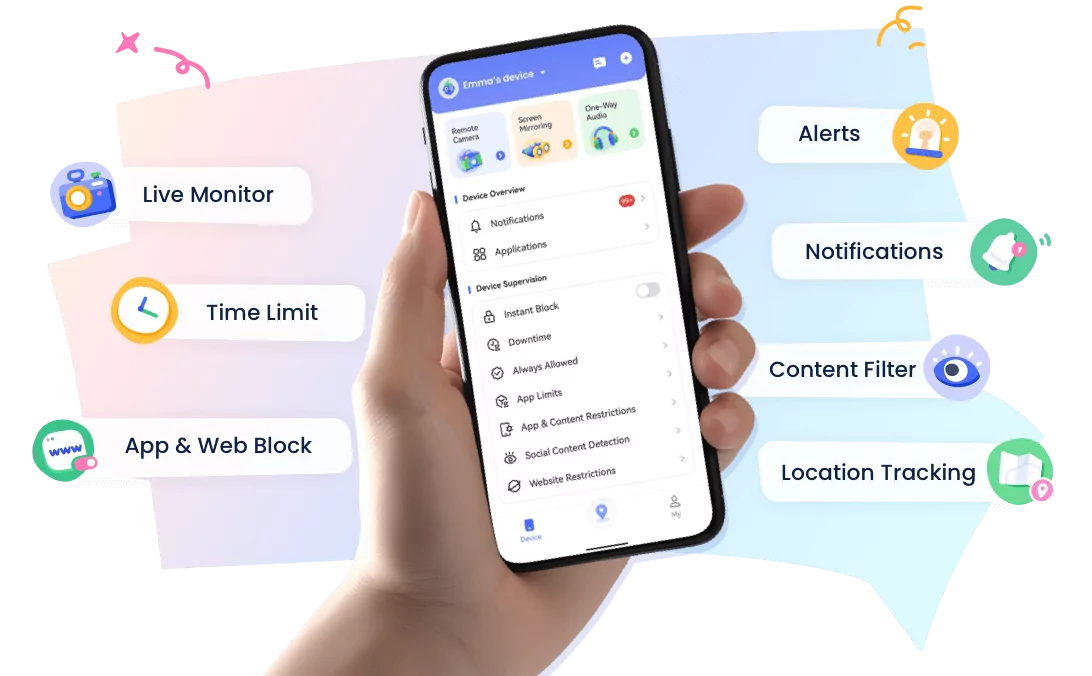
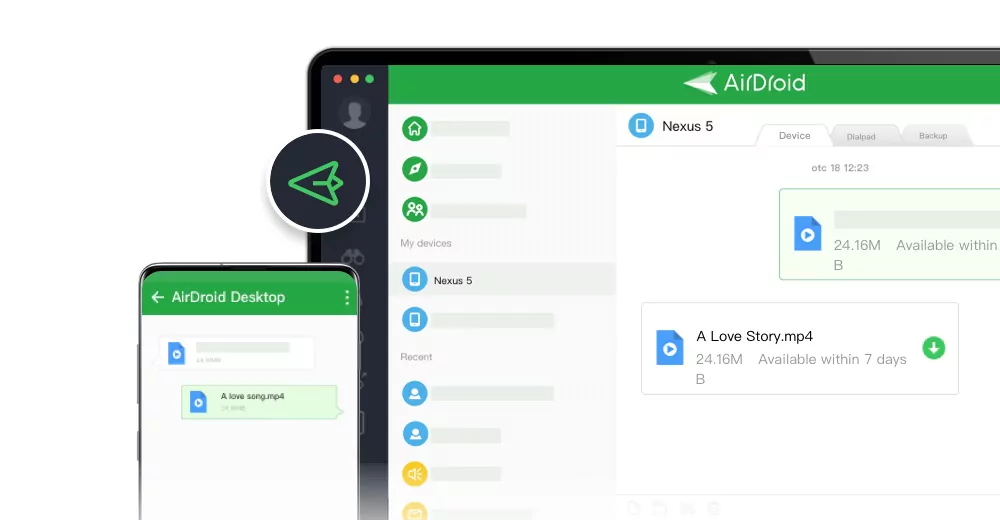
You don't need to monitor your child's every move to stay informed. Apps like AirDroid Parental Control let you see how much time your child spent on ChatGPT and set time limits on it.
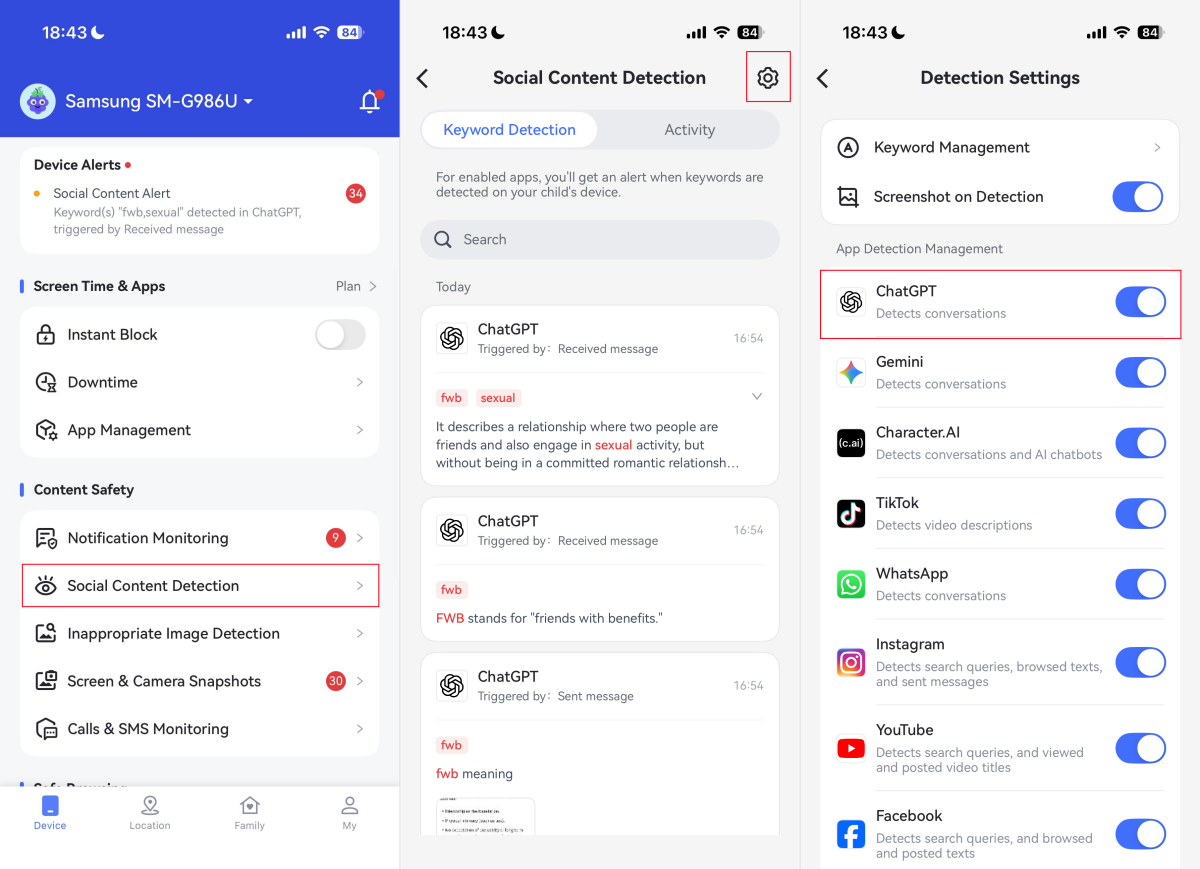
Additionally, as an AI chat monitoring app, AirDroid offers AI content detection and risk alerts, sending quick notification when your child is interacting with risky content on ChatGPT, Gemini, and Character AI.
In short, it not only helps you understand your child's ChatGPT usage patterns but also alerts you when those conversations involve potentially risky content.
Conclusion
Artificial intelligence is an incredible innovation, and there is no way it is going to last. But it should never replace human connection, critical thinking, or real-life experiences. If your kid is struggling to quit chatbots, remember that they are looking for connection, answers, and validation. In such ways, if you provide these things, keep communication lines open, and let them participate in helpful chores to stay active, you can help your child step away from the screen and back into the real world.
FAQs about ChatGPT Addiction
1. How much time is too much for a child to spend on ChatGPT or AI chat apps daily?
There is no specific number, but a good rule of thumb is that if AI use starts interfering with homework, sleep, outdoor play, or family time, then it is too much.
2. What should I do if my child is already showing signs of AI/chatbot addiction?
Begin with a gentle, non-judgmental talk with them about their habits. You can set boundaries such as banning devices from bedrooms at night and gradually replace screen time with other engaging activities of the real world. In case the same behaviour exists and causes severe anxiety or depression, the best thing is to consult a youth counsellor or therapist.
3. Can AirDroid monitor risky ChatGPT activity?
Yes, AirDroid can help parents detect risky ChatGPT-related activity when ChatGPT is used in Android devices. Parents can set keywords related to self-harm, sexual content, violence, bullying, or other concerns and receive alerts when those terms appear.






Leave a Reply.