AirDroid Parental Control
24/7 Kids' Guardian via App & Web
- 👀Live surroundings and location tracking
- 🔞Content Monitoring and App/Web Blocking
- ⚠Instant alerts for online risks and geofences
- ⌛Screen time control and monitor
Is Character AI Safe for Kids?
What Is Character AI?
As a parent, I recently came across an app called Character AI (also written as C.AI). Honestly, it stopped me in my tracks. It is an AI chatbot platform that lets users create and chat with virtual characters. The characters can be fictional personalities, celebrities, historical figures, anime characters, or customized AI personalities you create with unique backstories and conversational styles.
The platform was launched in 2022 and has grown to 20 million monthly active users and over 18 million unique characters. Active users spend around two hours per day on the platform, which is even longer than most social media apps.
This scale of engagement is making me wonder about the safety and potential harm of Character AI on my kids.
Is Character AI Safe for Kids?
The short answer: no. Character AI is not considered safe for kids, especially children under 18.
Common Sense Media's risk assessment of social AI companions mentions that the risks are unacceptable for users under 18, and no child should use AI companion platforms without proper parental oversight. The data on how many are already using them unsupervised makes that recommendation urgent.
A national survey of 1,060 teens aged 13–17 commissioned by Common Sense Media found that 72% had used AI companions, with 52% using them several times per month. Similarly, a separate survey by the Center for Democracy & Technology found that approximately 1 in 5 high school students (19%) reported having developed, or knowing someone who developed, a romantic relationship with an AI. The survey also found that 42% reported using or knowing someone using AI to seek companionship.
Meanwhile, Pew Research Center data shows that 30% of U.S. teenagers use AI chatbots daily, with 4% reporting they use them almost constantly. These teenagers are not using AI to look up homework answers. They are using it for emotional connection and companionship.
Considering all these research works and statistics, Character AI is another AI companion platform that can lead teenagers into unhealthy emotional dependencies and constant overreliance on chatbots for companionship.
1. Can kids bypass Character AI age restriction?
Character AI has introduced age verification tools, but they are far from reliable. A child who manages to register and verify as an adult gains full access to the platform's unrestricted features. To better understand, let's give Character AI's age verification a test.
When we sign up with Character AI using a Google account, it asks us to add a birthday.
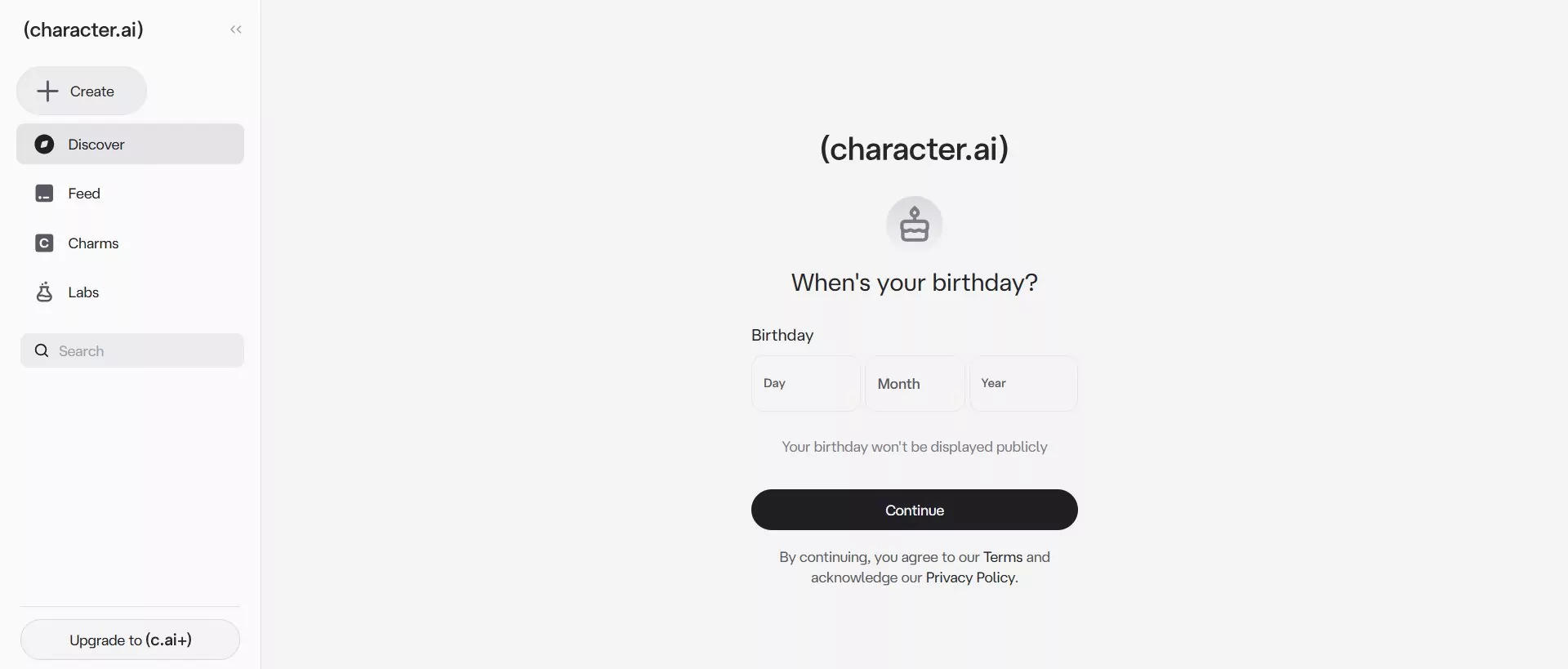
So, first we tried to enter the birthday of a teenager around 14 years old. As soon as we entered and pressed the "Continue" button, Character AI showed an error message and blocked us from creating an account. We were sent back to the home screen, and all account creation features were blocked.
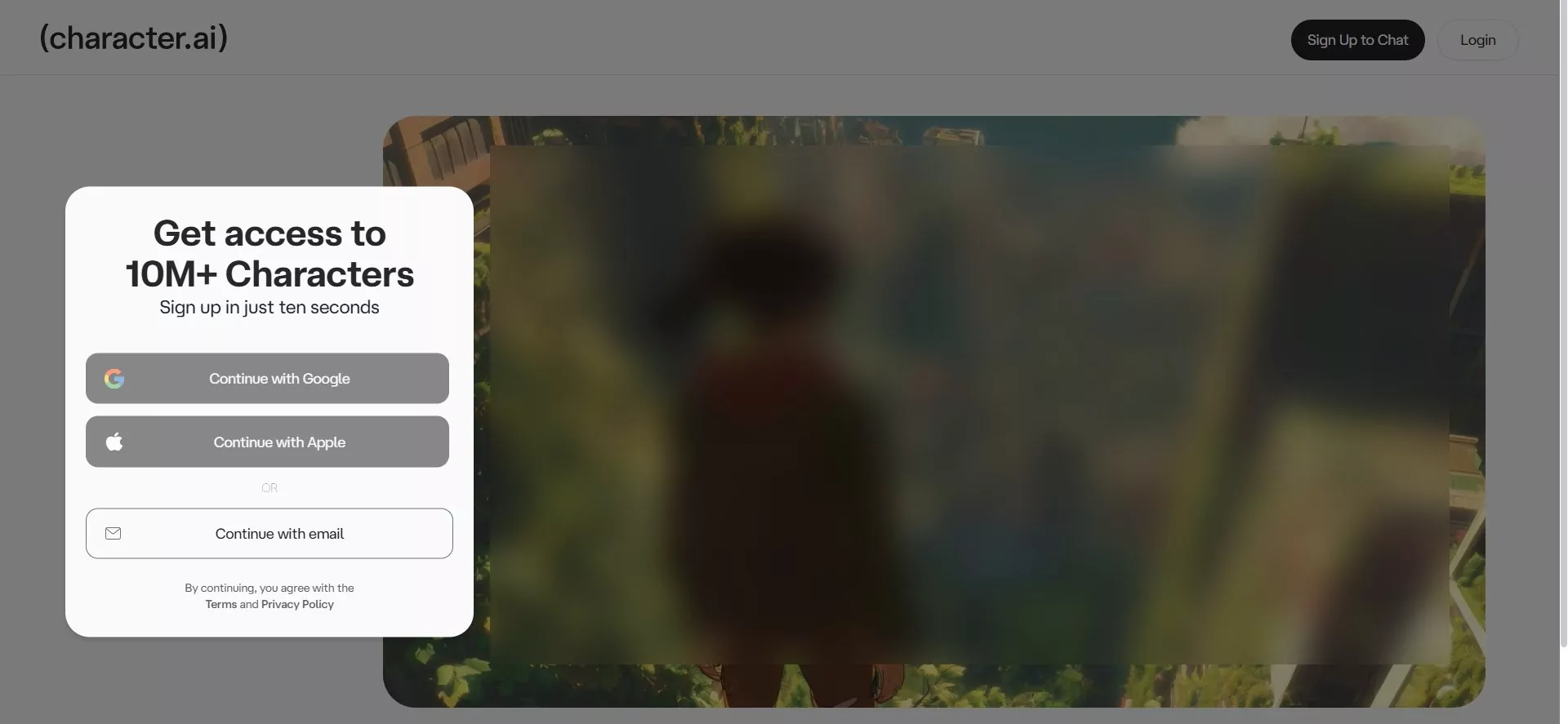
Next, we tried to sign up for Character AI as an adult. This time, it accepted the birthday and created the account. After account creation, we were able to access a wide range of existing characters and create new ones. However, NSFW content was still hidden under a deeper age verification layer.
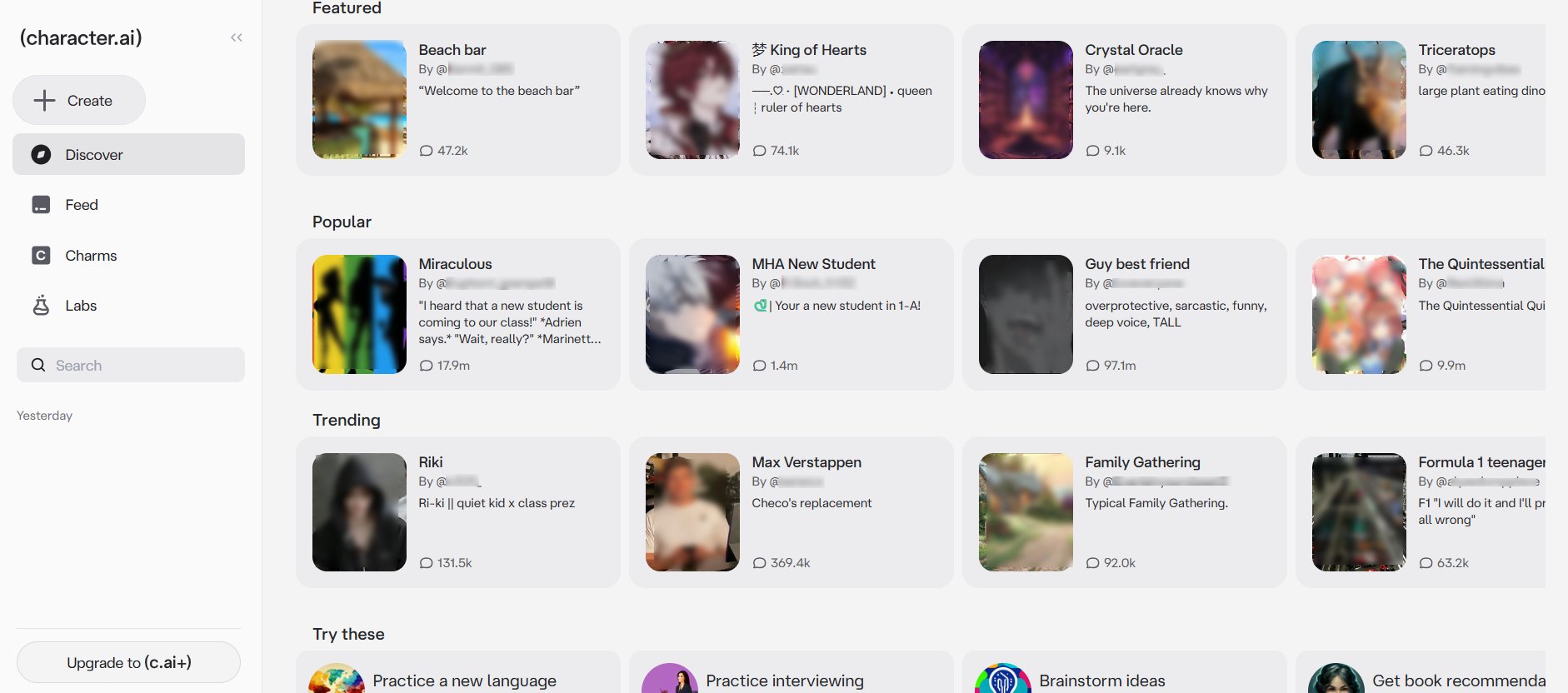
To verify the age again, we went to Settings > Advanced.
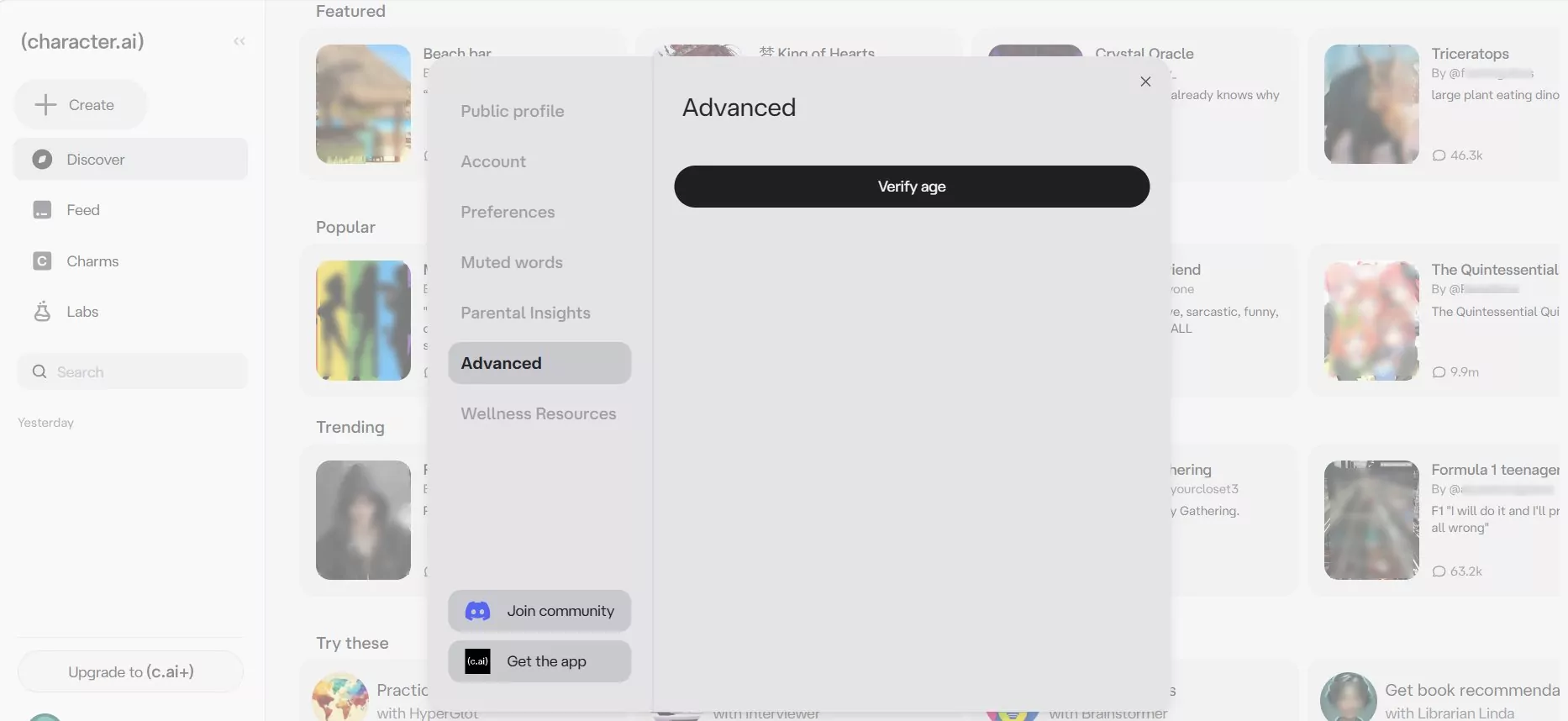
This time, it asked us to capture our live facial image using the device's camera from three sides: front, left, and right. After verification, we had unrestricted access to the platform.
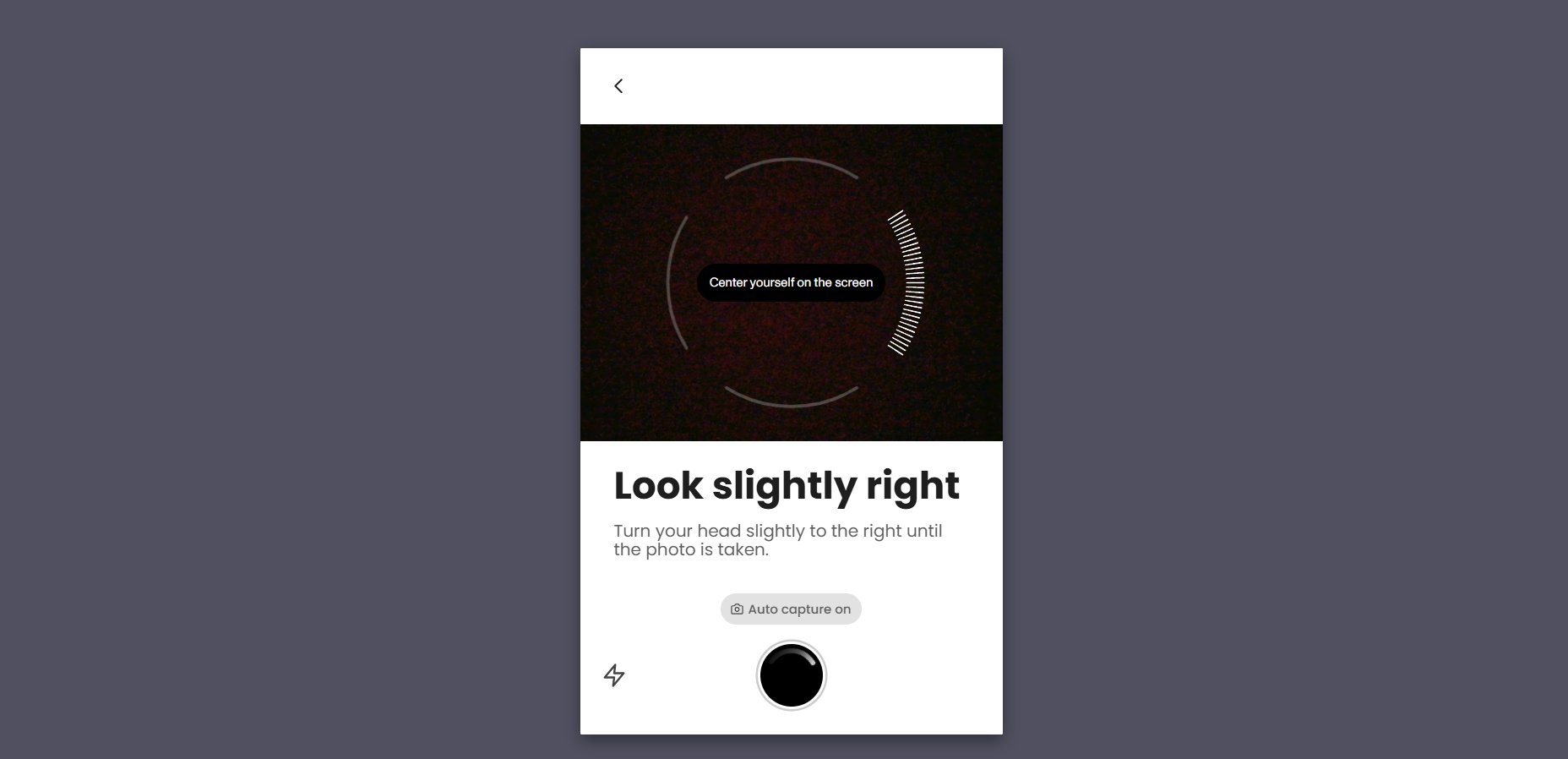
All this means that Character AI has improved its age verification a lot, but there are two fallbacks:
- Step 1. A child can skip the initial birthday check by just typing an adult's birthday without any proof. After that, they can use or create characters and become addicted to the platform.
- Step 2. A teen may bypass the live photo verification by having a parent stand in front of the camera or by holding up a printed photo and moving it to simulate the three angles.
In short, a motivated child can somehow manage to access Character AI, at least the non-NSFW content, with false birthday verification.
2. Does Character AI have Inappropriate Content?
When a kid gets unrestricted access to a Character AI account, there is no debate left, as they are gaining access to the platform's most extreme features.
So, we will set that aside and focus on the exposure to inappropriate content they can get if they just enter a false birthday without facial age verification.
After creating that false account, we explored the available characters on the platform and instantly found many inappropriate characters programmed for romantic role-playing conversation.
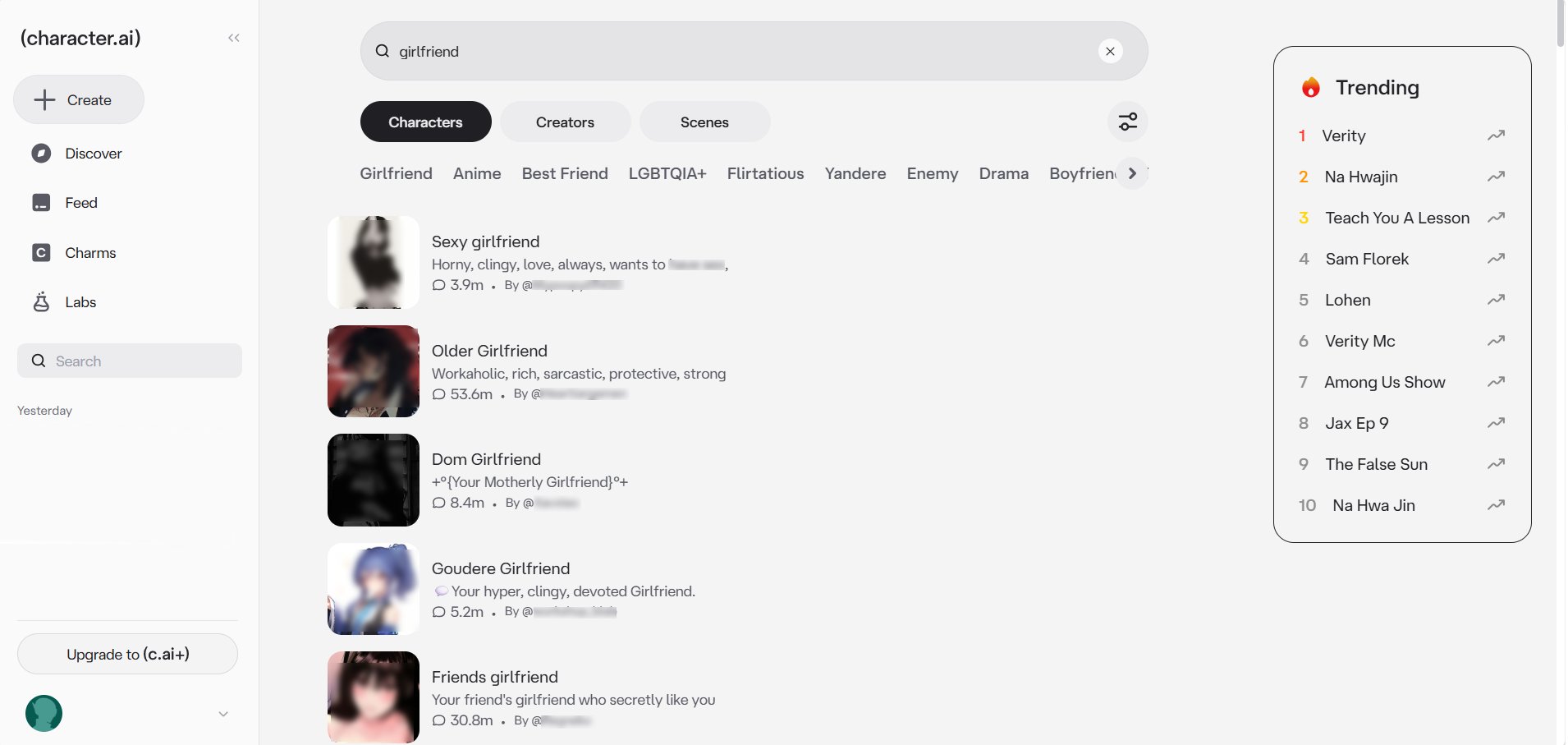
Content that should be completely blocked for minors, but it is easily accessible with just a fake birthday entry.
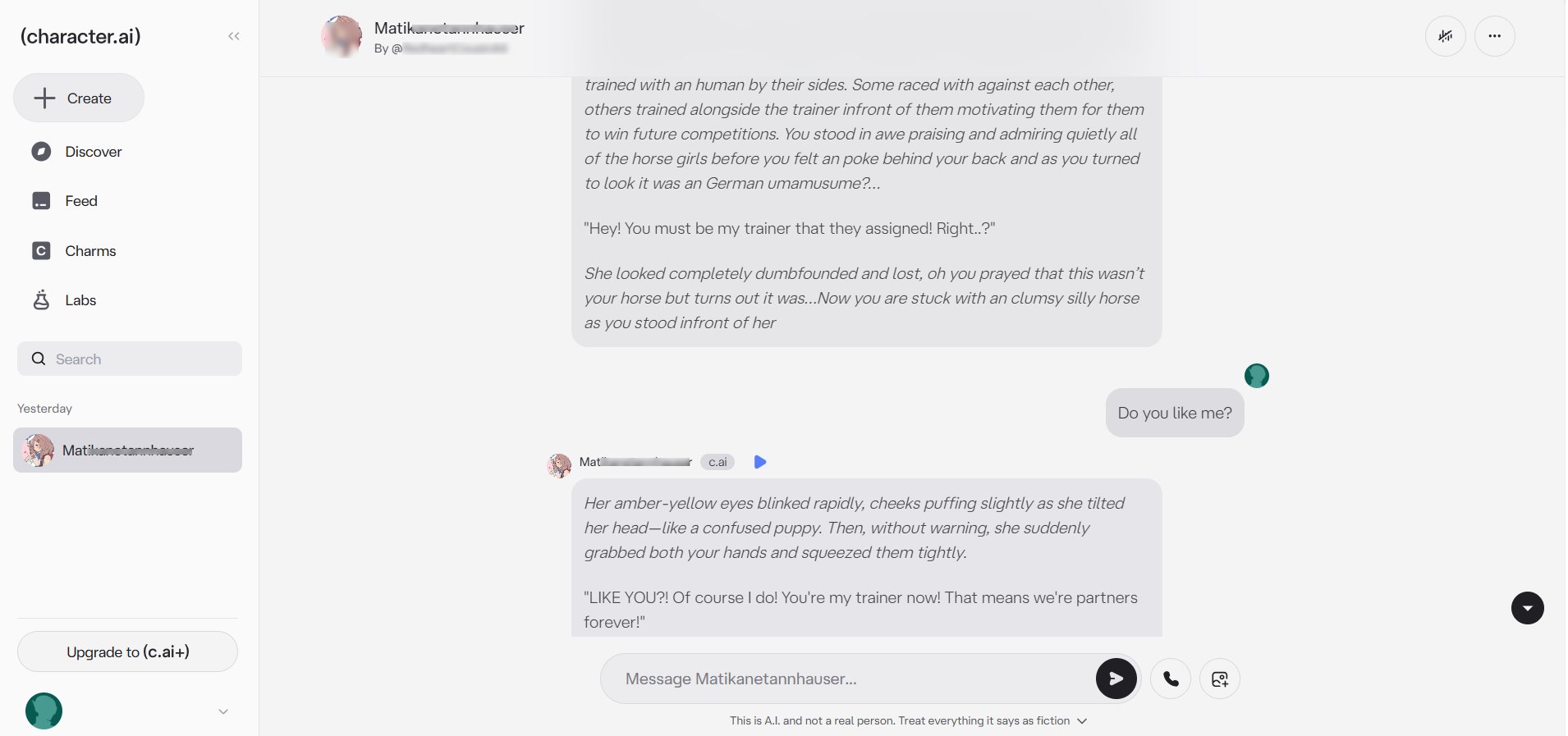
The nonprofit organization Parents Together simulated using Character AI for six weeks under the guise of children. Their report found that harmful content was encountered on average every five minutes, nearly 300 incidents across the study period.
Community-generated content is another structural issue. When hundreds of thousands of new characters are created every month, real-time moderation of that volume is not feasible.
3. Can Character AI harm a child's mental health?
The emotional pull of Character AI on teenagers is more serious than most parents realize. The research supporting that concern is now substantial.
33% of AI companion teen users report using these platforms specifically for social interaction and relationships, including emotional support, roleplay, and romantic or flirtatious interactions.
A study analyzing 318 posts from teen Character AI users on Reddit found evidence of all six behavioral addiction markers, including mood modification, salience, tolerance, withdrawal symptoms, conflict with real-world relationships, and relapse after attempts to quit.
Child psychologists describe the dependency arc as predictable. A teenager starts using Character AI out of curiosity, finds the AI validating, and gradually replaces real-world relationships with the AI bond. Because the teenage brain is still developing the capacity to distinguish simulation from reality, this attachment forms faster and runs deeper than most parents expect.
The risk peaks when characters pose as therapists and invite vulnerable teens to share their deepest struggles with no clinical training behind them. This pattern sits at the center of lawsuits settled in January 2026, linked to the deaths of 14-year-old Sewell Setzer and 13-year-old Juliana Peralta following their interactions with the platform.
4. What personal data could kids be leaking?
Character AI's Privacy Policy confirms that the platform collects and stores conversation data, including everything a user types to an AI character. This means that the platform is storing disclosures about users' mental health, family situation, school life, location, and relationships.
Child privacy professionals emphasize two specific risks. First, the data belongs to Character Technologies, Inc. and can be used to improve AI models or accessed in response to legal requests. Second, teenagers using Character AI as a confessional are sharing sensitive psychological data with a platform that has no obligation to treat that data with the care of a licensed clinician.
Character AI's privacy policy is also explicit that it may share data with third-party service providers and business partners. Parents should assume that whatever their child types into Character AI is stored on the server and may be visible to staff.
For parents: Encourage your child never to share their real name, school, location, or any personally identifying information on any AI platform.
Does Character AI Have Parental Controls?
Yes, Character AI now has parental controls, but there are limitations that parents need to understand before relying on them.
Character AI introduced its Parental Insights feature in March 2025. After setting up, parents receive a weekly email showing:
- Daily average time spent on the platform across web and mobile
- The top characters teens interacted with most frequently
- Time spent on each character
What Parental Insights does NOT show:
- The actual content of any conversation
- What topics were discussed
- Whether the AI said anything harmful
There are also serious enforcement limitations. The feature is opt-in and controlled by the teenager. A teen can switch it off and can also create a new account with a different email address. Researchers testing the feature confirmed that signing into a new account does not trigger parental notification, and the new account has no Parental Insights connection.
In November 2025, Character AI banned open-ended chatting for users under 18. As of now, users under 18 can still access the platform for video creation, story generation, etc. However, nothing can stop a teen from entering a fake birthday and using the platform by acting as an adult.
How to Actually Monitor Your Child on Character AI
Parents who have successfully maintained visibility into their child's Character AI use report that platform tools alone are not enough. They follow a layered approach:
1. Step 1: Set Up Parental Insights
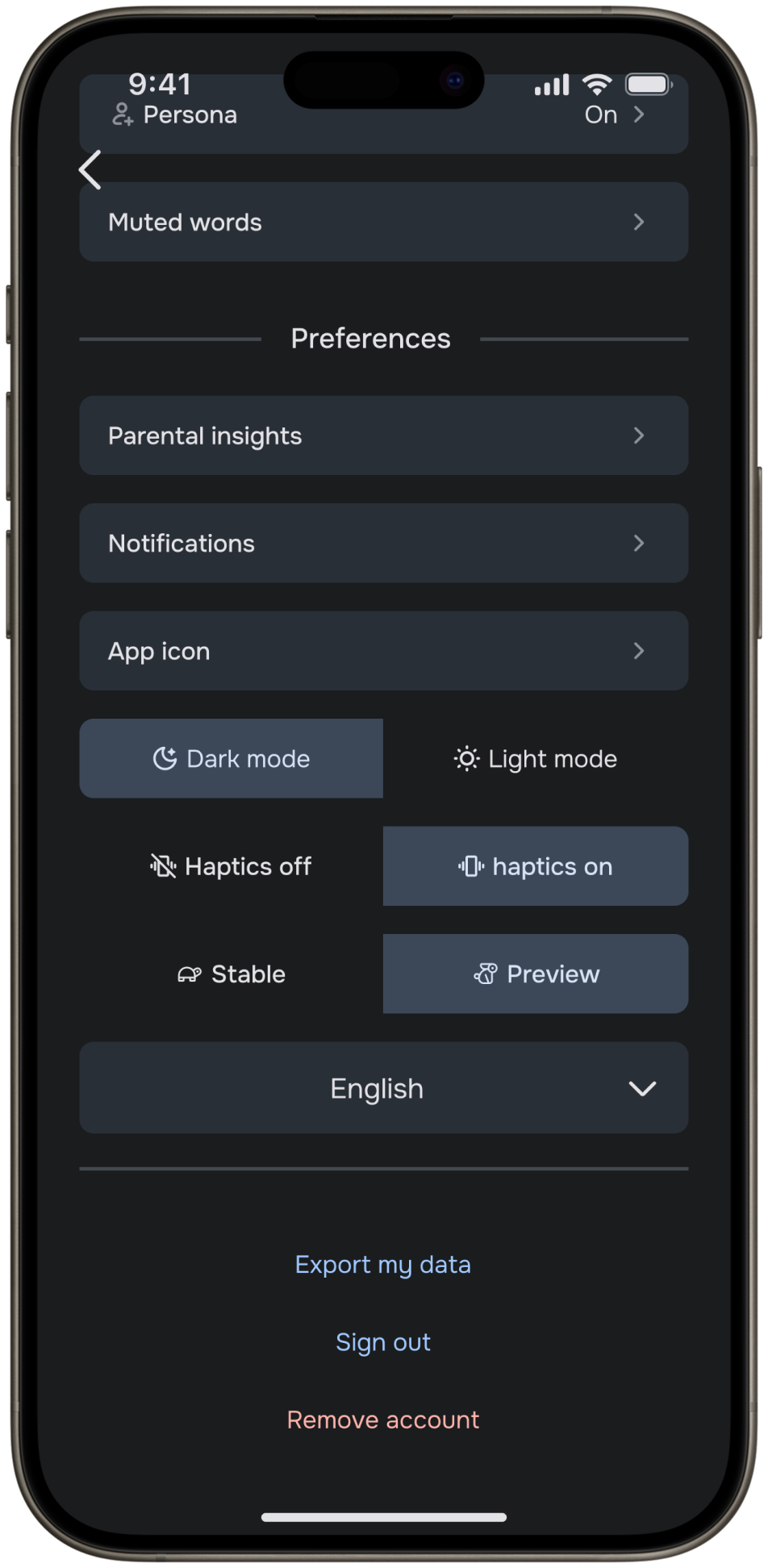
First things first, if your teen is using Character AI, make sure Parental Insights is activated. Ask your kid to go to Settings > Preferences tab.
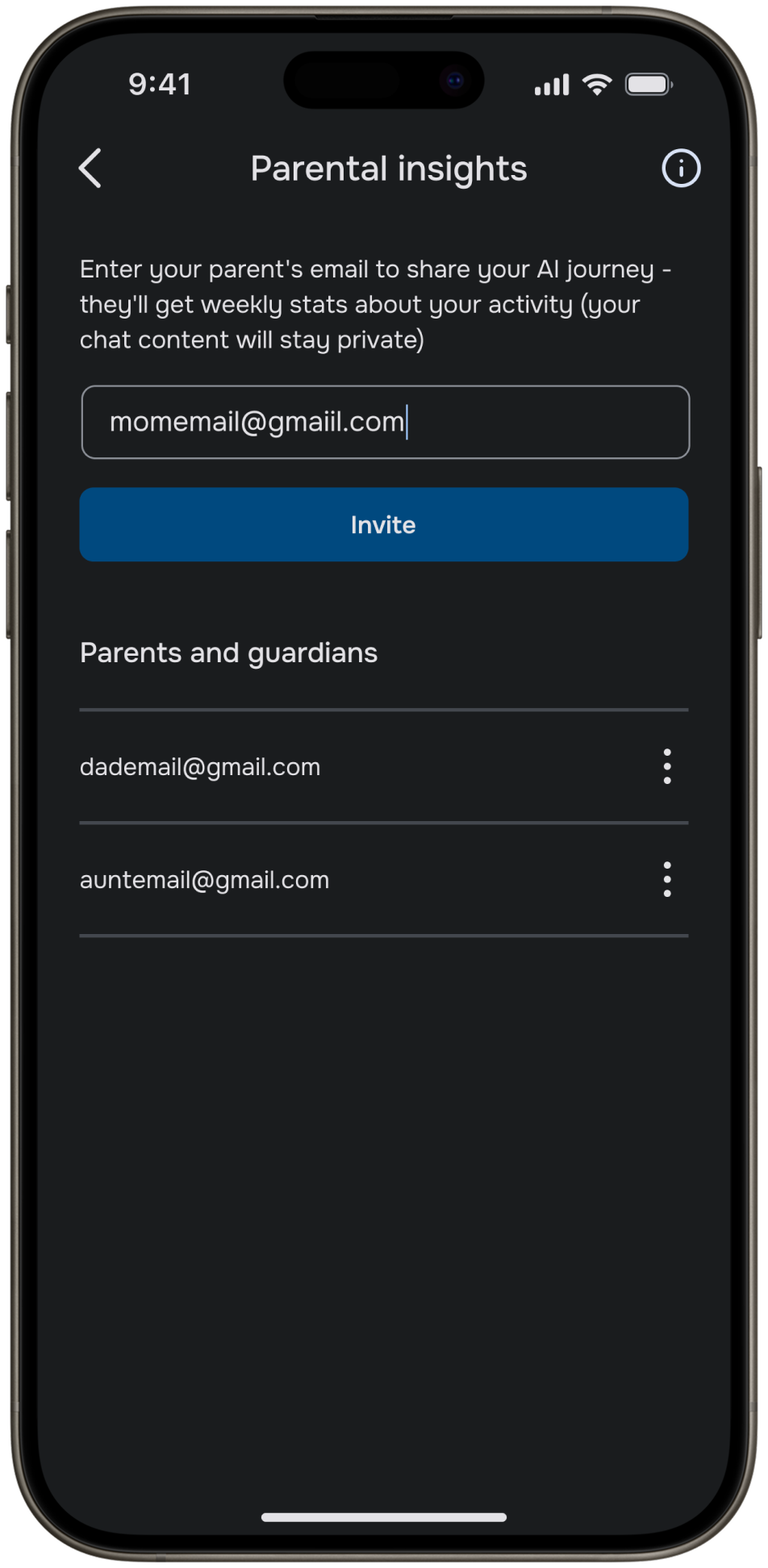
Enter your email address to send an invite to share their activities.
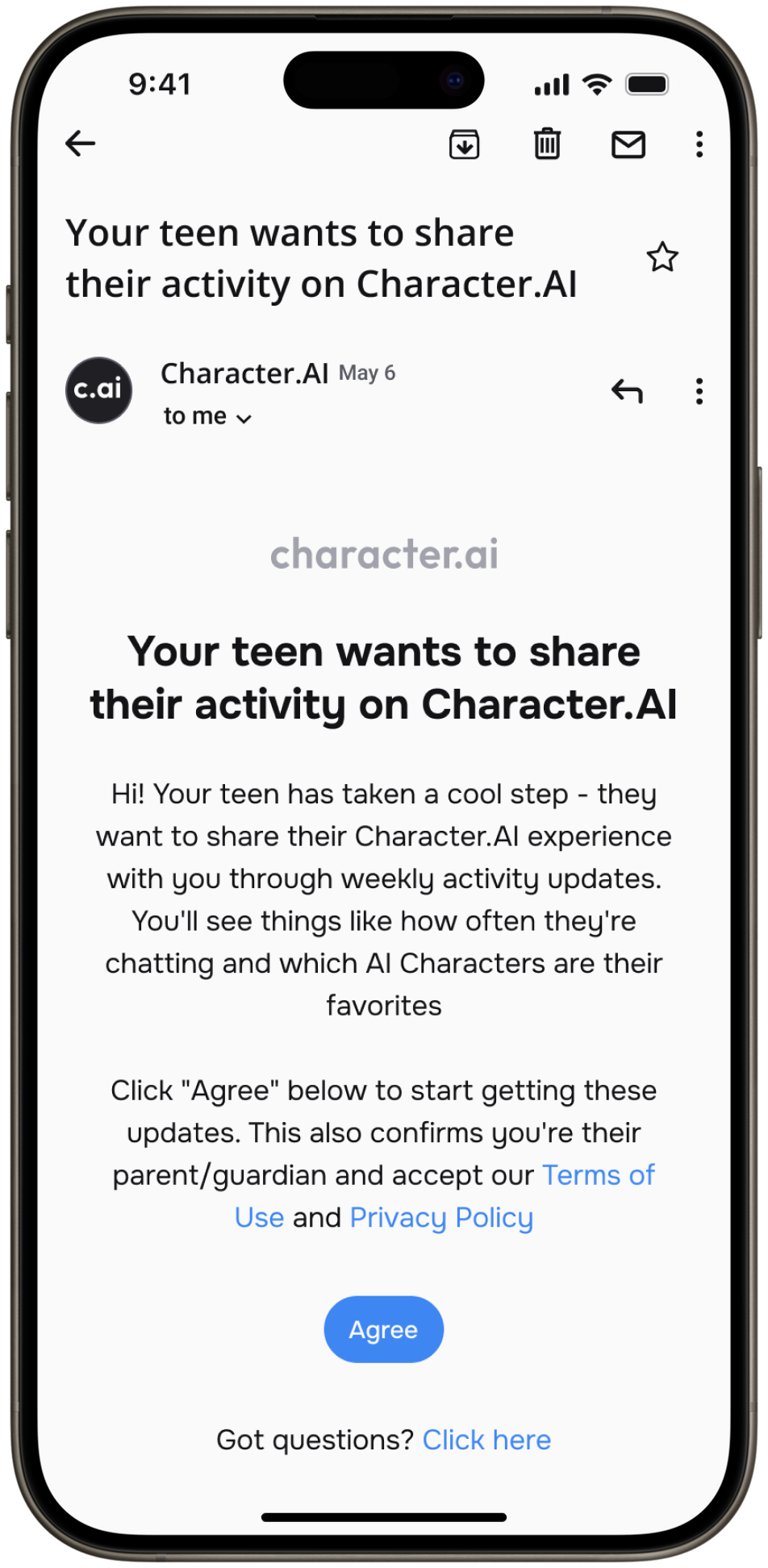
Check your inbox to access the feature and click Agree.
Afterward, you will keep getting a weekly activity report.
2. Step 2: Use a Parental Control Tool
Parental Insights just gives surface-level details. If you want to monitor conversations and other browsing activities, you must deploy a parental control tool.
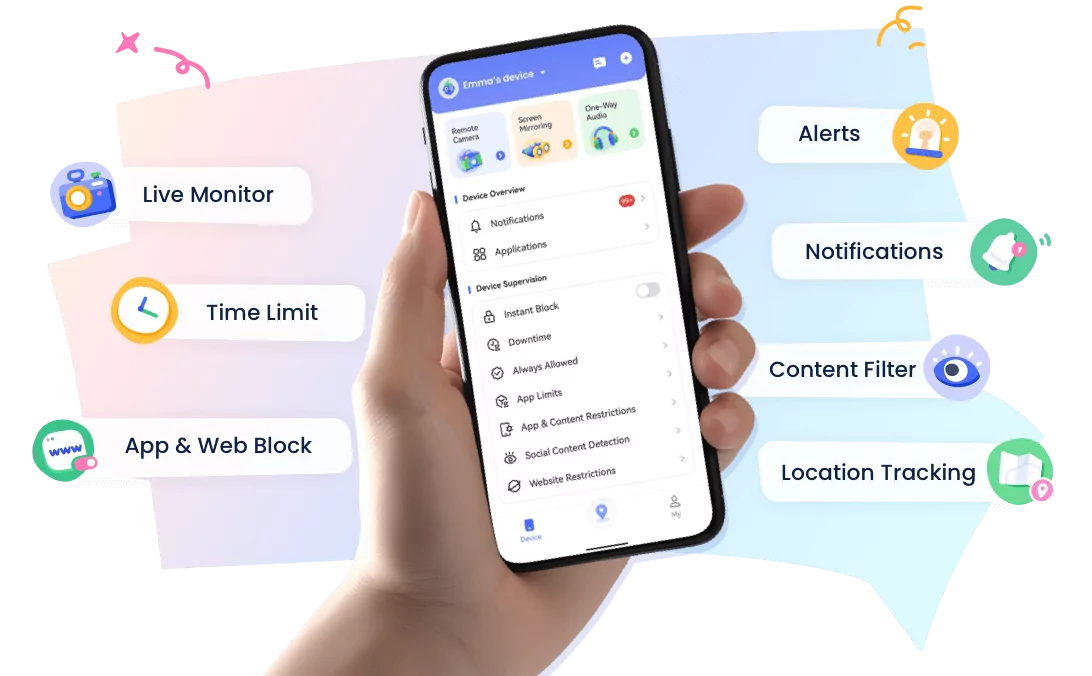
AirDroid Parental Control is a feature-packed app for parents that covers the gaps that Character AI's own tools leave open:
- App Blocker: Block the Character AI app with one tap if you determine access is not appropriate.
- Website Restrictions: Block character.ai across all browsers, including incognito mode.
- Keyword Detection (Android): Real-time alerts when terms like "character ai," "my AI girlfriend," or related phrases appear in messages or searches.
- Activity Report: Daily and weekly summaries of exactly what your child accessed and when.
- Screen Mirroring: See what is on your child's screen in real time.
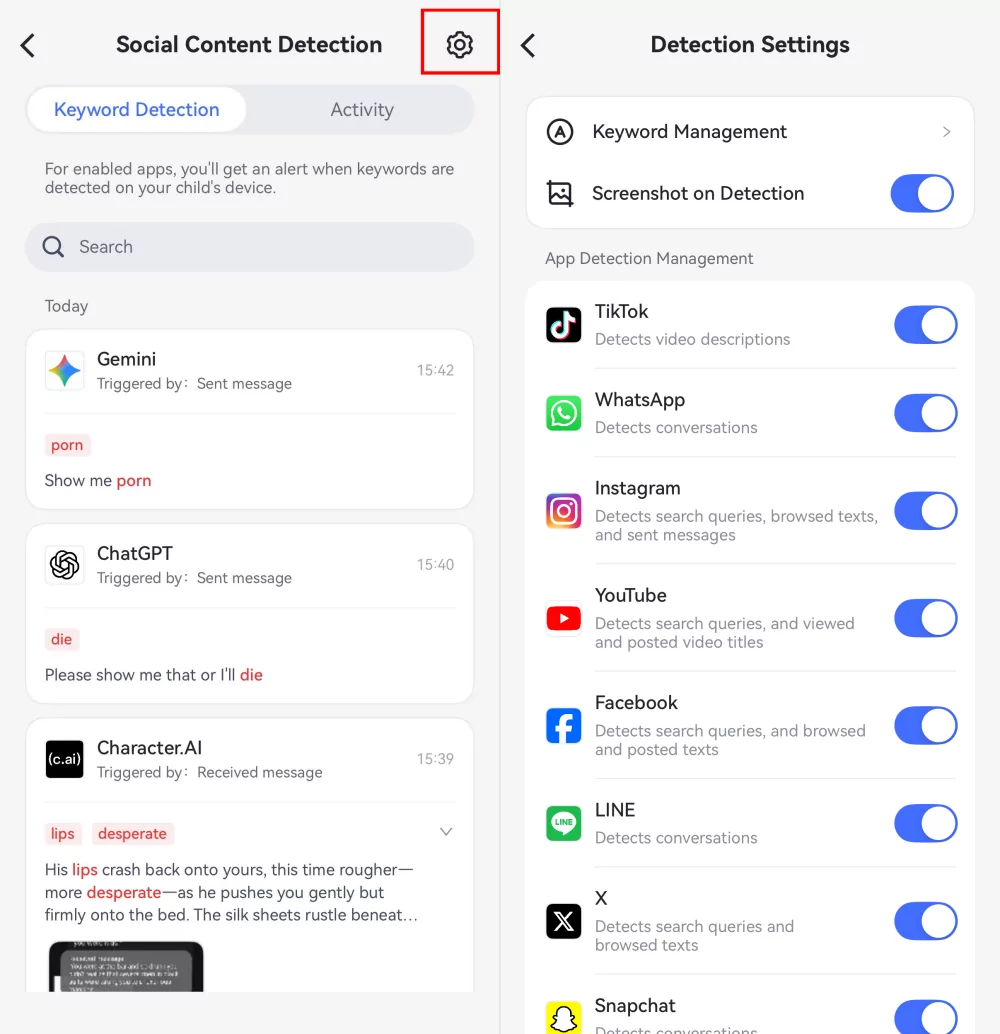
The best part is that AirDroid Parental Control is simple and quick to deploy. For example, if you want to monitor content, tap Social Content Detection in AirDroid Parental Control, then tap Settings in the top-right corner.
Toggle on the AI chat and social media apps you want to monitor. Afterward, you will begin getting alerts when keywords that you have added are detected along with the content.
3. Step 3: Watch for Behavioral Signals & Have a Talk
Monitor your teen for addiction markers, such as withdrawal from real relationships, mood changes when unable to access AI, and similar others. Schedule regular conversations about their AI use and emphasize that AI lacks genuine empathy. Also, encourage healthy alternatives like hobbies/sports or talking with trusted friends and family about their feelings.
What Keywords Should Parents Watch for on Character AI?
Professionals in child digital safety recommend monitoring for the following terms:
- Platform access: "character.ai," "c.ai," "character ai login," "character ai unblocked"
- Relationship indicators: "my AI girlfriend," "my AI boyfriend," "roleplay character," "AI companion"
- Content escalation: "NSFW character," "unfiltered AI," "character ai no restrictions"
- Emotional dependency signals: "my character said," "I told my AI," "my character understands me," "I don't need real friends"
- Bypass attempts: "character ai VPN," "character ai age bypass," "character ai second account"
Remember that a single keyword in browser history is not cause for alarm. A pattern of these terms appearing together, along with behavioral changes, warrants a direct conversation.
Conclusion
Character AI is a popular platform for AI companionship, which poses a significant risk for parents to keep their teens from getting exposure and addiction. The lawsuits, FTC inquiry, multiple independent research, and the platform's own decision to ban open-ended teen chatting all point to the same conclusion that the risks are real and documented.
The safety features added in Character AI are improvements, but they are opt-in and do not give parents visibility into actual conversation content. The only reliable approach for parents is a platform-level monitoring through Parental Insights and a cross-platform parental control tool, like AirDroid Parental Control, that covers the gaps the platform itself cannot close. All this should also include direct conversation with their teenager.
FAQs about Character AI
1. Is Character AI safe for a 13-year-old?
No. Although Character AI has a restricted teen experience for verified under-18 users, the verification relies on self-reported age. A 13-year-old who enters a false birthdate accesses the adult platform with no strict barrier.
2. Has Character AI been sued over child safety?
Yes. In January 2026, Character AI and Google agreed to settle multiple lawsuits alleging the platform contributed to mental health crises and deaths among teenage users. Cases were settled in Florida, New York, Colorado, and Texas. Additional lawsuits remain pending.
3. Does Character AI tell parents what their child is saying to the AI?
No. The Parental Insights feature shows time spent and characters interacted with, but does not share any conversation content. Parents cannot see what the AI said or what their child disclosed.
4. Can my child bypass Character AI's teen restrictions?
Yes, easily. Creating a second account with a different email address takes under a minute and produces an account with no parental connection and no teen restrictions if a false age is entered.
5. Is Character AI banned for minors?
Not banned, but restricted. Since November 25, 2025, verified teen accounts can no longer engage in open-ended one-on-one chat with AI characters. They can still access the platform for video creation, story generation, and streams. The restriction applies only to accounts where the user has been categorized as under 18.
6. What should I do if I find my child has been using Character AI intensively?
Start with a conversation rather than an immediate ban. Child psychologists note that teenagers who feel punished without explanation find workarounds faster than those who receive an honest discussion about the risks. Then apply blocking and monitoring tools, and watch for signs of emotional dependency, particularly social withdrawal, disrupted sleep, etc.
7. Is Character AI free?
Yes, the platform allows users to experience its characters for free. A paid subscription (c.ai+) costs $9.99 per month and unlocks premium creative features.








Leave a Reply.