AirDroid Family Locator
Best Life360 alternative to let you check live location and phone's surroundings.
Top 6 Apps Like Life360 for Families [Tested and Tried 2026]
Thinking about switching from Life360? You're not alone!
Whether it's privacy concerns, cost, or a more controlling "tracking" feel, many families are looking for Life360 alternatives that feel cheaper and more balanced.
In this guide, we'll walk you through the best Life360 alternatives and guide you on how to find the one that fits your family best.

Why Are You Looking for Life360 Alternatives?
For many families, Life360 works well in the beginning. It offers a simple way to check locations and stay connected no matter where we are.
But lately, you might have started noticing a few things, for example:
- Data Privacy Concerns:
- For many users, that's a dealbreaker. A recent report by The Capitol Forum found that Life360 has been creating audience segments based on users' location data and selling them through LiveRamp's Data Marketplace for ads.
- Unreliable Location Accuracy:
- More than one user on Facebook has reported Life360 sending false arrival alerts for family members and even no crash detection alerts after serious car accidents.
- Limited Free Plan:
- Though Life360 has a free version, features are limited. And its Gold and Platinum plans don't feel worth it when it only offers location tracking or driving safety features.
- Battery Drain Issues:
- Though itself states it's one of the lowest battery drains of all locator apps. Quite a few users said it runs down their battery fast, and one even reported Life360 used 19% of his Android phone's battery in a day.
- Need for More Than Location Tracking:
- Not just location tracking, you might need a tool that can tell you if your kids are safe, what they're doing online, or if they are involved in risky activities.
When Choosing a Life360 Alternative, What Really Matters for You?
Before jumping to an app similar to Life360, think about it, so you can find the right alternative.
If cost is your first filter → Apple Find My, Google Maps
Completely free without ads.
If your privacy is non-negotiable → Apple Find My, Google Maps
Developed by Apple and Google Inc, they do not sell users' location data.
If you care about your child's overall safety, not just location → AirDroid, Find My Kids
They both let you remotely check your child's surroundings.
If your teen just got their license → AirDroid or Geozilla
AirDroid provides trip details, real-time speeding alerts, post-trip records of hard braking and rapid acceleration, SOS alerts, and daily or weekly driving summaries. GeoZilla is another option for families that specifically require crash detection.
If transparency matters most or you don't need 24/7 tracking → Apple Find My, Google Maps, Glympse
All of them support mutual sharing. And Glympse is built specifically for temporary location sharing.
If location accuracy is what let you down with Life360 → Geozilla
ts positioning accuracy can be down to the feet, not just the meters.
If you want a battery saver alternative → AirDroid
It lets you customize how frequently the iPhone records locations, which determines the battery drain speed.
If you only need occasional location sharing → Glympse
Share via a link for a set time — no app needed on the other end. Free.
If your whole family uses iPhones → Apple Find My
It's built into iOS.
Top 6 Apps Like Life360 for Families
| Apps | Best for | Free? | Privacy | Kids Can Turn Off? |
|---|---|---|---|---|
| Find My | Apple families |  | High | |
| Google Maps | Mixed-device families | | High | |
| AirDroid | Comprehensive child safety with location sharing, driving insights, ambient sound checks, and customizable parental controls. | Free trial | Medium |  |
| Glympse | Driving safety with crash detection | | Medium | |
| GeoZilla | Driving safety monitoring | | Medium | |
| Find My Kids | Families of kids aged 6–12 | | Medium | |
Why You Can Trust This Guide:
Our recommendations are based on hands-on testing and real user reviews from the App Store and Google Play.
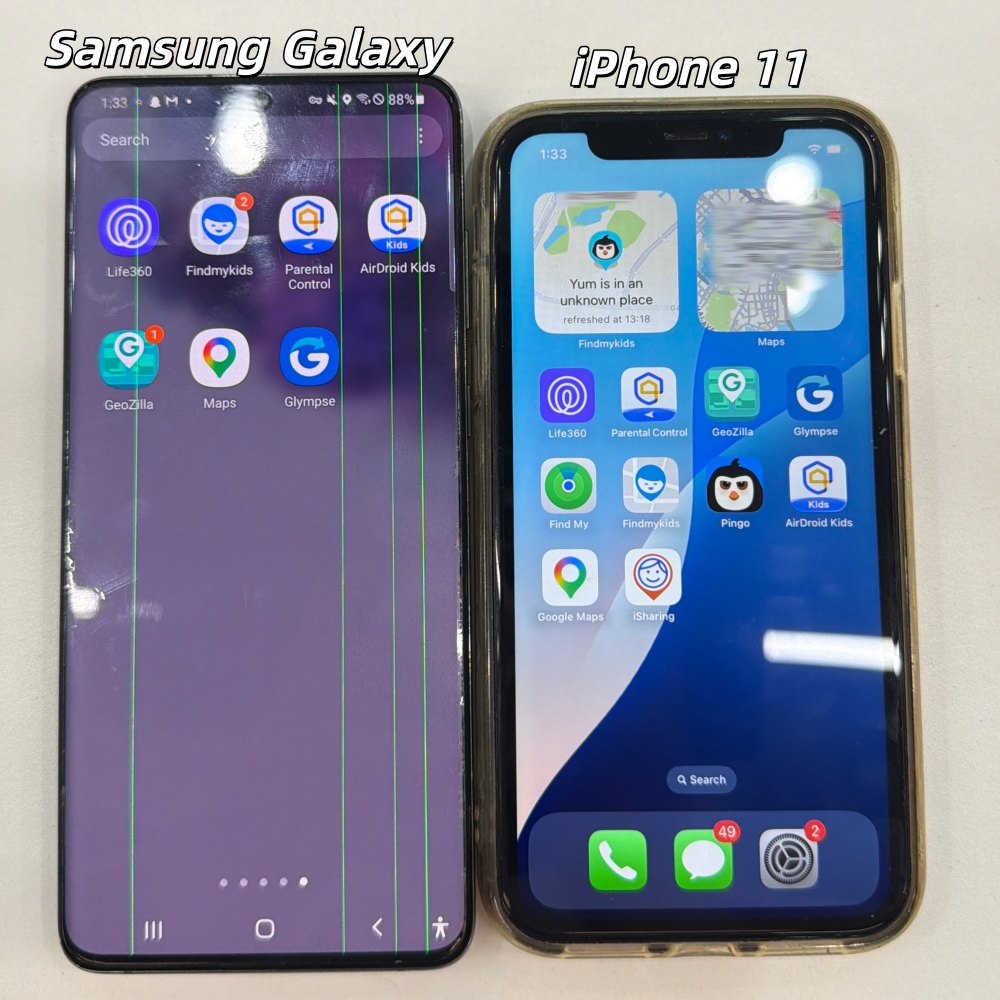
We tested all 7 apps (Life360 included) on two devices, a Samsung Galaxy S20+ and an iPhone 11. For each app, we mainly evaluated the basic location sharing feature, accuracy, battery impact, and update frequency under the free plan or free trial.
Beyond this list, our team also tested over 20 parental control and location sharing apps in the last year. If you‘re interested in it, view our [parental insights] folder.
1Apple Find My
Why We Pick It:
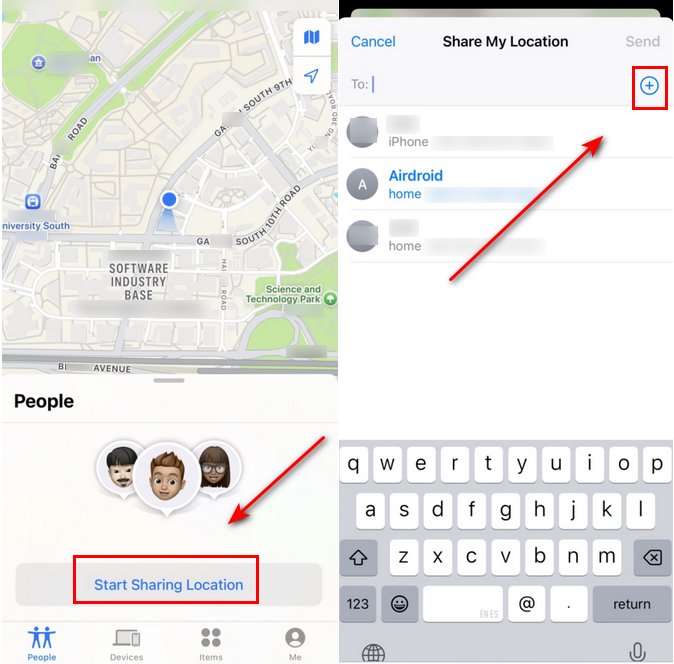
For families who use iPhones, Find My is a seamless and robust option. Since it is built directly into the Apple system, all location data is end-to-end encrypted. No one, not even Apple, can see shared locations.
Key Features:
- Real-time location sharing via Apple accounts.
- Share location indefinitely, for one hour, or until the end of the day.
- Geofencing notifications when family members arrive or leave set locations.
- Help track or erase a missing device.
Our Take After Testing:
- For me, Find My is seamless. It can provide very accurate and precise location data.
- Issues like location not updating or not being available may happen in daily use.
Pros
- Completely free.
- Works with iPad, Mac, AirPods, and AirTag.
- End-to-end encrypted.
- No ads or third-party tracking concerns.
- 100% transparent.
Cons
- Apple ecosystem only.
- Location features only.
- Location sharing can be turned off easily.
Pricing: Free.
2Google Maps
Why We Pick It:
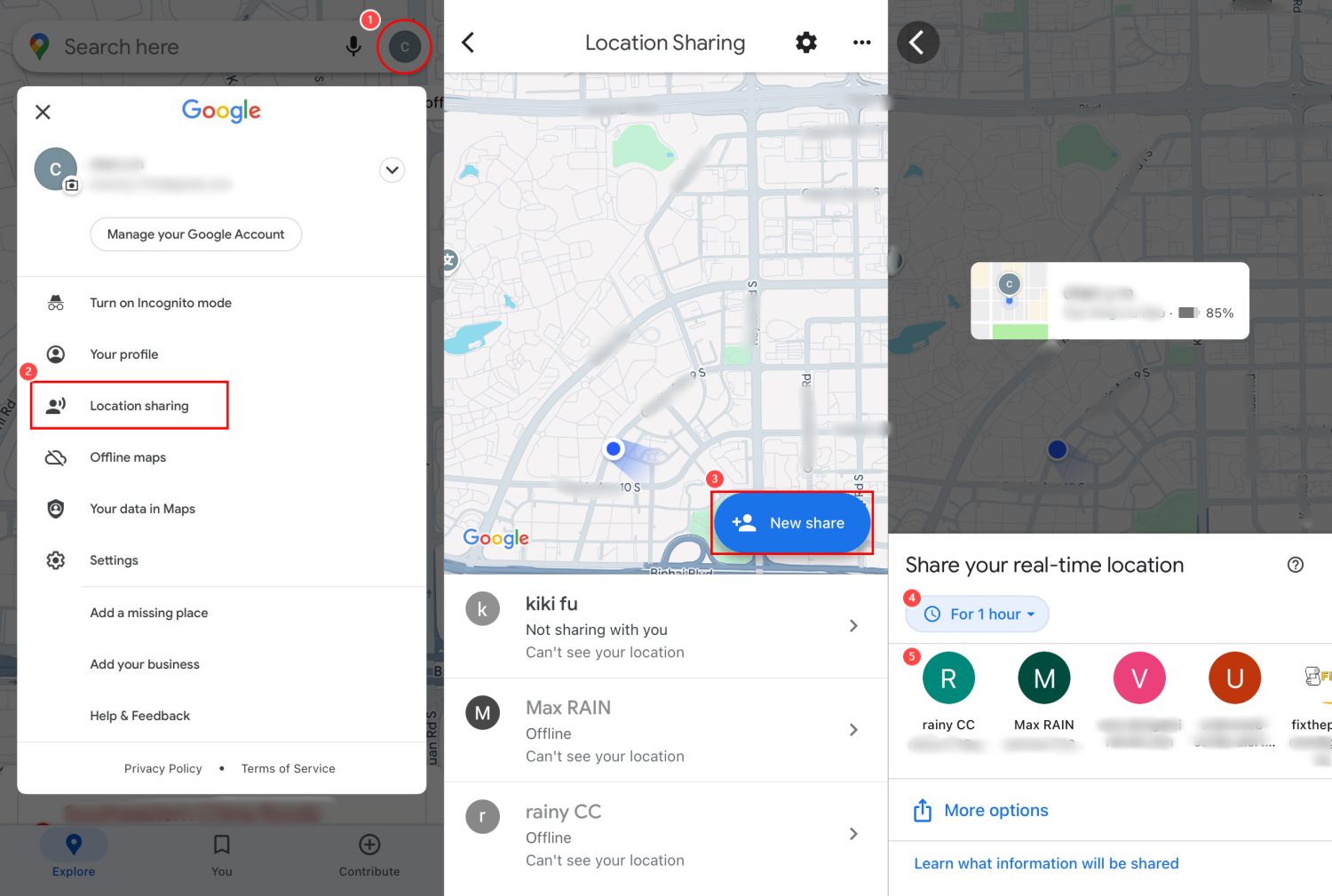
Though Google Maps is marketed as a navigation app, its location-sharing feature is reliable, free, flexible, and cross-platform. For mixed-device families who look for an app like Life360 but free, it gets the job done.
Key Features:
- Real-time location sharing from 1 hour to indefinitely.
- Support automatic arrival or departure alerts.
- Show the battery percentage of the person sharing their location.
Our Take After Testing:
- During testing, even when the phone was right nearby, Google Maps showed it was about 600 meters away. So I don't think it's as accurate as Find My, which showed 0 meters.
- Since it lacks SOS alerts, it's only suitable for daily meetups or pickups.
Pros
- No extra cost.
- Cross-platform support.
- No location data leak concerns.
- Built for transparency (person being tracked is always notified.)
Cons
- Basic location-sharing and navigation features only.
- Location sharing can be turned off easily.
Pricing: Free.
3AirDroid Family Locator
Why We Pick It:
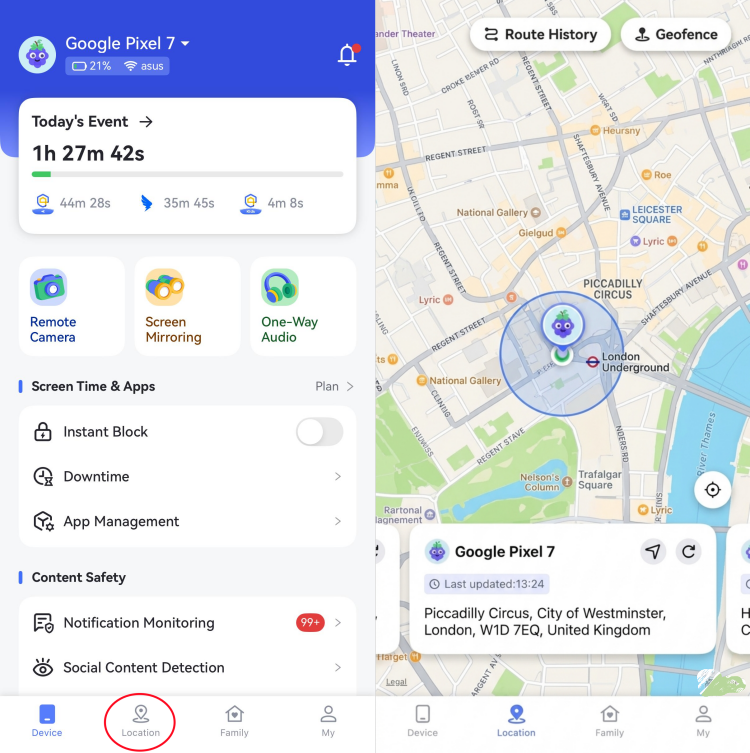
While basic tools only share a family member's current location, AirDroid offers a complete safety ecosystem—combining location updates with Driving Safety, environmental awareness, emergency response, and digital wellness tools.
Beyond viewing real-time locations and travel history, parents can review detailed trip summaries, including route paths, start/end points, driving speed, distance, and duration. AirDroid provides real-time alerts for speed variations and highlights sudden braking or sharp acceleration, empowering families to identify potential risks and build safer travel habits together.
Key Features:
- View your kid's real-time location and review their past 30-day routes.
- View trip routes, receive real-time speeding alerts, and get daily or weekly driving summaries.
- See and hear your child's surroundings to verify their safety.
- Set up places (home, school, etc.) and receive alerts when your child enters or leaves these areas.
- Support SOS with a loud siren alert.
- Offer screen time controls, social content monitoring, call blocking, web filtering, and more features.
Our Take After Testing:
- Unlike Life360, AirDroid generally displays the latest location when we manually refresh it. This makes it a go-to option if you prioritize battery longevity.
- When using its remote camera and one-way audio features, it takes about 6 seconds to establish the connection. It is faster than my expectations! But what's worth knowing is that these two remote features are not available if your child is using an iPhone.
Pros
- The only app in this list that lets you remotely hear and see your child's surroundings.
- Combines location tracking, driving safety insights, emergency support, surroundings monitoring, and digital parental controls.
- Comprehensive parental controls beyond location.
- Web dashboard available.
- 3-day free trial with full features.
- Cross-platform support
Cons
- Some features only work on Android.
- No free tier compared to Life360.
- Not built for mutual sharing.
Pricing: Premium starts at $9.99/month.
4Glympse
Why We Pick It:
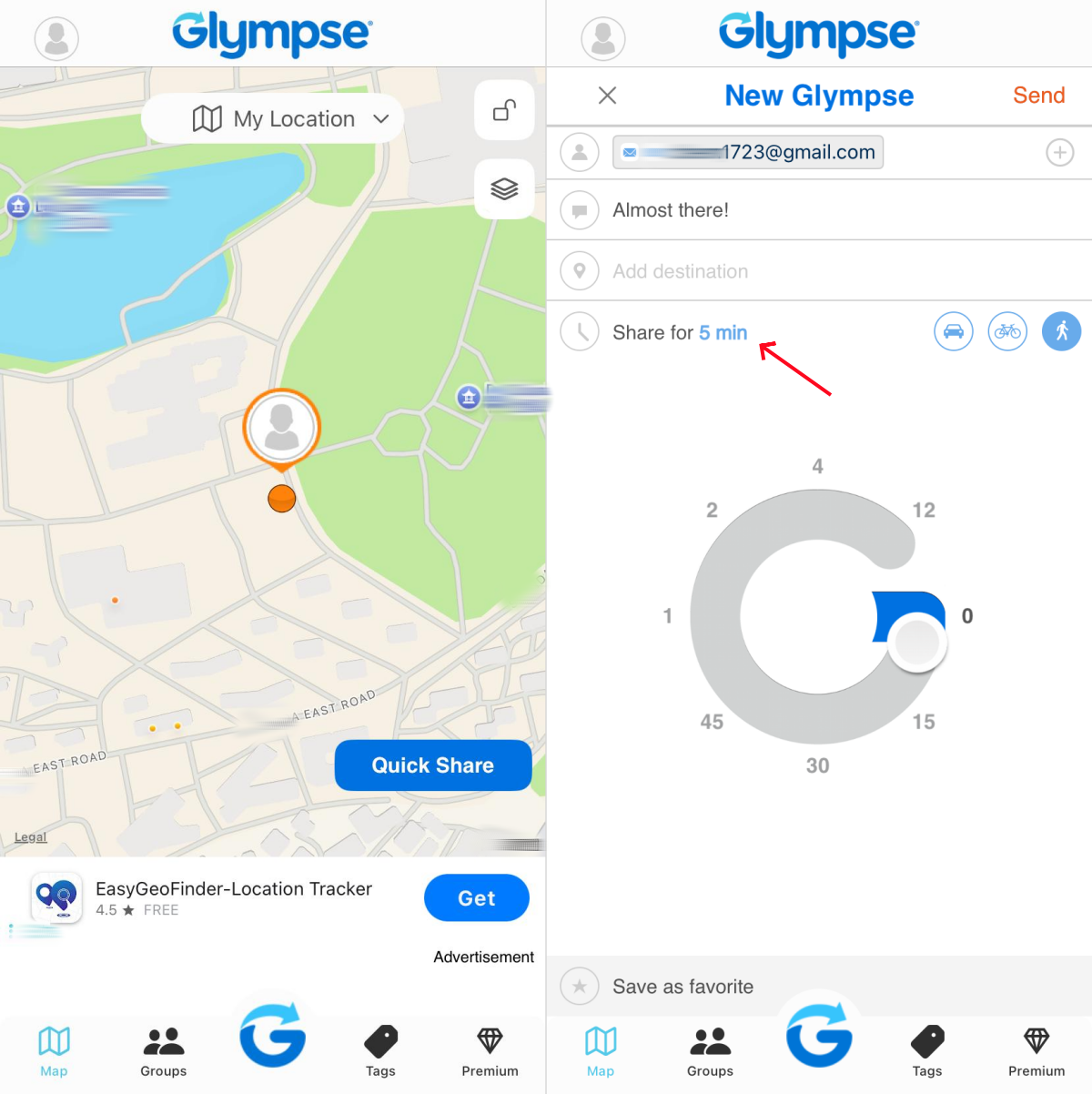
Instead of constant tracking, Glympse focuses on temporary location sharing. The app works by sharing the location via a link. Once you send a link, the recipient sees your shared location online (without downloading the app), and then the location data is gone once the shared time is up.
Key Features:
- Real-time location sharing with a very flexible duration (5 mins to 12 hrs).
- Automatically stop sharing when arriving at a destination.
- No app installation required for the person receiving your location.
- Review how many times you shared your location and details.
- Set up a group for location sharing.
Our Take After Testing:
- Unlike Life360, Glympse's free plan is enough for personal use. Its premium plans typically cover customizable features, which are not practical or worth the money.
- However, many users reported in the Play Store that location updates have been delayed recently.
Pros
- Offer a free tier.
- Shared location can be viewed via a link.
- Completely free for personal use.
- Cross-platform and browser-based.
Cons
- Come with ads in the free tier.
- Not designed for ongoing family safety monitoring.
- Non-intuitive layout.
Pricing: Free plan. Or start at $9.99/month.
5GeoZilla
Why We Pick It:
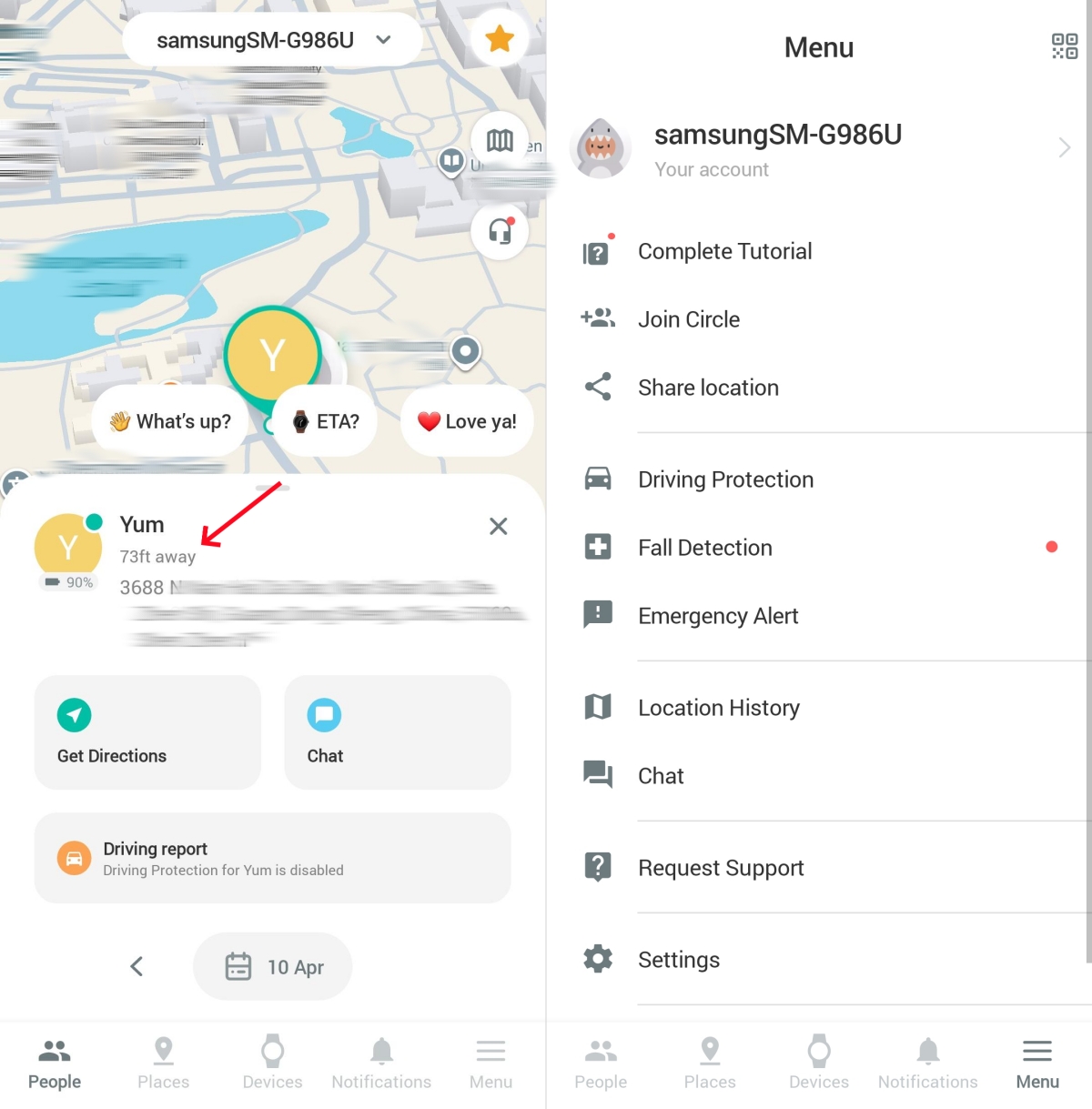
GeoZilla is a Life360 equivalent. Beyond location tracking, it monitors driving behaviour, such as flagging speeding, hard braking, and phone use at the wheel, and sends crash detection alerts to the whole family. For parents of new teen drivers, it deserves a try.
Key Features:
- Real-time GPS location tracking and chats with family circles.
- 15-day location history.
- Geofencing with arrival and departure alerts.
- Crash detection and driving behaviour monitoring.
- Invisible mode for hiding the live location in a circle.
Our Take After Testing:
- This app isn't user-friendly. When I open the app, it requests to purchase the premium to continue. However, after trying to log in on the web version and entering the code in the app, I can use it with the free version.
- What makes me surprised is its tracking precision! While most family tracking apps report location accuracy in meters, GeoZilla's GPS engine is precise to the level of feet. For example, it can show my tested phone 73 feet away.
Pros
- Highly accurate location.
- Offer a set of driving safety features.
- Can pair with a physical GeoZilla GPS tracker device.
- Designed for transparency.
Cons
- Expensive.
- Location inaccuracy issues.
- Hard to cancel or get refunds.
Pricing: Has a Free plan. Premium starts at $59.99/3 months.
6Find My Kids
Why We Pick It:
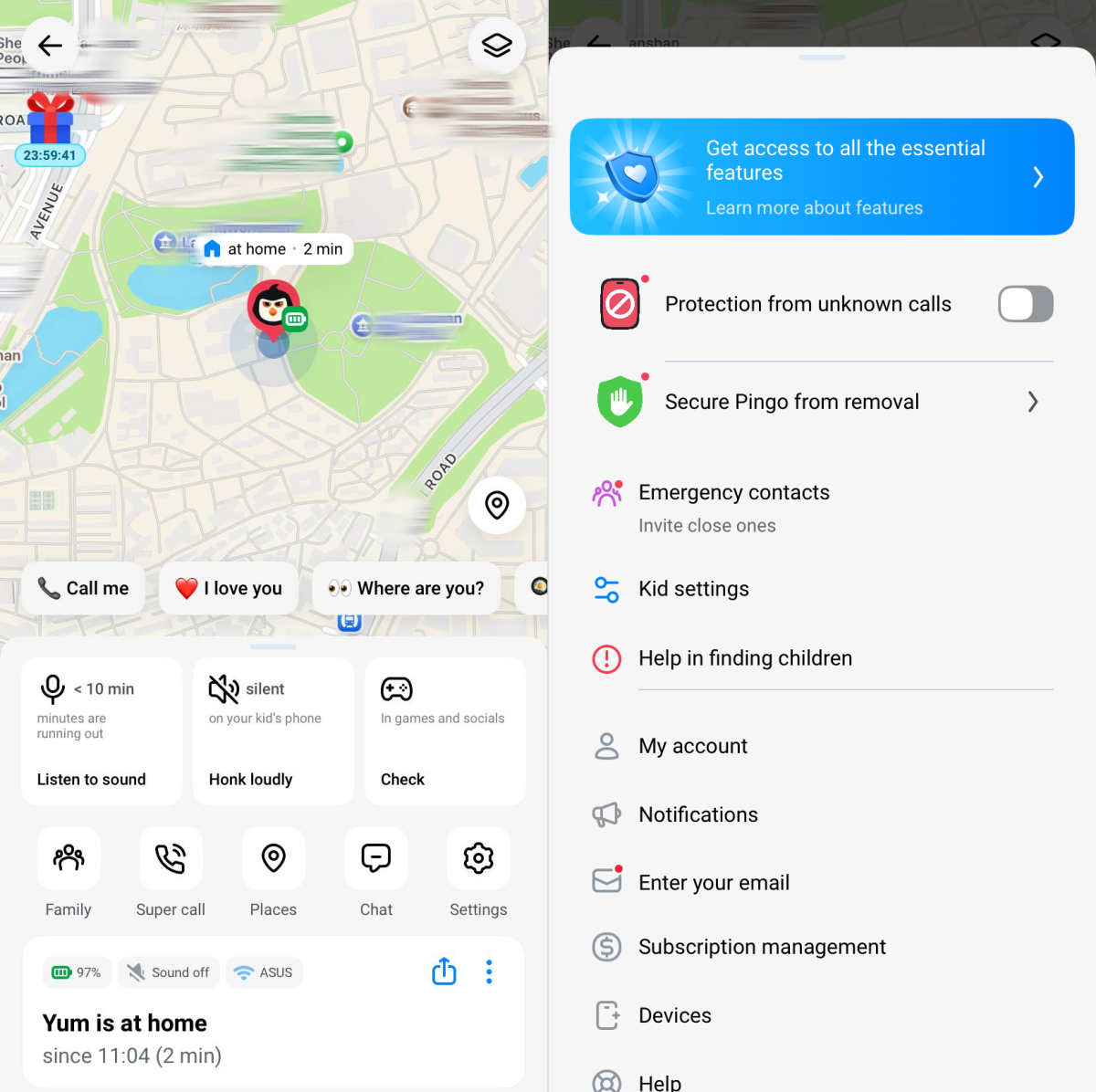
Similar to AirDroid, Find My Kids focuses on the core concerns of parents with kids. It also has a feature that allows you to listen to what's happening around your child. Additionally, it can ring the child's phone, which helps a lot in situations like kids not answering calls or not being able to find their phone.
Key Features:
- Remotely listen to your child's surroundings.
- Real-time GPS location with updates every 5 seconds.
- Location history and instant geofencing alerts.
- Send a loud alert to your child's phone even if it's on silent.
- SOS button for kids.
- Battery level monitoring with low-battery notifications.
Our Take After Testing:
- From my experience, the sound around (remote listening) is less responsive than AirDroid's. There's about a 7-second delay. During testing, I heard background sounds a bit later than they actually happened.
- Additionally, a notification appears on the child's device when this feature is activated. This makes it more transparent.
- One thing that really stands out: it lets me add a widget directly to the home screen. This means users can check the shared location instantly without opening the app.
- Frequent location updates.
- Compatible with its own GPS watches.
- Offer a call blocking feature.
- Cheaper than Life360.
- Battery drain with continuous GPS tracking.
- The sound-around feature requires an extra fee.
Pros
Cons
Pricing: Free plan available. The Care premium starts at $2.99/month, and the Plus starts at $5.99/month.
Before You Delete Life360: A Quick Checklist
If you have already decided which Life360 alternative to use, here's how to make the transition smooth.
Step 1: Test and try the new app
Don't uninstall Life360 right away until the alternative app meets your needs. Instead, install the new app and use it for at least 3 days.
Check what you might lose or have compared to Life360 and see if it works better than Life360 in accuracy, battery life, etc.
Step 2: Delete your account and data
Most people uninstall Life360 and call it done, but that's not enough. Given that Life360 has a history of selling user location data to brokers, it's essential to delete your data completely.
To do so, go into Life360's settings > account > delete account.
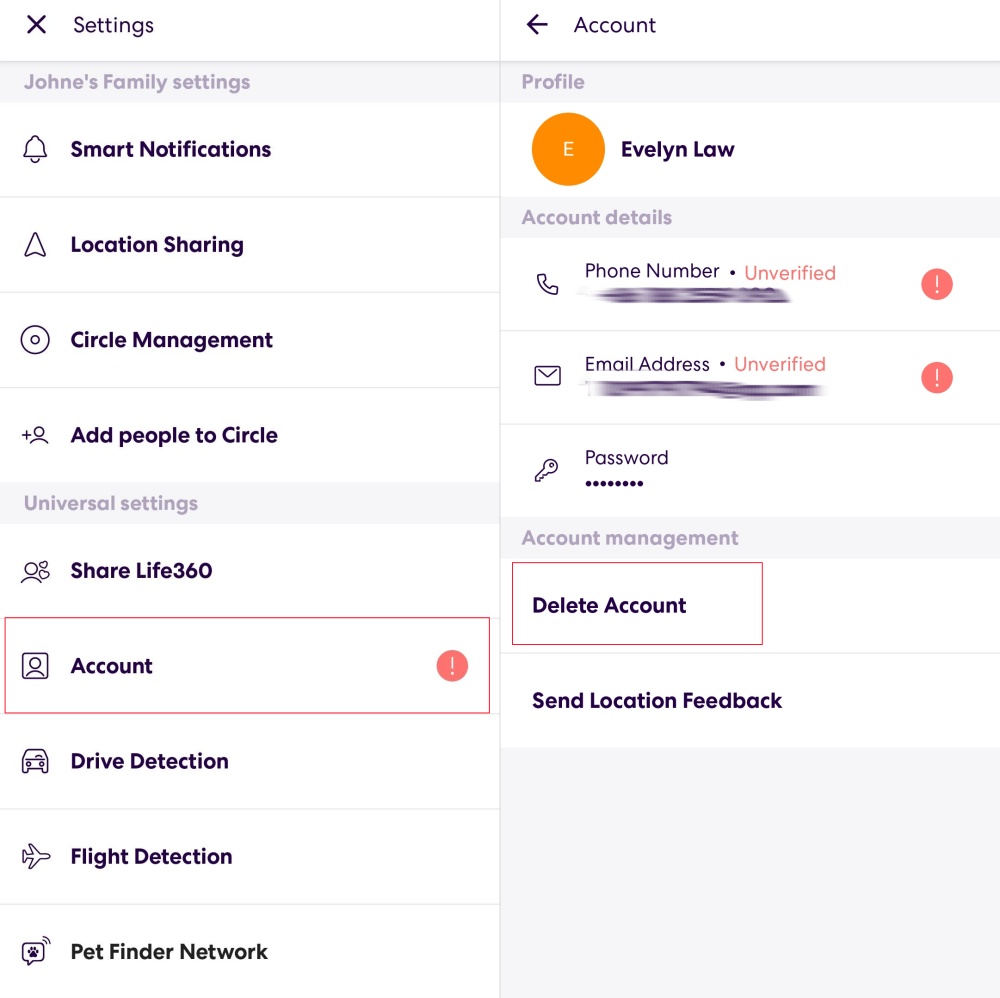
This ensures your location history data isn't sitting on Life360's servers after you leave.
If you're on a paid plan, cancel it before the next renewal to avoid being charged for another period.
Step 3: Let your family know
Communication matters when it comes to location sharing. Common Sense Media also recommends that these tools should be used with the child's knowledge, not secretly.
Take a moment to explain to your kids and other family members why you're switching the app. Also, make it clear that this tracking app is meant to protect rather than control.
Step 4: Help everyone set up the new app
Download the new app on every family member's device, and walk each person through the setup.
Note that some apps' location sharing works via an invite code (like AirDroid, GeoZilla, and Find My Kids), while others just require a link or an account (e.g., Find My, Google Maps, or Glympse).
And one of the most important steps is to make sure the location permissions are enabled. Then, do a quick test to confirm every member's location is showing on the app.
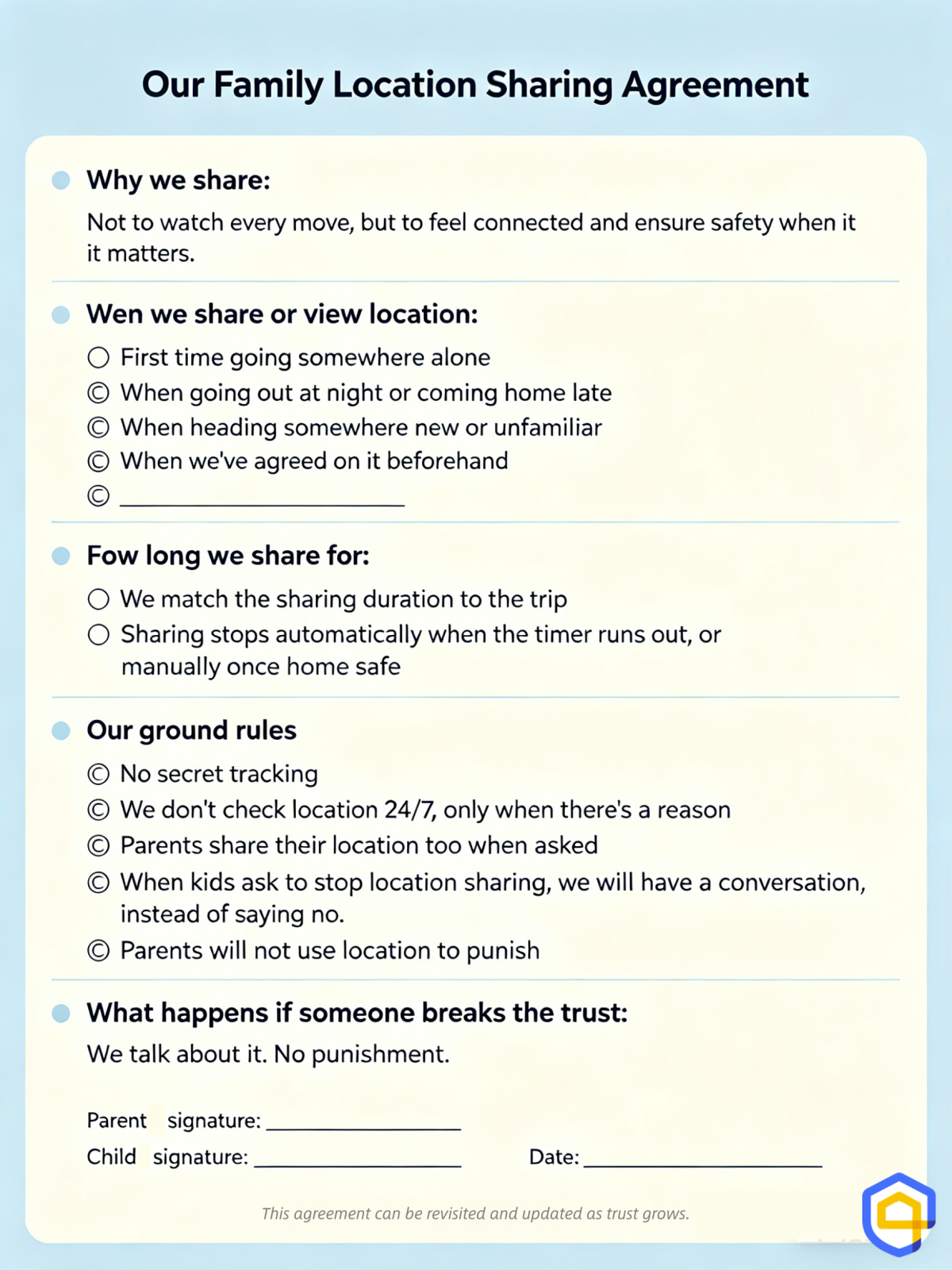
Step 5: Set your family's sharing rules together
Last but not least, agree as a family on when to share location and when not to. As Pavkovic, a parenting coach, puts in Parents, "I think it's really important that it's a collaborative agreement amongst families."
Having these conversations and rules upfront prevents the app from becoming a source of tension. To make it easier, we've compiled a family location tracking agreement template you can directly use.
FAQs about Life360
Does Life360 work in Mexico?

Yes, Life360 works in Mexico, as long as your phone has GPS and internet access. Several Facebook users also proved this.
Does Life360 sell data to insurance companies?
Yes. Life360 officially says your driving data will be shared with insurance companies if you explicitly opt in.
Can Life360 see search history?
No. It is designed for location tracking and driving behavior monitoring. It does track users' search history or browsing activity.






Leave a Reply.