How to Tell If Kids Watch Porn? What to Check
Wondering if your child watches porn? As a guardian, you're responsible for protecting young children.
However, assume too much, and you risk damaging trust. Assume too little, and a real exposure goes unaddressed. The key is to avoid making assumptions based on one clue alone.
In this guide, you'll know:
- how common porn exposure is among young users
- what to check before jumping to conclusions
- the signs to watch for
- and how to protect your child under open communication
Reality Check: How Common Is It for Kids to Watch Porn
The short answer: very common. Recent data from 2025 to 2026 confirms that exposure to online pornography among children and teens is the norm:
- 52% of US teens have encountered porn by age 12 or younger. [Common Sense Media]
- More than a quarter (27%) of UK young people aged 16-21 had seen pornography online by age 11. Some even reported seeing it as young as age 6. [Ofcom]
- 32% of Australian children aged 10-17 have seen sexually explicit material online. [eSafety]
- Most teens say their porn exposure was accidental.
- Social media feeds have become the main source through which children access porn.
What to Check If You Suspect Your Kids Watch Porn
If you suspect your child has been viewing pornography or want to better understand their online activity, here is a practical checklist of what to look for on their devices.
1Social Media Activities
Many parents think porn exposure happens through adult websites. However, they don't realize that more than half of kids encounter sexual content through social feeds or chats with friends.
Therefore, you should check for:
- Videos or posts on their feeds (this content is recommended by the algorithm. It sometimes means your child is actively looking for related content.)
- Searches inside apps
- Followed accounts
- Groups they joined or subscribed to
- Liked or saved content
- Whether the "Sensitive Content Filter" or "SafeSearch" setting is off
2Browser History
Traditional web browsing is still worth checking, but go in with the right expectations. You might find a completely empty history.
And this can be a red flag that your kids wiped their browsing history or used private or incognito mode to make sure nothing showed up or to hide something.
If private browsing is frequently used, that is worth a conversation or looking at other clues.
3App Downloads
There are apps specifically designed for adults and full of adult material. The material includes sexualized conversations, explicit images, videos, or live streams.
Some children may end up installing these apps because they are curious, influenced by peers, or misled by ads and recommendations.
So, you'd better check if they downloaded these apps from the Play Store or App Store download history:
- Dating apps
- Anonymous chat apps
- Random video chat platforms
- Dark web browsers
- VPN apps (these apps are mainly used to bypass restrictions or filters)
4Saved Photos and Content
Some children may receive, save, or screenshot inappropriate images and videos through social media, messaging platforms, online communities, or websites.
If you have a reason to check, pay attention to:
- Any image, video, or screenshot from unknown sources.
- Recently deleted or hidden albums.
- Saved or archived media from social apps.
However, avoid assuming that every private image or unusual file is a sign of pornography. And privacy becomes increasingly important as they grow older.
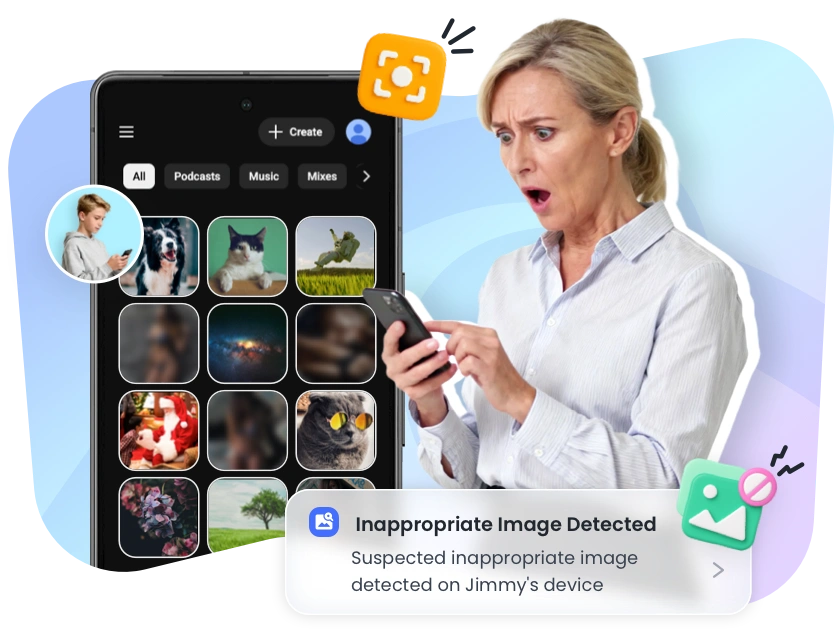
Let AI Identify Risky Images without Checking Every Photo.
AirDroid's AI-powered image detection automatically flags and alerts you only when inappropriate images are detected on your child's device.
Behavioral Signs That Indicate Someone Watches Porn
Usually, the most telling indicators of porn exposure are behavioral changes in how your child acts, speaks, or reacts. Here is what to watch for:
Unnormal Device Use
One of the most common changes parents notice is that their child becomes more protective of their devices. For instance:
- Quickly closing apps or tabs when you approach.
- Clearing history or using incognito more frequently.
- Starting to use app locks or hidden folders.
- Spending more time online late at night.
- Taking their phone into the bathroom every time and spending unusually long periods.
- Becoming upset if interrupted while using their device.
Sexual Knowledge & Language Out of Sync with Age
Think of it: If your child suddenly knows more about sex than they logically should, where did they learn it? Some telling signs include:
- Using sexual language or terminology that feels beyond their years.
- Starting to make sexual jokes or comments.
- Sharing inappropriate content with others.
- Showing interest in explicit material beyond typical curiosity.
- Asking specific questions about sexual practices.
What to Do If Your Kids Watched Porn
Start with Calm, Not Confrontation
Discovering that your child has watched pornography can be upsetting, but stay calm.
Instead of reacting with anger or shame or punishing them, focus on understanding what happened and helping them develop healthier online habits.
After all, your first reaction can shape whether your child feels safe talking to you in the future.
Talk and Ask How They Encountered It
Both Common Sense Media and Ofcom's research showed that most children encounter explicit content by accident. So, before jumping to conclusions, talk to understand how your child came across the content.
❓Was it an accidental click, something a friend shared, or something they intentionally searched for?
💡After getting the answer, you can decide what to do next:
- If it was accidental: Teach your child how to recognize suspicious pop-ups and links. Then, encourage them to close the page immediately instead of exploring further.
- If it came from a friend: Encourage your child to say no if friends send similar material again and explain why this inappropriate content shouldn't be shared with other peers.
- If they actively sought it: Use it as an opportunity to have a conversation about bodies and sex education. Meanwhile, understand the curiosity behind their behavior, especially for teens. And answer their questions so they don't rely on pornography as a source of information.
Adjust Access to Porn Content
If the conversation reveals a real gap, such as the platform having no content restrictions, fixing that gap matters to reduce accidental porn exposure. Then, how to stop watching porn for teens? Consider:
- Enabling SafeSearch across browsers or Sensitive Content Filter on social apps if any.
- Blocking adult websites on smartphones, computers, or at the router level.
- Using the AirDroid Porn Content Monitoring app to receive alerts if porn-related keywords appear in your child's SMS, social media, or AI chat apps.










Leave a Reply.