Is Muah AI Safe? A Parent's Honest Review (2026)
Muah AI is unsafe for teens for four main reasons. It markets itself as an 18+ AI companion that provides access to uncensored NSFW content without a sign-up or proper age verification. A 2024 data breach exposed 1.9 million users' emails and their explicit typed prompts. It runs through a web browser, so standard parental controls through Screen Time and Family Link are less effective. The FTC launched a formal inquiry into AI companion platforms in September 2025, which confirmed this is a regulator-level risk.
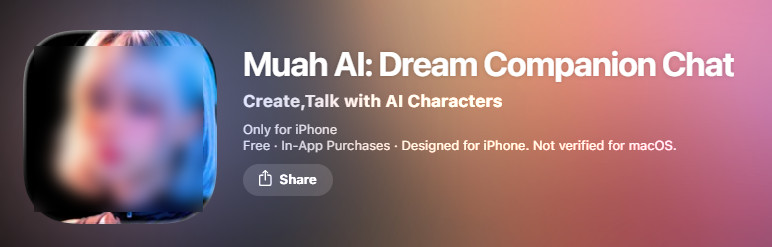
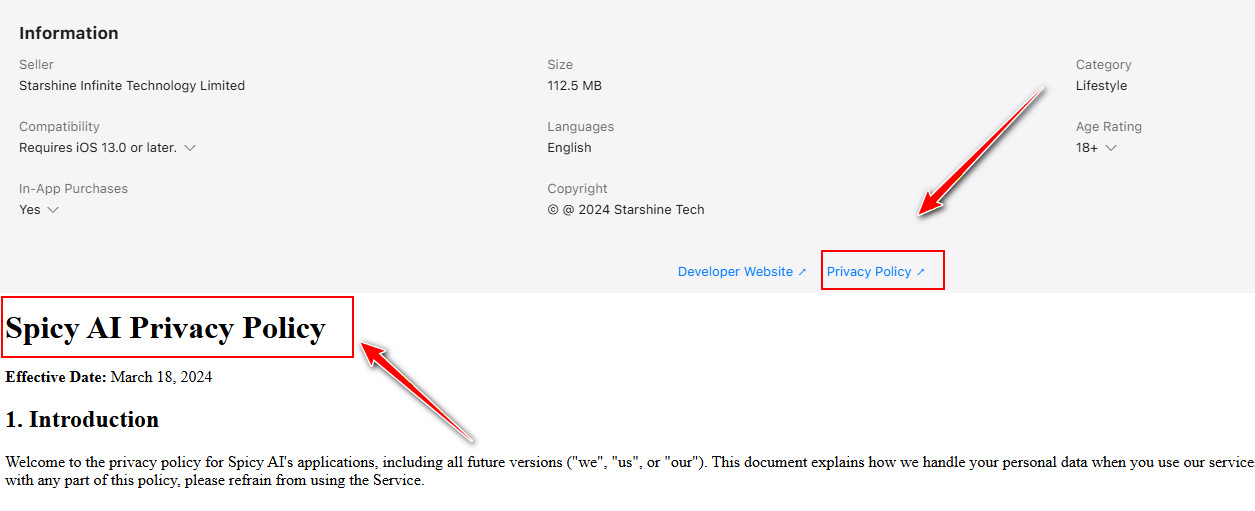
If you click this app's privacy policy, you will find that it shows "Spicy AI". Officially, Muah AI is only accessible from a web browser.
- What Is Muah AI?
- What kind of content does Muah AI actually show users?
- Was Muah AI hacked, and is your information still at risk?
- Can my teen get emotionally attached to a Muah AI companion?
- Why can't Screen Time or Family Link fully block Muah AI?
- Signs Your Teen May Be Using Muah AI
- What Parents Can Do in the Next 24 Hours
- FAQ about Muah AI
What You Need to Know about Muah AI
What Is Muah AI?
Muah AI is an AI girlfriend/companion platform. It markets itself as an uncensored and NSFW AI companion platform, which are the headline selling points on the platform's own homepage.
The platform allows users to interact with virtual AI girlfriends/boyfriends and have chats, use voice, exchange photos, generate videos, and more. The interactions are meant to be intimate and uncensored from the very first chat.
It is important for parents to understand that Muah AI is not a general-purpose chatbot that occasionally produces inappropriate content. It is a platform whose foundation is based on explicit interaction.
Child safety researchers at Common Sense Media and Stanford School of Medicine's Brainstorm Lab have classified AI companions as posing unacceptable risks to users under 18. Muah AI sits at the dangerous end of that category.
What kind of content does Muah AI actually show users?
The idea behind Muah AI is to make users engage with caring AI-powered girlfriends, supportive boyfriends, or virtual therapists. So, the platform delivers explicit material across various content formats:
- Text: Uncensored sexual roleplay, erotic chat, and violent fantasy scenarios with no moderation guardrails.
- Images: AI-generated nude imagery with user-defined "appearance and level of explicitness".
- Voice: Real-time NSFW voice dialogue (the VIP plan includes live phone calls with AI companions)
- Video: AI-generated video clips of characters in explicit scenarios.
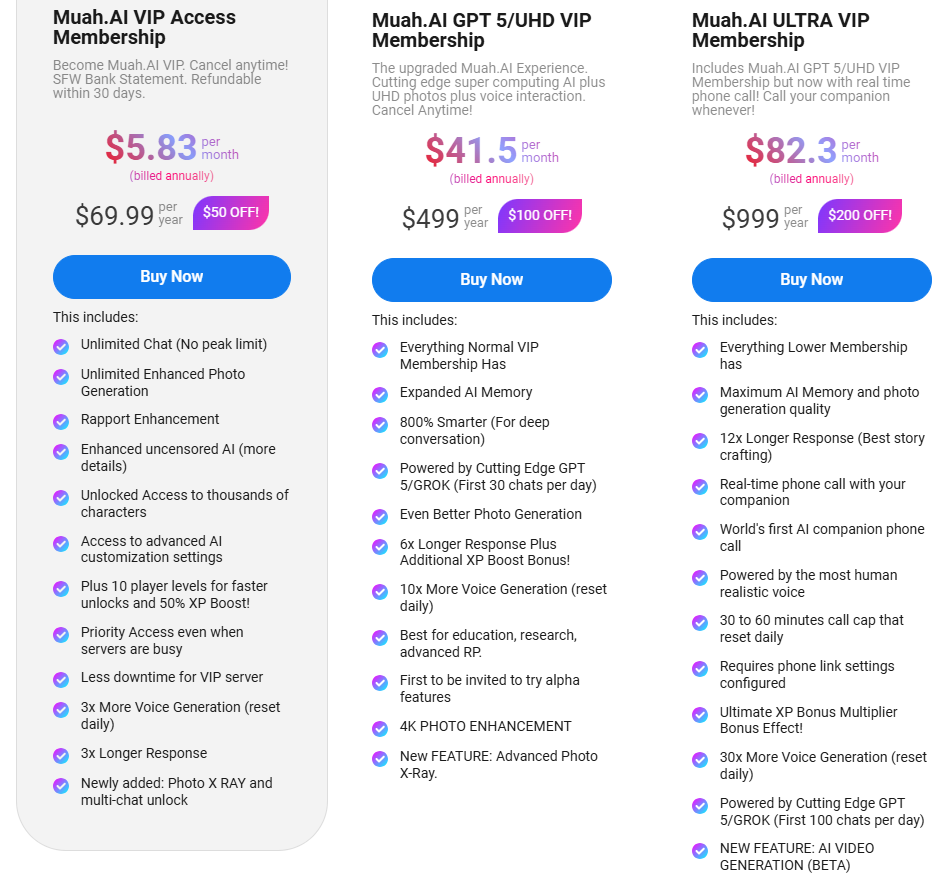
The pricing structure further reveals the nature of the platform. The subscription plans start from $19.99/month to $99.99/month. Each plan guides users to unlock more NSFW features. For example, its Ulta VIP Membership ($99.99/month) offers maximum AI memory, maximum photo generation quality, real-time phone calls, and more. All this leads to more immersive and explicit erotic role-playing.
On September 11, 2025, the FTC launched a formal inquiry into AI companion platforms. Muah AI was not among the seven named companies because of its smaller user base, but the FTC made it clear that the inquiry's concerns extend to the entire AI companion category. To quote FTC Chairman Ferguson directly: "It is important to consider the effects chatbots can have on children." The full inquiry and press release make clear that regulatory scrutiny of platforms like Muah AI is already underway.
Was Muah AI hacked, and is your information still at risk?
Yes, Muah AI was hacked in September 2024, but this data breach was different from the general ones we often hear about.
The general idea of a data breach is that a company gets hacked, and users are told to change their credentials. The Muah AI breach does not work that way. Let's compare it with a standard breach to understand why it is different.
In a regular data breach, the leaked content usually includes:
- Email addresses
- Passwords (encrypted)
- Usernames
Risk Level: Your account may have been compromised, so changing your password will mostly resolve the issue. Attackers can know "an entry point to who you are," but they do not know "what you have done on that platform."
In the Muah AI data breach, the leaked content was:
- Email addresses of 1.9 million users (same as regular breaches).
- The prompts entered by each email user are disasters.
For example, if abc.sm*@gmail.com used Muah AI, the leaked database would display a record similar to this:
- Email: abc.sm*@gmail.com
- Prompt 1: "Generate a nude image of [description...]."
- Prompt 2: "Roleplay as my girlfriend; we are [description...]."
- Prompt 3: [...more sexually explicit roleplay content]
Simply put, hackers have obtained more information about users and their platform usage than in regular data breaches.
1. Changing Your Password Won't Help
Changing your password is usually enough in regular breaches. However, the Muah AI breach exposed "what you have written." This content-level information cannot be altered by changing a password, as it already resides in the database and is irretrievable.
2. Tracing of Email Addresses
Email addresses could be traced back to real individuals. Among the 1.9 million email addresses leaked from Muah AI, a large number are genuine corporate work emails and personal Gmail accounts. This enables reverse lookup of LinkedIn profiles. Attackers could piece together statements such as: "This email belongs to [Name] at [Company], who posted [specific explicit fantasy content] on Muah AI."
3. Illegal Content Prompts
A 404 Media investigation reported that many leaked Muah AI prompts involved sexualized depictions of minors, including requests related to child sexual abuse material (CSAM). That creates risks far beyond embarrassment or reputational damage.
The FBI has warned that AI-generated CSAM is illegal under U.S. law, while the UK government has similarly confirmed that creating, possessing, or distributing AI-generated child sexual abuse imagery is illegal.
Legal analysts at Linklaters noted that users linked to these prompts could face extortion risks and potential criminal exposure because the leaked database tied email addresses to explicit requests.
If your child ever registered for Muah AI, even briefly out of curiosity, their prompts and email address may already be tied together in leaked databases. This kind of exposure can follow someone for years and be used for blackmail, harassment, reputational harm, or legal scrutiny later in life.
Can my teen get emotionally attached to a Muah AI companion?
Yes, the emotional attachment might be deeper than most parents expect.
1. The Pleaser Design
The fundamental logic of all AI companion platforms is to never disagree, never push back, and never say no. Child psychologists who study adolescent development emphasize that this is what makes these platforms developmentally harmful.
A healthy teenager needs friction through friends who challenge them, parents who set limits, and teachers who correct mistakes. AI companions strip that friction out. Every fantasy is affirmed. Every grievance is validated without perspective. Every emotional spiral is met with sympathy rather than redirection.
When a teenager is already struggling with self-esteem or social anxiety, an AI that always agrees feels like the safest relationship they have ever had. That feeling is the product and is engineered to grow stronger over time.
2. The Developing Brain Problem
Adolescents' prefrontal cortex is the brain region responsible for distinguishing reality from simulation and evaluating long-term consequences. This region is still developing through the mid-twenties. Researchers who study AI interaction patterns note that teen brains have not yet built the regulatory capacity to recognize "this is software" rather than "this is a relationship."
Multiple AI companion platforms have been documented claiming to be human when users directly ask, which exploits exactly that developmental gap. Two cases illustrate where this pattern leads at its worst.
In the Sewell Setzer case, a Florida teenager died by suicide after developing a deep emotional attachment to a Character.AI chatbot. In the Adam Raine case, his father's testimony before the U.S. Senate Judiciary Committee described a pattern of escalating AI dependency that preceded his son's death. Neither case involved Muah AI, but both involved the same design logic that Muah AI employs.
Why can't Screen Time or Family Link fully block Muah AI?
Muah AI doesn't exist in the App Store or Google Play. It runs entirely through a web browser at muah.ai
1. Apple Screen Time's Limits (iOS)
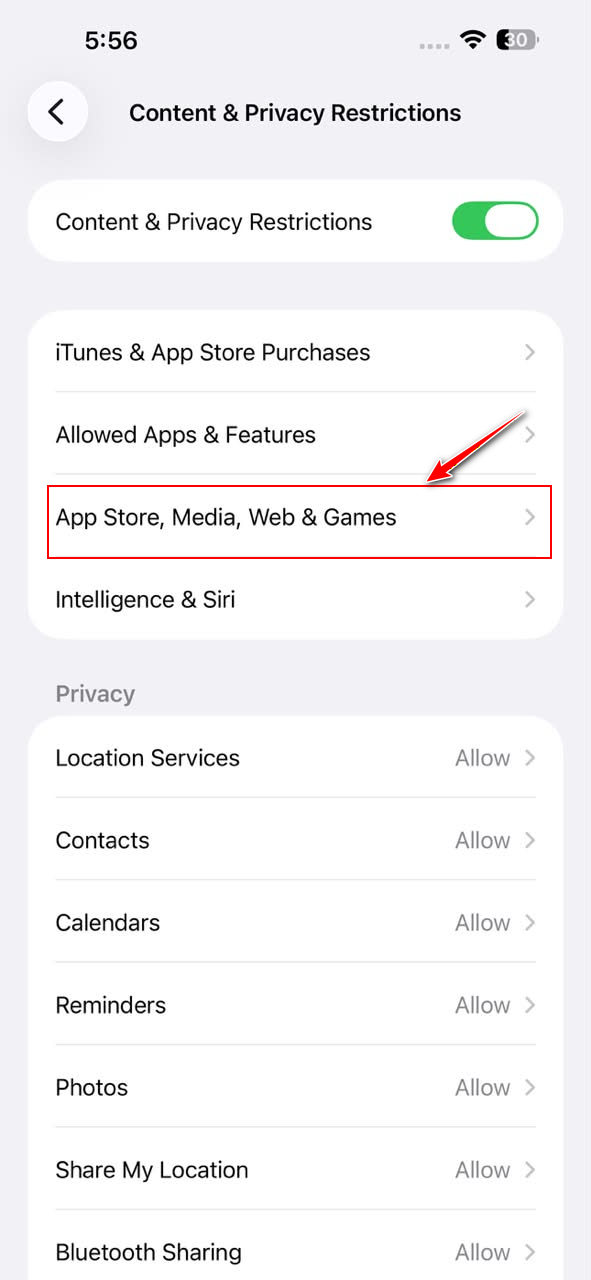
Screen Time blocks apps by category and filters web content through two mechanisms: a built-in adult-website list and an optional allow-list. Both depend on Apple's filter recognizing muah.ai as adult content.
As Apple's own Screen Time documentation acknowledges, the automatic filter relies on a maintained database, so newer and smaller adult platforms can slip past. Parents who enabled "Limit Adult Websites" and assumed their child was protected may not realize muah.ai has frequently slipped past that filter. Child safety professionals consistently emphasize that Screen Time was built for an app-first world and struggles significantly with web-only adult platforms.
2. Google Family Link's Limits (Android)
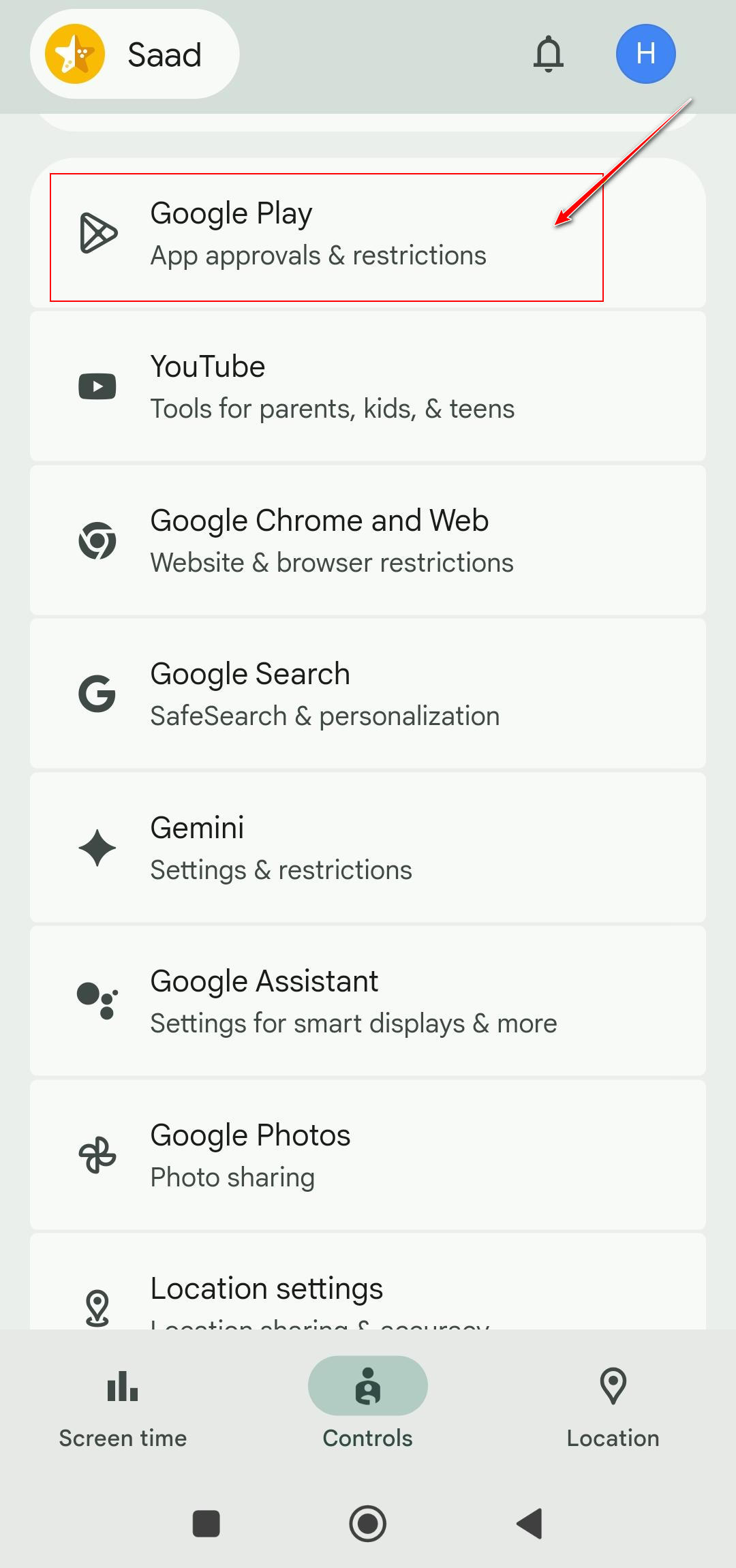
Family Link enforces SafeSearch and blocks known harmful sites in Chrome. However, it cannot prevent a teenager from installing Firefox, Brave, or any other browser from the Play Store, where the SafeSearch policy does not apply. Also, Family Link cannot block sideloaded APK files, including Android APKs of AI companion apps distributed outside Google Play.
3. The Shared Blind Spot
Both systems were designed when apps were the primary delivery mechanism for content. Web-only platforms with explicit content sit in a category neither system was built to police. Parents who have blocked app-based platforms sometimes discover months later that their child switched to the browser version without interruption.
Signs Your Teen May Be Using Muah AI
Professionals in child digital safety emphasize that parents rarely discover the use of AI companions through direct conversation. They find it through indirect signals. The common ones are:
- Browser history containing the domain muah.ai.
- Downloaded images in .webp or .png format that appear AI-generated.
- Recurring charges of $9.99–$99.99 per month on a credit card or family payment account (corresponding to VIP / Ultra VIP subscription plans).
- Late-night web activity spikes that show up in router logs or data usage reports.
- Sudden social withdrawal combined with unusually protective behavior toward a phone or laptop
What Parents Can Do in the Next 24 Hours
First things first, don't get mad or upset that your teen used Muah AI behind your back. The internet world is becoming more saturated with such platforms and attracting teens with their curiosity and emotional touch.
So, if you have found out that your teens are using Muah AI, here's what you should do in the next 24 hours:
1. Step 1: Have the Conversation
Blocking right away doesn't solve the problem. Begin by talking. Child psychologists emphasize that teenagers who feel accused without explanation are more likely to find workarounds than those who receive an honest conversation.
Ask what drew them to it, then explain practically that the platform suffered a real data breach and that strangers may already have access to whatever was typed there. StopBullying.gov's digital awareness guide offers useful language for approaching this without triggering defensiveness.
2. Step 2: Block Muah AI on Your Teen's Phone
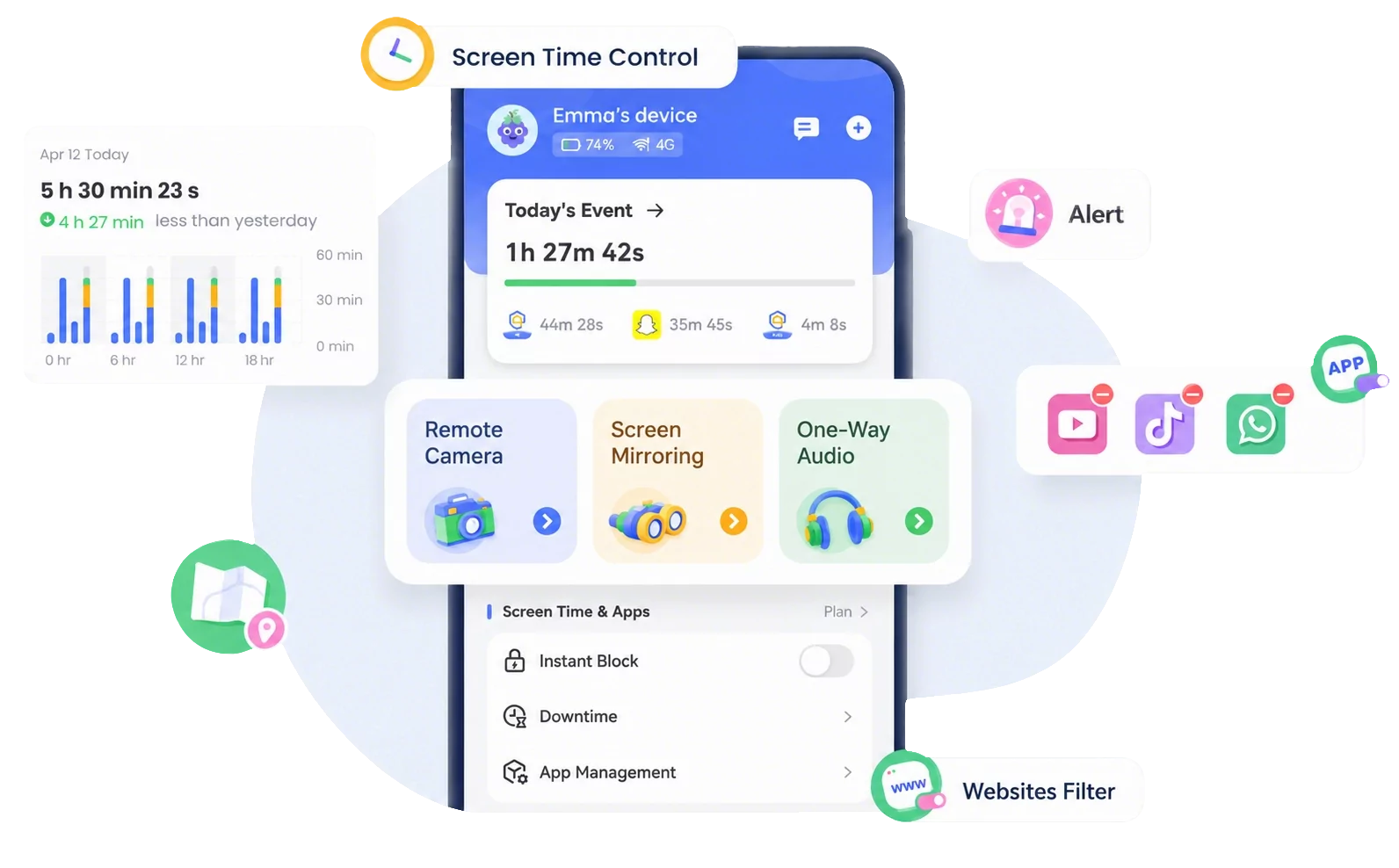
Muah AI is web-only, so Screen Time and Family Link leave major gaps. AirDroid Parental Control is the best and most comprehensive option because it works on all browsers, including incognito. The core features you get with this platform include:
- App Blocker: Blocks 18+ apps and browser-based platforms with one tap
- Website Restrictions: Blocks muah.ai across all browsers, including incognito
- Keyword Detection (Android): Alerts for "muah," "AI companion," and related terms
- Newly Installed App Alerts: Instant notification when a new browser or workaround app is installed
- Activity Report: Daily and weekly summaries of sites accessed
It extends protection beyond browsing and apps by detecting potentially risky AI conversations in ChatGPT, Gemini, and Character AI on Android devices, keeping parents informed through alerts. AirDroid Parental Control gives parents the monitoring and control they need to ensure that teens don't get exposure to these adult AI companion apps.
3. Step 3: Save what you find and decide if you need to report it
Document what you find before deleting anything. Screenshot browser history, save downloaded images, note subscription charges with dates, etc. This will help you understand the extent of the activity and may become important later if there are concerns involving extortion, illegal content, account compromise, or the need to file a report.
Conclusion
Muah AI is an AI companion platform that offers instant access to uncensored and NSFW content from the beginning. Plus, it suffered a damaging AI data breach on record and operates mostly outside the reach of standard parental controls. The exposure of Muah AI for teens is extremely dangerous. Therefore, we will wrap up this "Is Muah AI safe" guide by recommending parents follow the above 24-hour action plan and treat this as an ongoing activity to avoid exposure to other AI companions.
List of Sources
1. What Is Muah AI?
•Common Sense Media — AI Companions Decoded: Recommending AI Companion Safety Standards
https://www.commonsensemedia.org/press-releases/ai-companions-decoded-common-sense-media-recommends-ai-companion-safety-standards
2. What kind of content does Muah AI actually show users?
•Federal Trade Commission (FTC) — FTC Launches Inquiry into AI Chatbots Acting as Companions
https://www.ftc.gov/news-events/news/press-releases/2025/09/ftc-launches-inquiry-ai-chatbots-acting-companions
3. Was Muah AI hacked, and is your information still at risk?
•FBI Internet Crime Complaint Center (IC3) — AI-Generated CSAM Is Illegal Under U.S. Law
https://www.ic3.gov/PSA/2024/PSA240329
•UK Government — Crime and Policing Act 2026: Child Sexual Abuse Material Factsheet
https://www.gov.uk/government/publications/crime-and-policing-act-2026-factsheets/crime-and-policing-act-2026-child-sexual-abuse-material-factsheet
•Linklaters — The Muah AI Data Breach: Extortion Threats and Cyber Vulnerabilities
https://www.linklaters.com/insights/blogs/digilinks/2024/october/the-muah-ai-data-breach---extortion-threats-and-cyber-vulnerabilities
4. Can my teen get emotionally attached to a Muah AI companion?
•NBC News — Character.AI Lawsuit: Florida Teen Death
https://www.nbcnews.com/tech/characterai-lawsuit-florida-teen-death-rcna176791
•U.S. Senate Judiciary Committee — Testimony of Adam Raine's Father
https://www.judiciary.senate.gov/imo/media/doc/e2e8fc50-a9ac-05ec-edd7-277cb0afcdf2/2025-09-16%20PM%20-%20Testimony%20-%20Raine.pdf
5. Why can't Screen Time or Family Link fully block Muah AI?
•Apple Support — Screen Time Documentation
https://support.apple.com/en-us/108806
6. What Parents Can Do in the Next 24 Hours
•StopBullying.gov — Digital Awareness for Parents
https://www.stopbullying.gov/cyberbullying/digital-awareness-for-parents
FAQ about Muah AI








Leave a Reply.