AirDroid Content Detector
Set up keywords to detect harmful content on YouTube and receive instant alerts when your kids are potentially facing dangers and cyberbullying.
How to Block Inappropriate Content on YouTube? [2026]
The most effective way to block inappropriate YouTube content for a young child is YouTube Kids in Approved content only mode. This works like a whitelist: the child can watch only the videos, channels, and collections a parent selects.
For older children, use a supervised YouTube account with an appropriate content setting. Add device-level controls when you also need to limit or block the YouTube app and website.
Restricted Mode, Don't recommend channel, Autoplay controls, and reporting can still help, but they are supporting measures rather than dependable standalone blocks. No single filter guarantees that every unsuitable video will be removed.
- Quick Verdict: Which YouTube Safety Method Works Best?
- Best for Young Children: Use YouTube Kids Whitelist Mode
- Best for Older Children: Use a Supervised YouTube Account
- Block YouTube at the Device Level
- Add Family Safety Support with AirDroid Parental Control
- Other YouTube Safety Settings: What They Actually Do
Quick Verdict: Which YouTube Safety Method Works Best?
Instead of turning on every available setting, start with the strongest method that matches the child's age and the family's goal.
| Priority method | Best for | Protection provided | Main limitation |
|---|---|---|---|
| YouTube Kids Approved content only | Younger children | Only parent-approved videos, channels, and collections are available | Limited to the YouTube Kids catalog, with no child search in this mode |
| Supervised YouTube account | Children ready for the main YouTube experience | Applies an age-appropriate content setting and supported family controls | It filters content rather than allowing only individually approved videos |
| Device-level parental controls | Families needing app, website, or time restrictions | Can block or limit access to the YouTube app and website | Does not judge whether each individual video is suitable |
| AirDroid Parental Control | Families wanting YouTube limits plus supported safety signals | Combines app limits, Downtime, website rules, and platform-specific YouTube activity or keyword alerts | Does not filter every video, and available features differ between Android and iPhone or iPad |
Best starting point: Use Approved content only for a younger child. For an older child, combine a supervised account with device-level limits; AirDroid can add flexible YouTube rules and supported safety signals when the family needs broader support.
These methods solve different problems. YouTube's account settings influence what content is available inside the service, while Android, iPhone, and third-party controls manage whether and when the child can access the app or website.
Best for Young Children: Use YouTube Kids Whitelist Mode
YouTube calls its native whitelist option Approved content only. Instead of trying to identify and block every unwanted channel after it appears, parents choose the videos, channels, or collections that the child is allowed to watch. Everything else remains unavailable inside that YouTube Kids profile.
This is the strongest native YouTube option for parents who prefer an allowlist rather than an endless blacklist. The child also cannot search in Approved content only mode, which reduces the chance of reaching unreviewed content through a new query.
- Step 1.Open the YouTube Kids app on your child's device and tap Settings in the bottom-right corner.
- Step 2.Complete the multiplication problem or enter the custom parent passcode.
- Step 3.Under "My Kids", Select the "child's profile", enter the parent account password, and choose "Edit Settings".
- Step 4.Select "Approve content yourself", review the explanation, and tap Select.
- Step 5.Approve the collections, channels, and individual videos the child can watch, then select "Done".
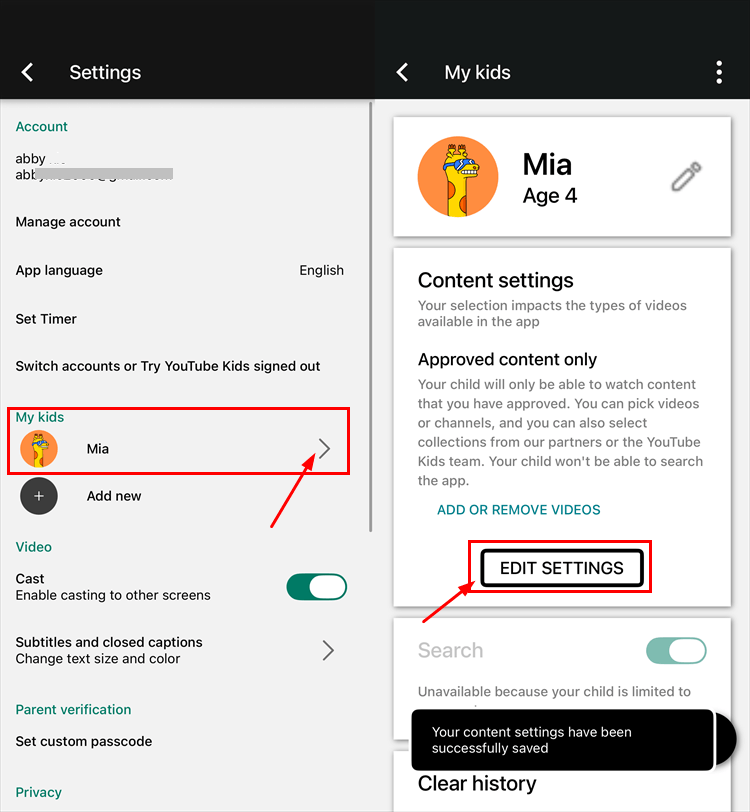
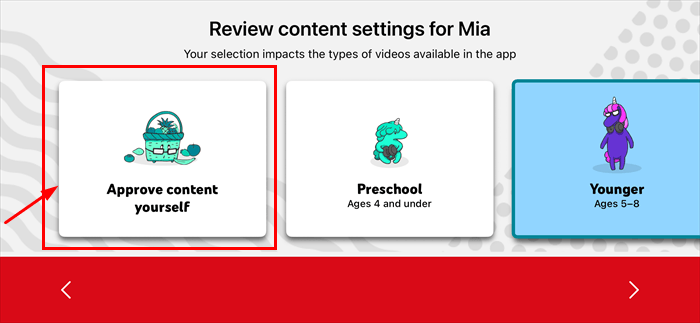
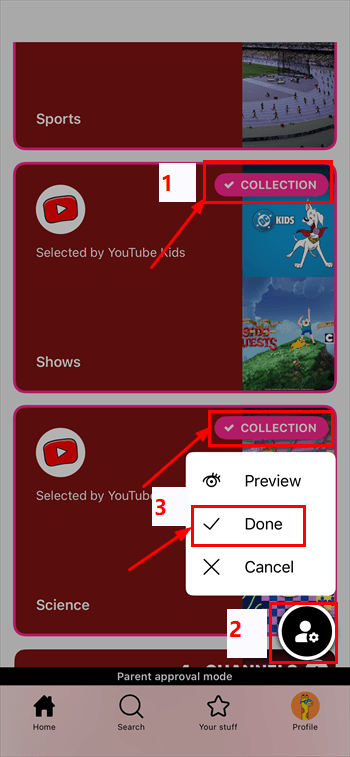
Google's current YouTube Kids parental-control instructions state that parents must use the YouTube Kids app to switch to Approve content yourself. The approved list can later be edited under Manage.
In a Reddit parenting discussion about curating YouTube, the parent reported finding the option after creating a YouTube Kids profile and selecting Approved content only in the mobile app. Other parents in the discussion preferred this approach because it showed only content they had handpicked.
The discussion also illustrates an important setup issue: several parents could not find the option on the web or under a different profile configuration. Treat the Reddit thread as a real family experience, not product documentation; follow Google's current instructions for the definitive setup path.
- Key advantage. The parent chooses what is allowed before the child encounters it, rather than reacting to unwanted recommendations afterward.
- Catalog limit. Parents can approve only content available within YouTube Kids; not every channel from the main YouTube service will appear.
- Maintenance required. The list may need occasional updates as the child's interests and maturity change.
Best for Older Children: Use a Supervised YouTube Account
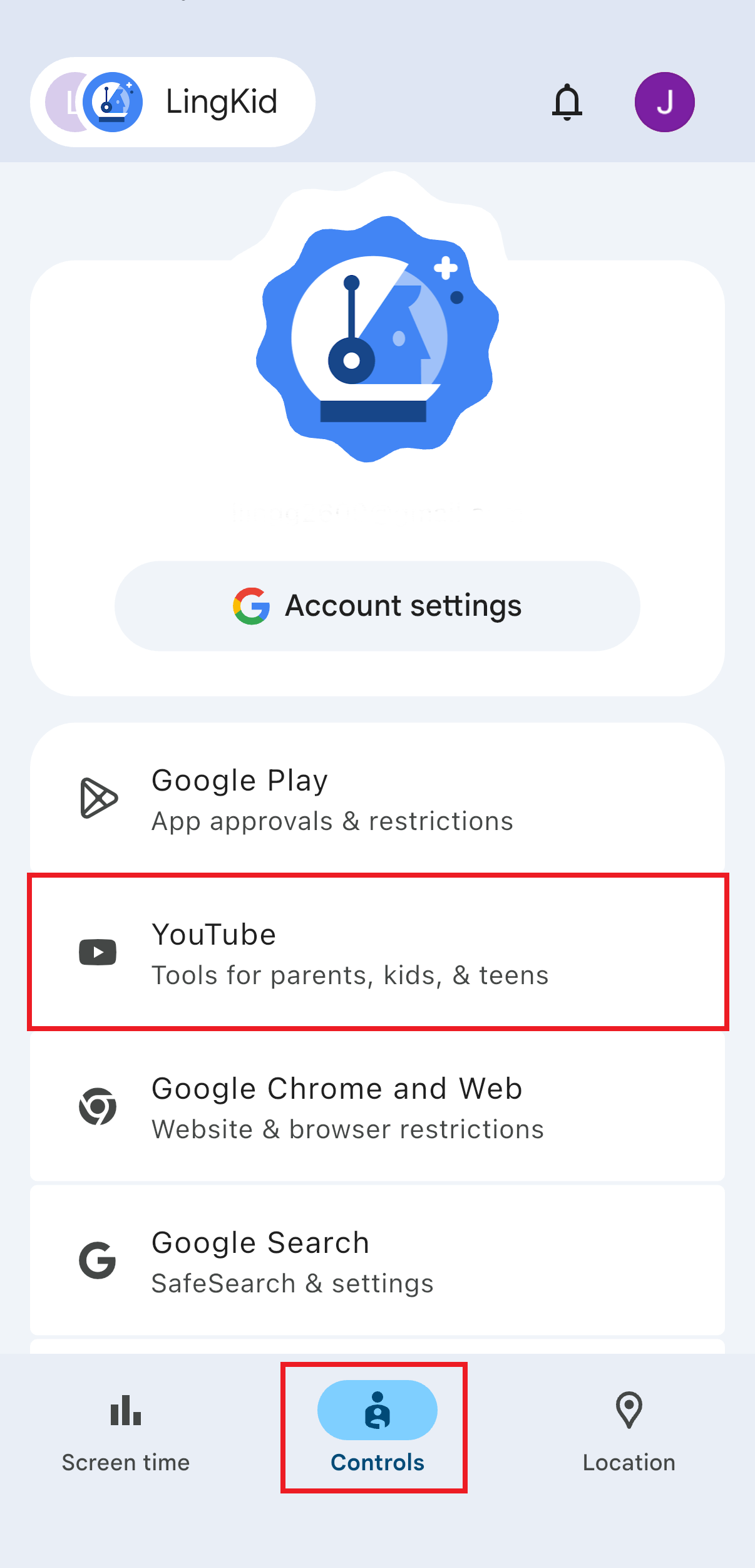
A supervised YouTube account is a more practical option when a child is ready to move beyond the smaller YouTube Kids catalog. Parents can select the available content setting and manage supported controls through Family Center or Google Family Link.
Unlike Approved content only, a supervised account does not provide a strict whitelist of individually approved videos. It gives the child access to a broader, filtered version of YouTube, so unsuitable videos may still appear.
1Set Up the Supervised Account
- Step 1.Create or use the child's own Google Account and add supervision through Google Family Link.
- Step 2.Sign in to YouTube with the linked parent account, open Settings, select Family Center, and choose the child.
- Step 3.Choose the content setting appropriate to the child's age and review the available Autoplay, history, channel, and time-management controls.
2Use Restricted Mode as an Extra Filter
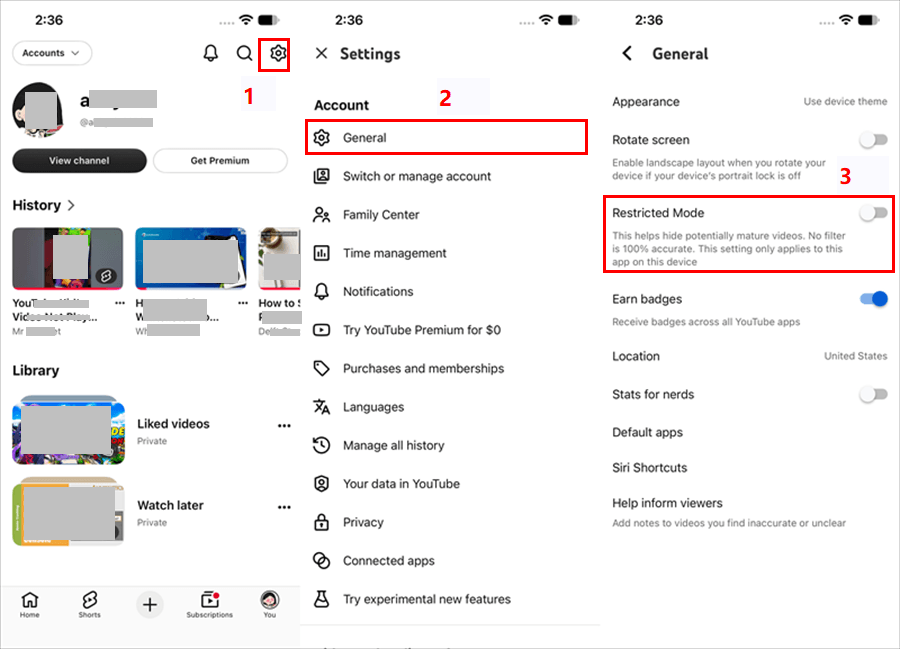
Restricted Mode can help screen out videos YouTube identifies as potentially mature. It is useful as an additional layer for the main YouTube experience, but it is not a replacement for supervision or an age-appropriate account.
- Step 1.Open the YouTube app, sign in, and tap the profile picture.
- Step 2.Open Settings, select General, and turn on Restricted Mode.
- Step 3.Check every browser, profile, and device the child uses because Restricted Mode can apply separately.
Important limit: Restricted Mode relies on platform signals and may miss content a particular family considers inappropriate. It can also filter some educational or contextual content that is not harmful.
Block YouTube at the Device Level
Use device-level parental controls when the goal is to block YouTube completely, create a daily limit, or prevent access during homework or bedtime. App restrictions and content filtering are not the same: a device rule controls access to YouTube, while a YouTube account setting controls the experience inside it.
1On Android Phones and Tablets
- Step 1.Open Google Family Link and select the child.
- Step 2.Open Screen time, select Time limits, choose App limits, and select YouTube.
- Step 3.Block the app or set a daily limit, then review Chrome website controls separately.
Test youtube.com, m.youtube.com, and YouTube links opened from other apps. Blocking the Android app does not necessarily remove every browser route.
2On iPhone and iPad
- Step 1.Open Settings, tap Family, select the child's name, and open Apps & Websites.
- Step 2.Select YouTube and tap Block App, or create an appropriate time allowance.
- Step 3.Select youtube.com and tap Block Website, then test Safari and other supported browsers.
Apple's current Screen Time instructions separate app and website management. On older iOS or iPadOS versions, similar options may appear under Screen Time, App Limits, or Content & Privacy Restrictions.
Use AirDroid for YouTube Limits and Safety Support
AirDroid Parental Control adds app, website, and time controls around YouTube while providing supported safety signals that can help families respond to potential concerns.
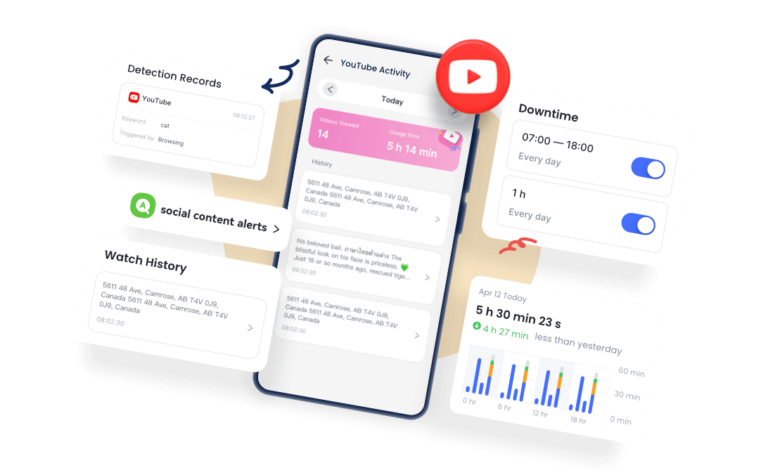
- Set clear YouTube boundaries. Apply an individual app limit, schedule Downtime, or restrict YouTube when it should not be used.
- Cover the app and website. Manage the YouTube app and supported web access separately so a browser does not become an easy alternative.
- Receive relevant YouTube safety signals. On supported Android child devices, parents can review up to 30 days of YouTube activity and receive configured keyword alerts. On iPhone and iPad, account linking enables selected activity and alerts for monitored keywords in supported video titles or descriptions.


AirDroid does not filter every YouTube video or provide the same visibility on every platform. Full iPhone or iPad device management requires Supervision Mode, and iOS YouTube Detection is not a complete watch history, notification sync, or live screen mirroring. Treat alerts as prompts for a calm conversation, not proof of wrongdoing.
Other YouTube Safety Settings: What They Actually Do
The following tools can improve the experience, but they should not be presented as equal to whitelist mode, supervised-account filtering, or device-level blocking.
- Don't recommend channel. This tells YouTube to reduce recommendations from a channel. The child may still find the channel through search, a direct link, or another account, so it is not an effective channel block.
- Block channel for kids. A linked parent can block a specific channel for a supervised child account. This blocks that channel's uploads, but not reuploads or similar channels.
- Turn off Autoplay on YouTube. This stops the next suggested video from starting automatically. It does not prevent searches or opening another video.
- Clear or pause history. Removing watch and search signals can reset unwanted recommendations, but it does not create a content whitelist.
- Report harmful content. Reporting asks YouTube to review a possible policy violation. It does not immediately hide the video from every child device.
- Set a Shorts feed limit. A limit, including zero where supported, controls Shorts feed scrolling. Individual Shorts may still be reachable through search, channels, or shared links.

Practical priority: Do not spend most of your time repeatedly selecting Don't recommend channel. If strict content selection matters, use Approved content only. If access itself is the problem, use an app and website block.
FAQs About Blocking Inappropriate YouTube Content
For younger children, begin with Approved content only instead of trying to repair recommendations one channel at a time. For older children, use a supervised account and proportionate device rules, then keep the setup transparent and open to adjustment.







Leave a Reply.