AirDroid Parental Control
AI-powered content monitor and alerts
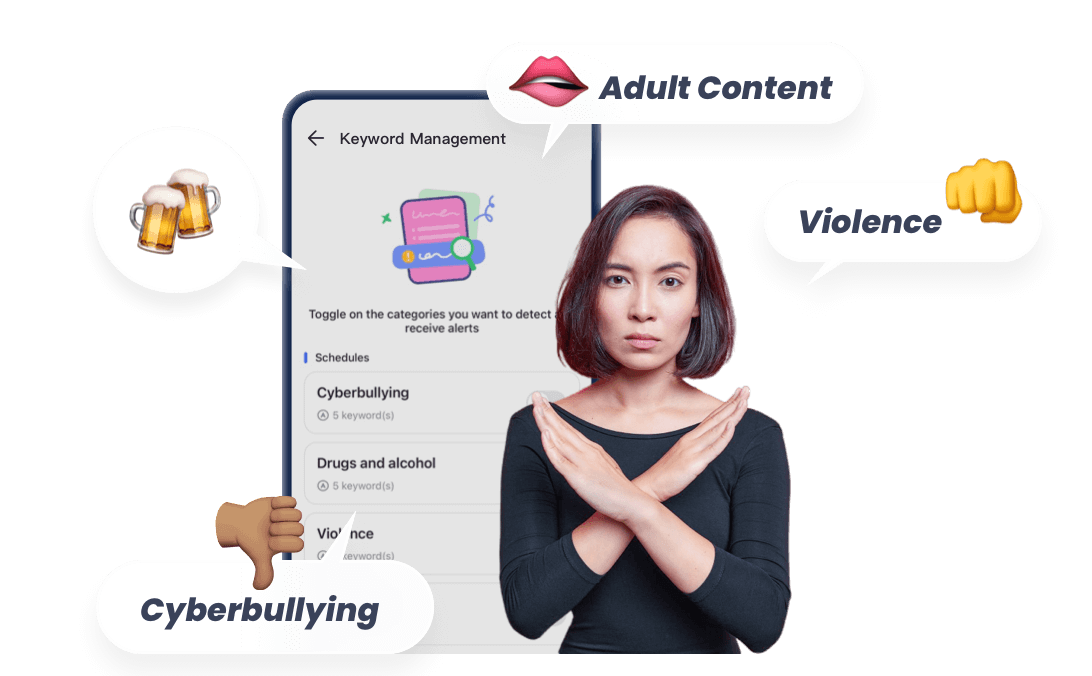
- 👀Social Apps & Messages content monitor
- ⚠ Instant Alerts for potential online risks
- 🔞Inappropriate apps and websites blocking
Sneaky Link Meaning: Examples & What Parents Should Know
A sneaky link is slang for a secret romantic or sexual partner you keep hidden from others. Once a niche TikTok phrase, it's now mainstream—even lending its name to the 2025 Netflix reality show Sneaky Links: Dating After Dark. Below, we break down what it means, where it came from, and how people actually use it.
Part 1: What Does Sneaky Link Mean?
A sneaky link is a secret romantic or sexual partner—someone you meet up with privately while deliberately keeping the relationship hidden from friends, family, or a main partner. The phrase works two ways: it can name the person ("he's my sneaky link") or describe the act of meeting up in secret ("we sneaky linked last night").
Sneaky link is a slang term used to describe a person that someone is secretly hooking up with, and it is commonly used in the context of romantic or sexual relationships.
The term blends two pieces of slang: link, meaning to meet up or hang out, and sneaky, meaning done quietly or on the down-low. Put together, a sneaky link is a connection that's intentionally kept off the radar.
What counts as a sneaky link sits on a spectrum. At the milder end it can be discreet flirting or an occasional meetup; more often it implies a casual, physical, no-strings hookup. The one constant is secrecy—by definition, a sneaky link is something other people aren't supposed to know about.
Reference sites like Urban Dictionary and Wiktionary land on the same core idea: a hookup or secret partner kept hidden from everyone else.
Part 2: Where Did Sneaky Link Come From?
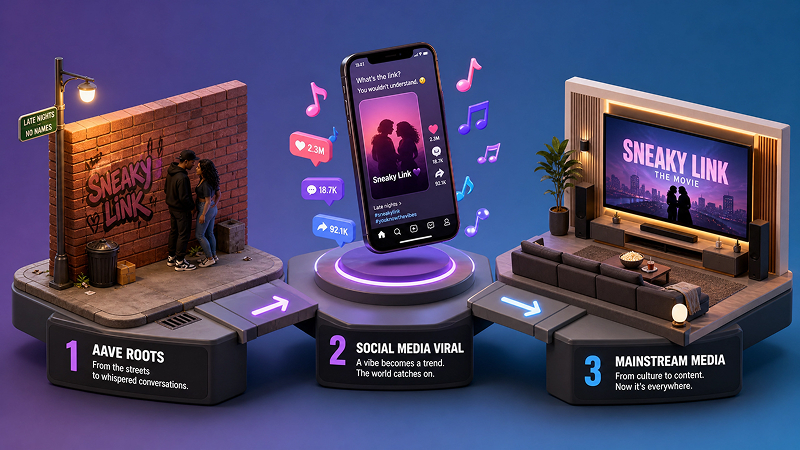
The phrase grew out of African American Vernacular English (AAVE), where link was already established slang for meeting up. "Sneaky link" took that and layered on the secrecy that defines it today.
It broke into mainstream slang through Gen Z on TikTok in the early 2020s, helped along by HXLLYWOOD's 2021 song "Sneaky Link," which became a viral sound and turned the phrase into an everyday term.
By 2025, it had fully crossed into pop culture: Netflix launched a reality dating series, Sneaky Links: Dating After Dark, which premiered on May 21, 2025, and built its entire premise around contestants confronting their real-life sneaky links. When a slang term gets its own Netflix show, it's no longer niche internet talk.
Who uses it? Mostly teens, Gen Z, and young adults—the crowd most active on TikTok, Snapchat, and X (formerly Twitter), where casual, app-driven dating is the norm. That said, the term is now widely recognized well beyond that age group.
Part 3: Sneaky Link vs FWB vs Situationship: What's the Difference?
These three terms get mixed up constantly, but each describes a different kind of casual relationship. Here's how they compare:
| Sneaky link | FWB (friends with benefits) | Situationship | |
|---|---|---|---|
| Kept secret? | Yes—secrecy is the whole point | No—friends usually know | Not really; it's just undefined |
| Emotional connection? | Usually none | Friendship, but no romance | Ambiguous; often one person wants more |
| Physical/sexual? | Usually yes | Yes | Sometimes, not always |
| In one phrase | A secret hookup | Casual sex between friends | "More than friends, not quite dating" |
The clearest way to tell them apart is by their defining trait. The difference between a sneaky link and FWB comes down to secrecy: friends with benefits can go public, while a sneaky link is hidden by definition. A situationship is different again—it's defined by ambiguity, where the status and feelings are unclear and often unequal, rather than by being kept secret.
Part 4: How to Use Sneaky Link in Conversation?
"Sneaky link" works two ways: as a noun for the person, or as a verb for the act of meeting up. It's casual slang, so you'll mostly see it in texts, DMs, and on social media rather than in formal conversation. Here's how it shows up:
As a noun (the person)
- He's just my sneaky link—nothing serious.
As a verb (the act):
- We sneaky linked last night, but no one knows.
Here the same word describes the act of meeting up in secret, not the person.
In conversation:
- Friend: Wait — who'd you leave with last night?
- You: Don't even 😅 that's my sneaky link.
Talking about someone else:
- Apparently those two have been sneaky linking for months.
As a social-media caption:
- POV: your sneaky link texts you at 2 a.m.
POV — a popular TikTok caption format (POV = "point of view") that frames a scene as if it's happening to you.
Part 5: What Should You Do If Your Teen Uses the Term Sneaky Link?
If you've come across "sneaky link" in your teen's messages or heard them say it, it's natural to wonder what it means for them. The most important thing to know first: using the word doesn't automatically mean they have one. Teens pick up slang from TikTok, joke around with friends, or reference things like the Netflix show Sneaky Links: Dating After Dark—often without any of it applying to them. Seeing the term is a cue to pay calm attention, not to panic.
If the word shows up alongside other changes, though, it can be worth a closer look.
Signs worth noticing:
- Sudden secrecy around their phone—hiding the screen, taking texts in another room, or changing passwords.
- Vague plans or a "friend" they won't name—evasive about where they're going or who they're meeting.
- Late-night texting or unexplained outings—messages at odd hours, or trips they'd rather not explain.
- A second, hidden account (a "finsta") or apps with disappearing messages.
- Getting dressed up for a casual "hangout," or noticeable mood shifts.
⭐ Again, none of these is proof on its own—they can have plenty of innocent explanations. They're a reason to talk, not to accuse.
What to do:
The most effective first step is a calm, judgment-free conversation. Ask open questions, listen more than you lecture, and make it clear they can always come to you. Treat it as a chance to talk about safety, consent, and healthy relationships—not an interrogation.
If you'd like added peace of mind, a parental-control app like AirDroid Parental Control can flag specific words—you can add terms like "sneaky link" to a keyword alert and get notified if they come up in your child's messages or social apps. It works best alongside open conversation—as a safety net, not a replacement for trust.
Final Thoughts
A sneaky link is, at its core, a secret hookup or partner—casual, usually physical, and deliberately kept private. The term grew out of AAVE, spread through TikTok, and has since gone mainstream. It overlaps with words like FWB and situationship, but stands apart for one reason: secrecy is the whole point.
Whether it counts as cheating depends entirely on the situation—it isn't inherently dishonest between two single people, but it often is when someone is already in a committed relationship.
For parents, the takeaway is simple: hearing the word isn't a reason to panic, but it can be a good opening for an honest conversation about relationships and boundaries.
Sneaky Link FAQs









Leave a Reply.