AirDroid Parental Control
AI-powered content monitor and alerts
- 👀Social Apps & Messages content monitor
- ⚠ Instant Alerts for potential online risks
- 🔞Inappropriate apps and websites blocking
Simp Meaning: What Does Simp Mean
Simp is slang for someone who gives excessive attention or effort to a person they like, often without receiving the same interest in return. Teens may use it as an insult, a joke, or a playful way to describe being a big fan. This guide explains what simp means in texts and social media, whether it is offensive, and what parents should know.
What Does Simp Mean in Text and on Social Media?
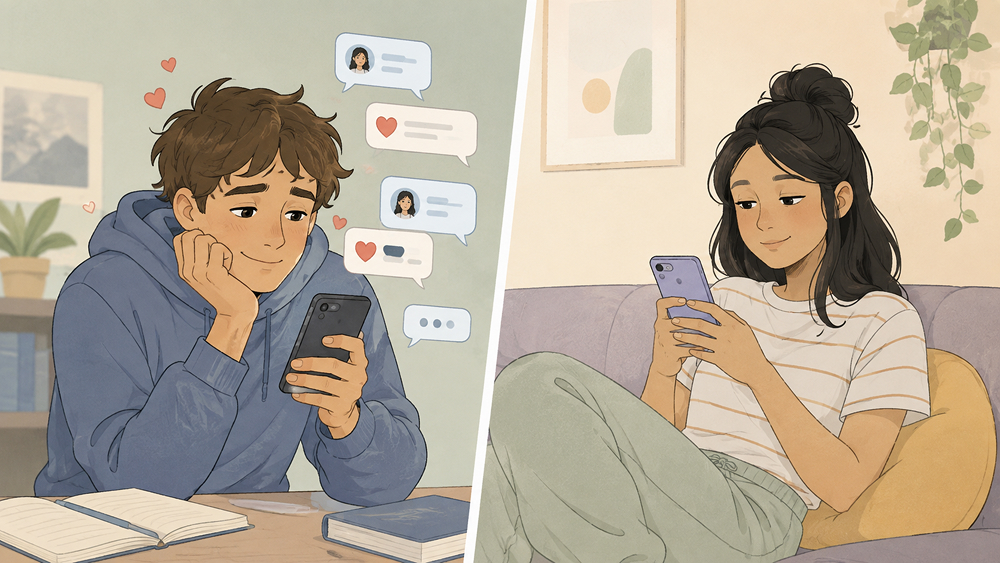
In everyday online conversations, a simp is someone seen as trying unusually hard to impress or please a person they like. That might include replying to every post, constantly giving compliments, buying gifts, or always taking the person's side—even when the attention does not seem mutual.
However, teens often use the word much more loosely. It may be a harsh label, friendly teasing, or a playful way to admit that someone has a crush or is a devoted fan.
How Teens Use Simp Online
- Texts and group chats — often used to tease a friend about a crush:
- "You replied to her story in five seconds. You're such a simp."
- TikTok and Instagram — commonly used in captions, comments, and fan posts:
- "This edit has me simping again 😭"

- Discord — may describe someone giving another user excessive attention:
- "He changed his pfp just because she asked. Simp behavior."
- Gaming chats — sometimes used jokingly when someone buys gifts or repeatedly helps another player:
- "You bought her the new skin? Bro is simping hard."
Simp can be used as a noun or a verb. Simping is simply its -ing form, while simp for identifies the person, celebrity, or fictional character someone strongly admires. For example: He's a simp, He's simping again, and I simp for this character.
Is Simp an Insult, a Bad Word or Just a Joke?
Simp is not a swear word. Depending on the tone and context, it can be a playful joke, a self-description, or an insult. Saying I'm such a simp for this character is usually lighthearted, while calling someone a simp to shame them for caring about another person carries a more negative meaning.
Teasing between friends may be harmless when everyone is comfortable, the joke is mutual, and it stops easily. It becomes more concerning when simp is used to shame someone for showing affection, supporting a partner, or being emotionally open.
The use of the term may cross into bullying when:
- The same person is repeatedly singled out in group chats or comments.
- Private messages or screenshots are shared to embarrass them.
- The teasing continues after they show discomfort or ask others to stop.
- They feel pressured to act colder or less caring to avoid being mocked.
One casual comment does not automatically amount to bullying. The clearer warning signs are repeated targeting, public humiliation, and pressure to change healthy behavior just to fit in.
When Does Simping Become a Problem?
Having a crush is not the problem. Neither is supporting a partner or obsessing over a celebrity edit for a few days. The concern starts when the effort costs a teen more than they can comfortably give—and they keep going because they hope it will earn attention, affection, or approval.
📌 Watch for patterns such as:
Spending too much on gifts, subscriptions, donations, or in-game items;
Repeatedly messaging someone who has shown little interest or asked for space;
Dropping friends, plans, schoolwork, or other responsibilities to stay available;
Agreeing with or defending everything the person does to avoid losing their approval;
Becoming anxious, angry, or deeply upset when messages go unanswered;
Being guilted into "proving" their loyalty with money, photos, favors, or constant attention.
Uneven crushes are normal, especially during the teen years. The real issue is whether a teen can respect a no, maintain their own boundaries, and step back without feeling that their worth depends on another person's response.
What Should Parents Do If Their Teen Uses Simp?
Do not start with, Are you a simp? That is likely to sound accusing—and may shut the conversation down before it starts.
Instead, ask what the word means in their friend group and what was happening when it came up:
- Were you all joking, or was someone being picked on?
- Is this about a real person, a creator, or a fictional character?
- Has anyone been pressuring you to spend money or prove that you care?
Their answers will tell you what needs attention. If it is peer teasing, focus on how your teen is being treated. If it involves overspending or nonstop messaging, agree on a clear boundary first. A parental control tool can then help you put that boundary into practice without blocking every app at once.
With AirDroid Parental Control, parents can manage app use and screen time based on the specific issue they have noticed, rather than reacting to the word “simp” itself.
Conclusion
Overall, it is safe to say the term simp has taken on several meanings in today's internet-driven culture. Originally derived from "simpleton" to describe a foolish person, simp meaning has evolved over the decades to encompass individuals who display excessive affection, admiration, or devotion towards someone they are romantically interested in.
While the term can be used playfully among friends, it has also acquired a negative connotation, often used to shame or mock those perceived to be overly devoted in relationships.
Common Questions About Simp Slang









Leave a Reply.