How to Track Your Child’s Calls and Messages from Another Phone Safely
Parents may want to monitor a child’s calls and texts when they notice warning signs such as cyberbullying, suspicious contacts, spam messages, or risky conversations. However, call and text monitoring should only be used on a child’s device you manage, your own device, or a device where you have clear permission.
The goal is not secret surveillance. It is to create a safer digital environment through transparent rules, age-appropriate boundaries, and open family conversations. The American Academy of Pediatrics recommends building a family media plan, talking regularly with children about their online activities, and checking privacy or parental control settings when they start using new apps or games.
Option 1: Use Official Built-in Services
Official Cross-Device Sync
Some official tools allow you to view messages, calls, or phone notifications across your own devices. For example, Google Messages for web lets Android users check messages on a computer or Android tablet after pairing the device. Apple users may also receive iMessages or forwarded SMS messages on other Apple devices when the same Apple Account and the required message settings are enabled.
This method is best for your own devices, shared family devices, or a child’s device that you manage openly. It is not a way to secretly access another person’s private calls or texts. Setup steps and available data vary by device, account settings, operating system, and whether the phone remains connected.
- Step 1.Choose the official syncing option that matches the device, such as Google Messages for web, Apple Messages, or another built-in cross-device feature.
- Step 2.Make sure the phone and the second device are using the required account, pairing, or message forwarding settings.
- Step 3.Complete the setup on the phone itself, such as scanning a QR code, approving a device, or enabling message forwarding.
- Step 4.After setup, check whether messages, calls, or notifications appear on the connected device. Remember that not every service shows call logs, SMS content, or older message history.
Pros
- Free and official
- Works well for your own devices or shared family devices
- Does not require unknown third-party tracker apps
Cons
- Requires account access, device pairing, or setup approval
- Not designed for secret monitoring
- Available message and call data vary by platform and device settings
Editor's Experience: Official syncing is usually the safest option when you are managing your own phone, a shared family device, or a child’s device with clear permission. In my test, it worked best for checking messages across devices I had already set up and approved, but it was not a complete call-and-text tracking solution.
Phone Link
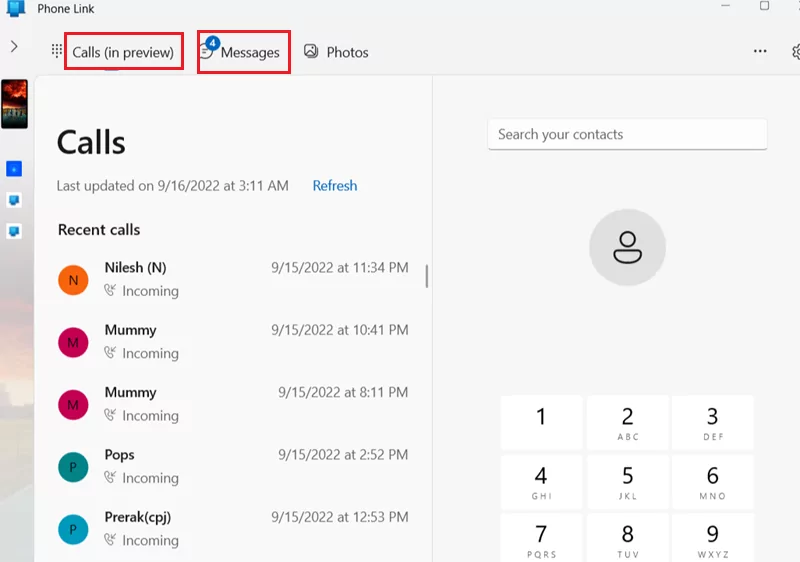
Phone Link is Microsoft’s official Windows app for connecting a phone to a PC. After setup, you may be able to view phone notifications, send or receive texts, and make or receive calls from your computer, depending on the phone model, system version, permissions, and connection status.
This method is useful when you want to manage your own phone from a Windows computer, or when a parent is helping manage a child’s phone with clear permission. It should not be treated as a hidden tracking tool because the phone must be paired and connected during setup.
- Step 1.Open the Phone Link app on your Windows PC.
- Step 2.Install or open the Link to Windows app on the phone you want to connect.
- Step 3.Follow the pairing instructions, such as scanning the QR code shown on the PC and approving permissions on the phone.
- Step 4.Once connected, check the Phone Link dashboard on your PC to see available calls, messages, and notifications.

Pros
- Official Microsoft tool
- Useful for managing a connected phone from a Windows PC
- May support calls, texts, and notifications depending on setup
Cons
- Requires setup and permission approval on both devices
- Some features are limited on iPhone or by Android system settings
- Messages and notifications may not appear if the phone is disconnected or permissions change
Editor's Experience: Phone Link is helpful when I want to check my own phone notifications, calls, and SMS from a Windows computer. However, it depends on a stable connection and approved permissions, so it is better for daily convenience than for long-term child safety monitoring.
Cellular Carrier Logs
Some cellular carriers allow the account owner to view basic call and text records for lines under the same family plan. These records may include phone numbers, timestamps, call duration, or message counts, depending on the carrier and plan.
Carrier logs are useful when parents need a basic overview of communication activity on a line they manage. However, they usually do not show the actual content of SMS, MMS, iMessages, WhatsApp messages, or other private app conversations.
Pros
- Official account-level records
- Useful for checking numbers, timestamps, and basic activity
- Data cannot usually be deleted from the phone by the child
Cons
- Usually does not show the content of text messages
- Does not cover messages inside apps like WhatsApp, Snapchat, Instagram, or Discord
- Availability depends on the carrier, plan, and account permissions
Editor's Experience: Carrier logs are useful for checking who a line contacted and when, but they are not a complete monitoring solution. If parents need to understand the content or context of a risky conversation, they usually need a child-safety tool and an open conversation with the child.
Option 2: Use Parental Control or Monitoring Apps
Parental control apps can be helpful when built-in tools are not enough, especially if parents need risky keyword alerts, notification syncing, or broader child safety features. However, apps that access SMS, call logs, or notifications may involve sensitive permissions, so parents should choose tools carefully.
Before installing any monitoring app, check whether it clearly explains what data it collects, whether it requires setup on the child’s device, whether it supports your child’s operating system, and whether it is intended for transparent parental supervision. Avoid apps that promise secret tracking, hidden message access, or full SMS recovery without consent.
AirDroid Parental Control
AirDroid Parental Control is designed for parents who want to manage a child’s digital safety more transparently. For Android child devices, it can help parents receive synced notifications, check SMS-related safety alerts, and detect risky keywords across SMS and supported social media & AI Apps.
Compared with basic account syncing or carrier logs, AirDroid Parental Control is more suitable when parents want ongoing child safety alerts instead of only checking numbers or timestamps. It can also support broader parental control needs, such as screen monitoring, app management, location safety, and online activity awareness.
Here's how to monitor SMS-related activity with AirDroid Parental Control:
- Step 1.Download AirDroid Parental Control on your device or go to the web dashboard.
- Step 2.Follow the setup guide to link your child’s Android device.
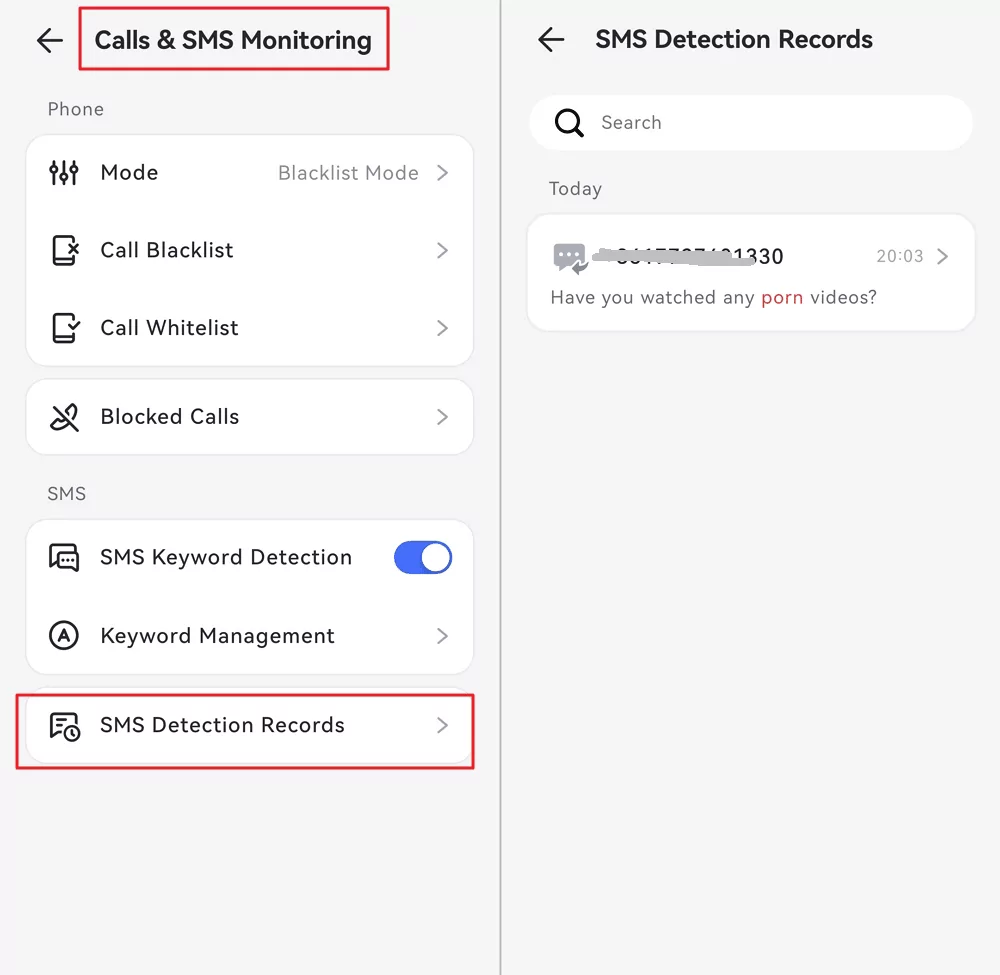
- Step 3.Open the dashboard and go to the notification or SMS monitoring section to check synced alerts, incoming message notifications, and risky keyword records.
AirDroid Parental Control can also detect risky keywords in SMS and across 14+ social media platforms, then send alerts to parents. To review SMS-related keyword alerts, parents can go to Calls & SMS Monitoring > SMS Detection Records.
Pros
- Designed for parental supervision and child safety
- Supports notification syncing and risky keyword alerts
- Helps parents notice SMS and social media risks earlier
- Also supports broader safety features, such as screen and activity awareness
Cons
- Requires setup on both the parent and child devices
- SMS monitoring is mainly available for Android child devices
- Paid subscription required after the free trial
- Parents should use it with clear family rules, not as hidden surveillance
Editor's Experience: AirDroid Parental Control is more useful as a child safety tool than as a simple call log viewer. In my test, its biggest value was helping parents notice risky message patterns and receive alerts earlier, especially when combined with open family conversations.
However, parents should understand its limits. It may not show every detail, such as full call duration, outgoing call content, or messages inside every app. For best results, use it as part of a broader safety plan instead of relying on monitoring alone.
Third-Party Call & Message Tracker Apps
Some third-party apps claim to log calls, WhatsApp messages, notifications, or message activity from a connected Android phone. One example is Message and Call Tracker, which says it can save WhatsApp text messages and call data.
However, third-party tracker apps should be reviewed carefully. SMS and Call Log permissions are restricted on Google Play, and not every app can read or store SMS or call data. Before using any such app, check its latest app store listing, permission requests, privacy policy, user reviews, and whether it still supports the feature you need.
If you still want to test a third-party tracker app, use it only on your own device, a child’s device you manage with clear permission, or a device where you have explicit consent.
- Step 1.Download the app from an official app store page, not from unknown APK websites.
- Step 2.Review the app’s permissions, privacy policy, and latest feature description before creating an account.
- Step 3.Complete setup on the device you own or manage with permission.
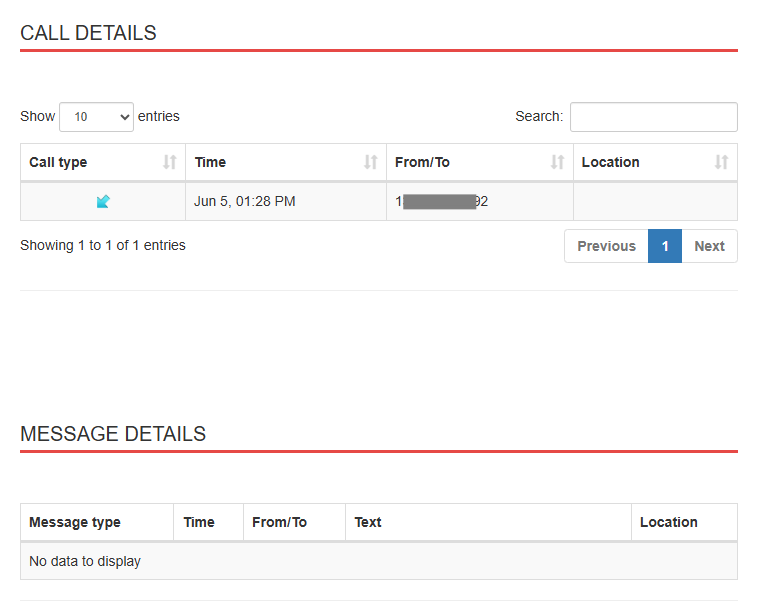
- Step 4.Open the app or web dashboard to check which data is actually available, such as call records, WhatsApp text records, or notification logs.
Pros
- May provide extra records depending on the app and device setup
- Can be useful for testing limited logging features on your own device
Cons
- Feature availability may change because of app store policies and system restrictions
- May require sensitive permissions
- Privacy policy and data handling practices vary by app
- Not recommended for secret monitoring or unclear consent situations
Editor's Experience: In my test, this type of app could record some call activity, but the experience was limited and the ads were distracting. Because third-party tracker apps can involve sensitive permissions and changing policies, I would treat them as a cautious fallback rather than the first choice for parents.
Choose Quickly: Which Method Suits You?
Official Cross-Device Sync
Messages, calls, or notifications available through official account/device syncing, depending on the system setup.
Your own devices, shared family devices, or a child’s device managed with clear permission.
Not designed for secretly viewing another person’s private messages. Setup and visibility vary by Apple, Google, and device settings.
Phone Link
Calls, texts, and notifications from a connected phone on a Windows PC.
Parents or users who want to manage an already connected phone from a Windows computer.
Requires setup on both devices. Some features are limited by device type, Bluetooth connection, system version, and privacy settings.
Cellular Carrier Logs
Call records, numbers, timestamps, and sometimes message metadata through the account holder’s carrier portal or bill.
Account owners who need basic communication records for lines under their own family plan.
Usually does not show the actual content of SMS or private messages.
AirDroid Parental Control
SMS alerts, notification syncing, risky keyword detection, and child device activity insights.
Parents who want a child-safety-focused solution for Android SMS monitoring and broader online safety.
Requires installation, child device setup, and transparent family rules. SMS monitoring is mainly for Android.
Third-Party Call & Message Tracker Apps
Varies by app; some claim to log calls, WhatsApp messages, or notifications.
Users who fully understand the app’s permissions, privacy policy, and consent requirements.
SMS and call log access is restricted on Google Play. Always review permissions, data practices, and whether the app is still compliant.
Why Call and Text Monitoring Can Matter for Child Safety
Calls and texts are often more private than public social media posts, which means parents may not notice a problem until a child’s behavior changes. According to StopBullying.gov, cyberbullying can happen through SMS, text messages, apps, social media, forums, gaming communities, and other digital spaces. It also notes that cyberbullying can be hard for parents and teachers to recognize because they may not overhear or see it happening.
For parents, call and text monitoring is most useful when it is used as an early-warning layer, not as a replacement for trust. It can help parents notice patterns that may deserve a calm conversation, such as repeated unknown numbers, threatening messages, suspicious links, or sudden changes in who a child is contacting.
- Cyberbullying: Text messages and messaging apps can be used to send harmful, threatening, or humiliating content. Because these conversations are often private, parents may need a transparent way to identify repeated harassment and step in before the situation escalates.
- Suspicious Contacts: Unknown numbers, repeated late-night calls, or messages from adults your child does not know can be warning signs. Monitoring should not be used to assume guilt, but it can help parents decide when to ask questions and offer support.
- Sexting and Inappropriate Content: Private messages may include sexual content, image-sharing pressure, or conversations that make a child uncomfortable. Parents should handle these situations carefully, focusing on safety, consent, and emotional support rather than punishment.
- Drug-Related or Coded Messages: Some risky conversations may use slang, emojis, or coded language. These signs should be treated as a reason to talk with your child and understand the context, not as automatic proof of wrongdoing.
- SMS Scams and Phishing: Children and teens may receive fake prize messages, gaming currency offers, delivery alerts, or suspicious links. If they click without checking the source, they may expose personal information or family account details.
Monitoring works best when it becomes part of a broader family safety plan. The purpose is not to read every conversation forever, but to help children recognize risky situations, ask for help earlier, and gradually build safer digital habits.
List of Sources
- Option 1: Use Official Built-in Services
- Apple Support – iCloud Messages and Forwarding (https://support.apple.com/guide/iphone/forward-sms-messages-iph3e2e415f/ios)
- Google Help – Backup and Sync Messages (https://support.google.com/android/answer/2819582)
- Option 2: Use Parental Control or Monitoring Apps
- AirDroid Parental Control – Official Website (https://www.airdroid.com/parental-control/)
- Google Play Developer Policy – SMS and Call Log Permissions (https://support.google.com/googleplay/android-developer/answer/10208820)
- Common Sense Media – Parental Control Apps Guide (https://www.commonsensemedia.org/parent-concerns/tech-guide-for-parents)
- Choose Quickly: Which Method Suits You?
- Microsoft – Phone Link App Overview and Setup (https://www.microsoft.com/en-us/windows/sync-across-your-devices)
- Google Support – Messages for Web Official Guide (https://support.google.com/messages/answer/7611075)
- Carrier Official Account Portals – SMS and Call Record Policies (example: https://www.verizon.com/support/manage-account/)
- Why Call and Text Monitoring Can Matter for Child Safety
- American Academy of Pediatrics – Tips for Parents in the Digital Age (https://www.healthychildren.org/English/family-life/Media/Pages/Tips-for-Parents-Digital-Age.aspx)
- StopBullying.gov – Cyberbullying Overview (https://www.stopbullying.gov/cyberbullying/what-is-it)
- NSPCC – Online Safety for Children (https://www.nspcc.org.uk/keeping-children-safe/online-safety/)
- NCMEC – Online Enticement and Sextortion Statistics (https://www.missingkids.org/online-enticement)
- FBI IC3 – Internet Crime Complaint Center Reports 2024 (https://www.ic3.gov/Home/ComplaintChoice)
- FTC – How to Recognize and Report Spam Text Messages (https://consumer.ftc.gov/articles/how-recognize-and-report-spam-text-messages)
FAQs about Calls & SMS Monitoring or Tracking






Leave a Reply.


My brother recommended I might like this blog. He was entirely right.
This post actually made my day. You cann’t imagine just how much
time I had spent for this info! Thanks!