AirDroid Parental Control
All-in-One Tool for Real-World Child Safety
- 📍Real-time location & route history
- 🔍Live surroundings check
- 🔔Geofence alerts on daily routes
- 🆘One-tap SOS with ambient audio
Will Tracking Your Child Ruin Your Relationship? How to Talk About It
Each time you call your kids, and they don't pick up, you may feel like verifying their location for safety. So, you installed a tracking app.
You tell yourself it's for safety. But deep down, you wonder: "Won't tracking my kids' location ruin our relationship or trust?" Well, you're right to think this way.
The short answer is no. Tracking itself won't destroy your bond. What will damage trust is secret tracking or imposing tracking without open communication.
So, how can you have an open communication with your child and better use the location tracking? This article will break that down.
Before Tracking: Talk About It with Your Kids
To avoid pushback or misunderstanding, an honest talk before tracking is essential. This determines whether location tracking will be a trust-builder or a trust-destroyer.
You can start having this conversation by following the steps below:
Step 1. Acknowledge their need for independence & privacy
Location tracking is closely tied to privacy and independence. So, when you bring up location tracking, kids see it as a violation of their privacy or think you're overstepping.
This reaction is more about independence. They want to manage their own choices as they grow up.
Therefore, begin the talk by acknowledging that you can see the situation from their perspective, which makes them more likely to see yours. In this way, defensiveness can be disarmed.
Step 2. Be honest about your worries
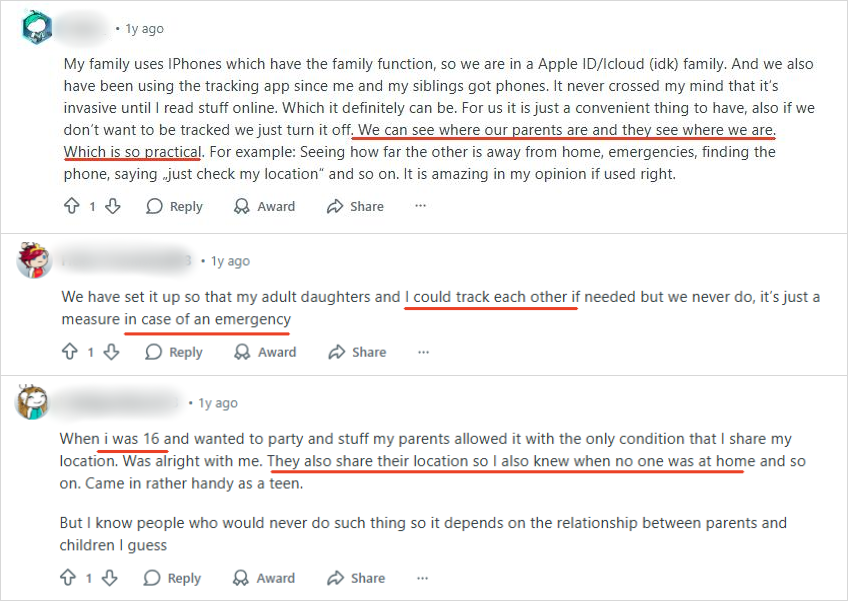
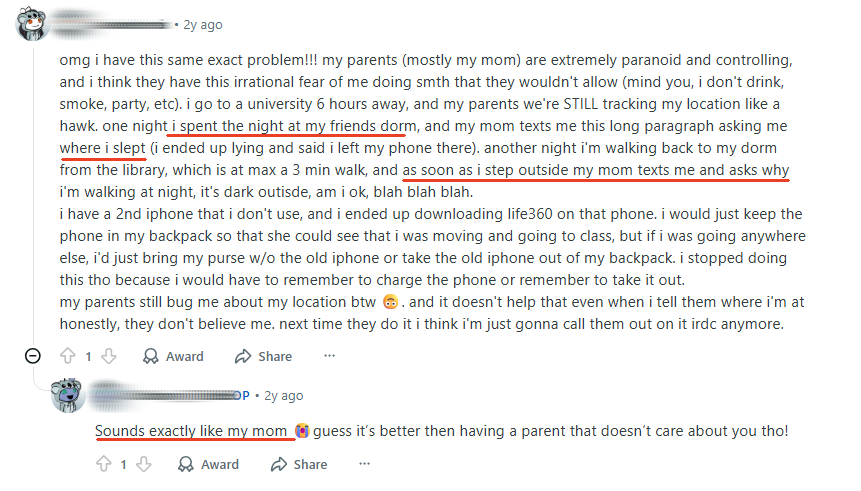
In fact, if you honestly explain the real motivation behind the tracking, some children will even proactively share their location with their families, like this teen on Reddit:
Comment
byu/moonybearr from discussion
ingermany
During your conversation, clearly explain why you want to track them. Most importantly, let them know the tracking is temporary and will only be done whenever their safety is unknown.
Tip: The best time to have this talk is right after an incident that caused you anxiety, helping your child better understand that the location tracking and your worries are about safety.
Step 3. Invite them to co-create the tracking rules
As children grow, seeking autonomy and independence are normal. So, how about inviting them to help create the tracking rules altogether?
Doing this will make them feel respected. Then, they might be more likely to accept the location tracking app.
Additionally, many parents also commented on Reddit that they shared their own locations too. This kind of mutual tracking makes children feel fairer.
Best Practices to Use the Child Location Tracking App
Now that you know how to start a communication about location tracking with your child, let's look at how to best use the location tracking app.
1Install with Consent
Don't ever think that because you got them the phone, you can just do anything you like on it. After you've talked it through, the next step is making sure location tracking is installed with your child's clear awareness and agreement.
And the consent means they understand what & when is being installed, and what it really does beyond location tracking.
Looking for a tool that balances safety and trust?
AirDroid is our top pick. It's built to reduce the friction between you and your child. With reliable location updates and instant SOS or geofencing alerts, you can stop panicking and start trusting.
2Set Boundaries Together
Location tracking works best when rules and boundaries are clear on both sides. Plus, don't just impose rules; negotiate them. As we stated above, you can give your child a say in the process of creating boundaries:
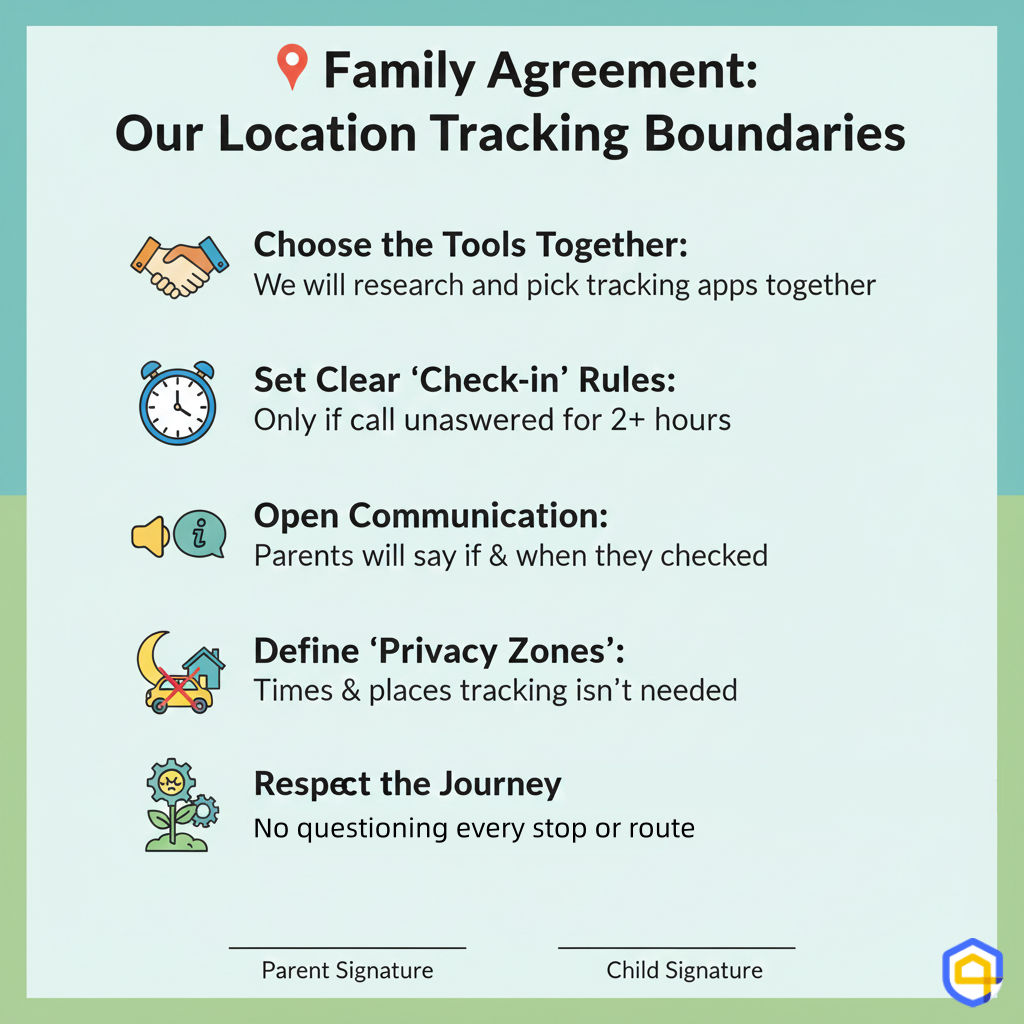
- Co-select the tracking tools with your child.
- Be clear about when you will check the location (e.g., if they didn't reply back when the call was missed 2 hours).
- Let the child know if and when you checked their locations.
- Agree on specific times and places where tracking isn't needed.
- No questioning every stop or route.
Surely, the most important thing is to adjust tracking rules regularly as the child gets older.
3Know When to Step Back
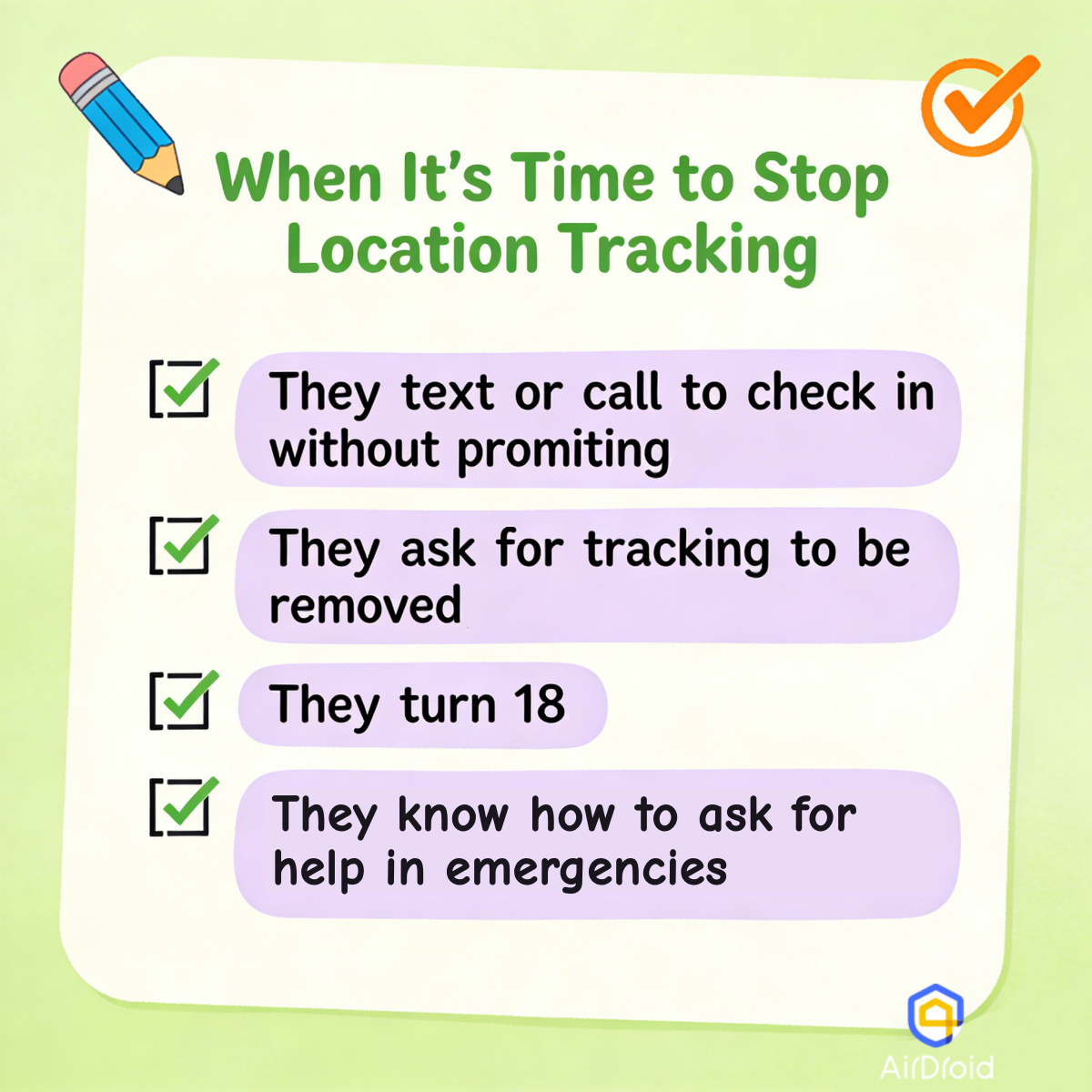
Even if, after your child has agreed, you can track them, and you realize she's not comfortable with tracking, then you have to take a step back.
Additionally, location tracking doesn't have to last forever. As your child grows older than 18, meaning they grow more independent, consider to stop location tracking and respect their thoughts.
4Apologize If You Overstep
Even with the two-way tracking rules, mistakes happen. Some parents often overstep the boundaries and start monitoring their kids' locations and phone usage 24/7, which ruins the trust and even causes conflicts.
If you realize you flout the tracking rule, acknowledge it and apologize. A sincere apology can go a long way in repairing trust and showing that tracking is still guided by respect.
Things to Avoid: When Tracking DOES Ruin Relationships
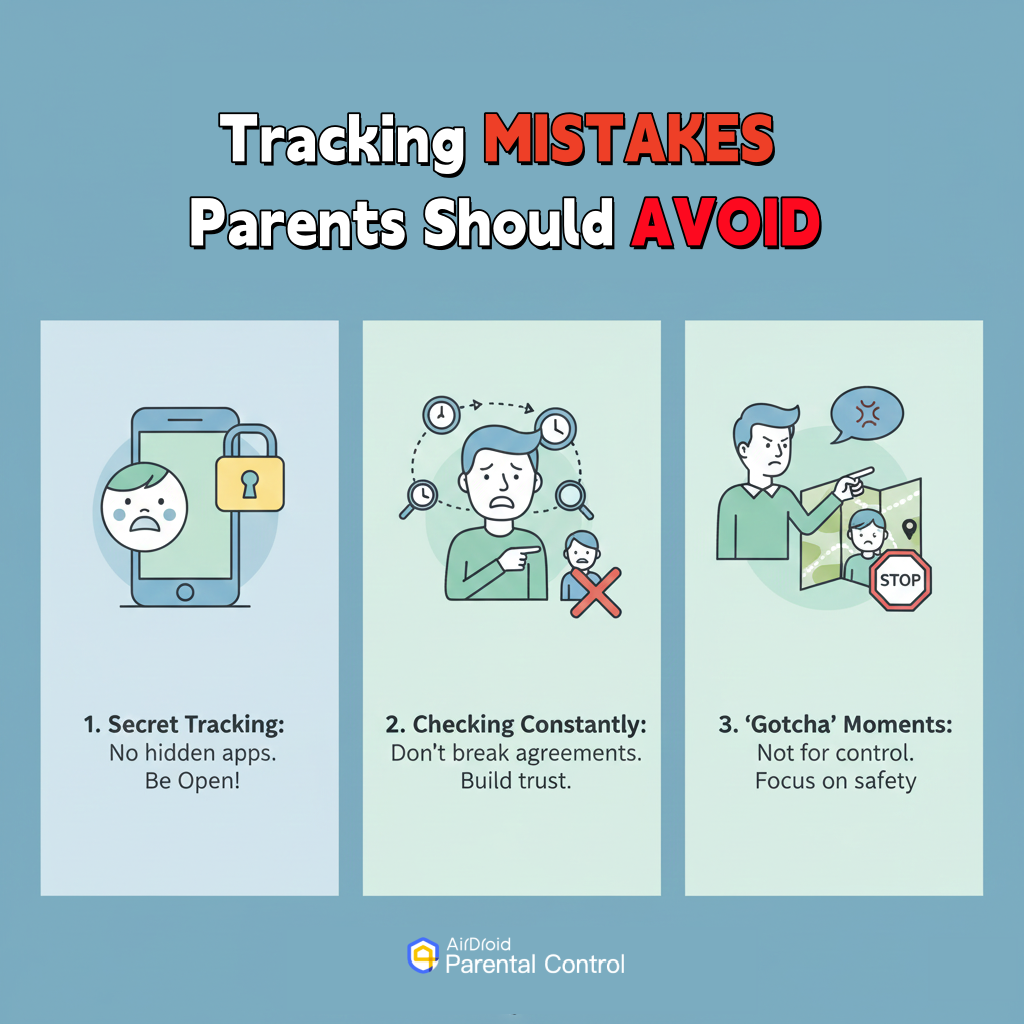
As I've said at the very beginning, what creates distrust isn't the tracking, but how it makes your child feel. So, always steer clear of the following things when applying the child location tracking app:
❌ Secret Tracking
Never install the tracking apps secretly. If they find out (and they will), trust and relationship are broken forever. This is why it is necessary to have an open communication before it begins.
❌ Checking Location Constantly
If you frequently check their location just for "curiosity" after both of you have agreed, you'll only track them when they leave calls unanswered, then you must be ready to face the consequences.
Breaking those boundaries is a direct breach of trust, meaning you have no respect for them. Your kids may feel like their feelings and needs don't matter, which can lead them to cut you off completely and stop tracking instantly.
❌ Using It for "Gotcha" Moments
Using their location data and past routes to confront them, "Why were you there?" or "You said you were somewhere else," makes tracking feel less like safety and more like control. This also means you don't trust your kids.
In a Reddit post, many children shared that this kind of tracking makes them feel uncomfortable and less willing to be honest with their parents.
What to Do If Your Child Refuse Location Tracking
Now, what if after you had an open communication with your child and they refuse to be tracked? Then, what will you do? Well, worry no more. Try these instead:
Listen to their concerns
You have to understand that the fact that your child refuses you doesn't mean they're disobeying you. They may just be scared that you may not be sincere about your intention to track them. So, sit down and listen to their concern to know the exact reasons they don't want to be tracked.
Offer alternative safety plans
Since your intention is to ensure their safety, you can opt for another safety plan if they refuse location tracking. Some of these alternatives include:

Propose a trial period
If they declined your offer, propose a trial period for both of you to see how things will work out, such as, "Let's try it for 30 days. If you text and answer me when you're supposed to, I'll stop tracking. Is that okay?"
Respect their privacy if they still say no
If they still remain adamant at the end, then there is nothing you can do other than respect their decision.
Conclusion
In short, location tracking can affect parent-children relationships if there is a lack of open communication or when it's misused.
Have an honest conversation first, install the tracking app transparently, and be clear about when you'll check and when tracking will end. Follow these principles, and tracking can support safety without ruining your bond. The last step? Track less, trust more.













Leave a Reply.