AirDroid Parental Control
AI-Powered Keyword & Content Monitoring
- 🧠 AI-generated keyword suggestions
- 🚨 Real-time alerts when risky terms appear
- 📱 Social media & chat monitoring
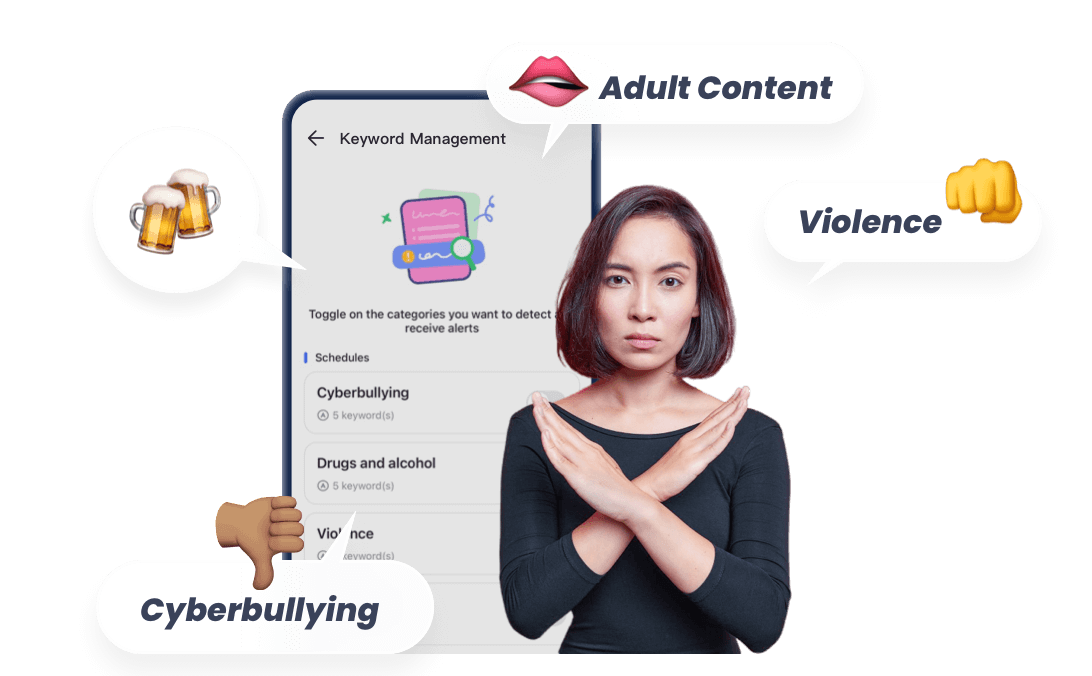
List of Keywords to Block for Parental Control
The internet is an incredible library, but it's also an unlocked door to the entire world, inappropriate content included. While blocking these websites is your first line of defense, many children still come across this material through social media, videos, or trending slang terms.
That's why many parents are seeking a keyword block list. To save you hassles, we've compiled the main types of keywords parents need to watch for and how to build a smarter keyword list.

8 Keyword Categories to Block for Parental Control

Instead of trying to ban thousands of words, it's more effective to focus on key categories that lead to unsafe or unhealthy content, such as:
(The following categories or keywords we complied also cover popular slang and online trends.)
1Adult & Sexual Content
According to a finding in the Journal of Adolescent Health, 85% of adolescent males and 50% of adolescent females had been exposed to pornographic material.
And early exposure to porn can lead to violent behavior, increased depression, younger age of sexual debut, and more issues, as researched by American College of Pediatricians.
The harsh reality is that this content is easy to access across search engines, social media apps, video streaming platforms, etc. So, blocking these categories of phrases should be your top priority as a parent.
Some adult and sexually related keywords or phrases are:
- xxx
- Porn
- Blue Film
- Nude
- Webcam Sex
- Roleplay adult
*examples only
2Self-Harm
Self-harm is not a strange phenomenon in society today. A study shows that around 2 million children and teens in the U.S. attempt suicide each year.
Many vulnerable kids are exposed to self-injury content online, through forums, or social media challenges, which leads them feel self-harm or suicidal ideation as a normal way to cope with emotional pain.
To prevent the occurrence, the most important step is recognizing emotional warning signs early and offering support in time. Then, create a list of keywords to reduce exposure to harmful searches and content:
- Hurt myself
- Unalive
- Sewer slide
- I had pasta tonight
- Self-mutilation
- Blithe
- Self-injury
3Dangerous Social Challenges
Many parents don't realize that dangerous challenges have become a viral online risk for kids today.
Some viral "dares" or trending challenges are not only demonic, but they can send participants to their early graves. Take the Blackout Challenge, for instance.
In this challenge, individuals are required to hold their breath for a while until they pass out due to a lack of oxygen in their brains. In 2022, a 14-year-old teenager was reported dead while engaging in this challenge on TikTok. Other examples of similar toxic challenges you are:
- Silhouette Challenge
- Tide Pod Challenge
- Milk Crate Challenge
- Skull Breaker Challenge
- Blue Whale Challenge
- Fire Challenge
4Gambling & Scams
Gambling and scams are two duos ruining society. Both can expose your child to fraudsters or activities that could steal their identity, personal information, and cause financial loss. With that in mind, below are some gambling and scamming keywords to watch out for.
- Casino
- Betting
- Online slots
- Pokies
- Instant fund
- Sweepstakes
- Get rich quick
- Win big
5Cyberbullying
Cyberbullying is a common online issue. A survey conducted by the World Health Organization shows that 1 in 6 children in their adolescent stage have experienced cyberbullying, while 1 in 8 adolescents have engaged in cyberbullying.
When a child is being bullied, it can lead to mental health decay, such as suicide ideation, depression, anxiety, and many more.
To prevent this, here is a list of cyberbullying keywords you should block:
- I'll expose you
- Dumb or stupid
- Chopped
- Dick head
6Drugs
Drug is another keyword category you shouldn't joke with. Once your child is introduced to this kind of content, they may start using drugs. After all, exposure is often what sparks curiosity and leads to trying things out.
And overdose can lead to harmful consequences, including brain damage, impaired decision-making, and even psychosis.
So, blocking drug-related keywords isn't just about filtering out bad content; it's about helping keep developing kids from seeing harmful behavior as normal.
Example of drug-related keywords to block include:
- Weeds
- Get high
- Molly
- Drug Dealer
- Lean
- 710 (The code for marijuana concentrates)
7Online Predators
Online predators are adults who pretend to be someone they are not. Once your child becomes their victim, they may be manipulated into sharing their personal information or private photos.
Sadly, the chance your kids will come across them is higher as they're present across many gaming communities, chat sites, social media platforms, and online forums. Here are some online predator-related keywords you should block or pay attention to.
- Are you alone
- Don't tell
- Private chat
- Our secret
- GNOC (Get Naked on Camera)
8Bypassing Controls Keywords
Think about this - you've set up parental control or a content blocker on your child's phone just to keep them safe. But later, you discover that they've found a way to bypass it.
This is why you should block keywords related to bypassing controls.
As such, you can ensure your safety settings stay effective and give you a chance to address the issue early.
Some of these keywords include:
- Disable parental control
- Unblock school WiFi
- School internet hack
- VPN
- Unblocked games
The Problem with Keyword Blocking Lists
Though keyword blocking lists can be a helpful idea to prevent harmful content, they come with these limitations:
Manual input & update is time-consuming
The above categories and examples are really just the tip of the iceberg. I mean, there are tons of related terms, slang, and new trending phrases. And inputting keywords manually can be time-consuming, not to mention trying to keep the list updated as new terms pop up.
Keyword lists may go outdated quickly
Language on the internet evolves faster than software updates. The moment you start understanding the meaning of a popular slang term, your little ones have likely already moved on to a new vocabulary.
Moreover, they even use emojis or numbers to access banned content. This means you have to keep monitoring trends and updating the vocabulary to ensure it matches the latest trend.
They are prone to error
Keywords created manually are susceptible to mistakes such as spelling errors. Once this happens, kids can easily bypass it and access the inappropriate content.
Harmful content cannot be fully blocked
As we all know, popular apps among teens, such as Snapchat, TikTok, and Instagram, are visual content-centered. Filters that look for keywords are often blind to what is actually happening on the screen. Moreover, most keyword blocking tools typically stop at the browser.
Put it more plainly, the keyword list cannot detect a dangerous image or a suggestive gesture in a TikTok video when it comes to your child's feed.
A Smarter Solution: AI-Powered Keyword Generator & Monitoring
Rather than creating manual keyword lists that are time-consuming and may not fully keep up with trends, why not try AirDroid Parental Control? This tool offers an AI-powered keyword generator and detection.
How AirDroid Works?
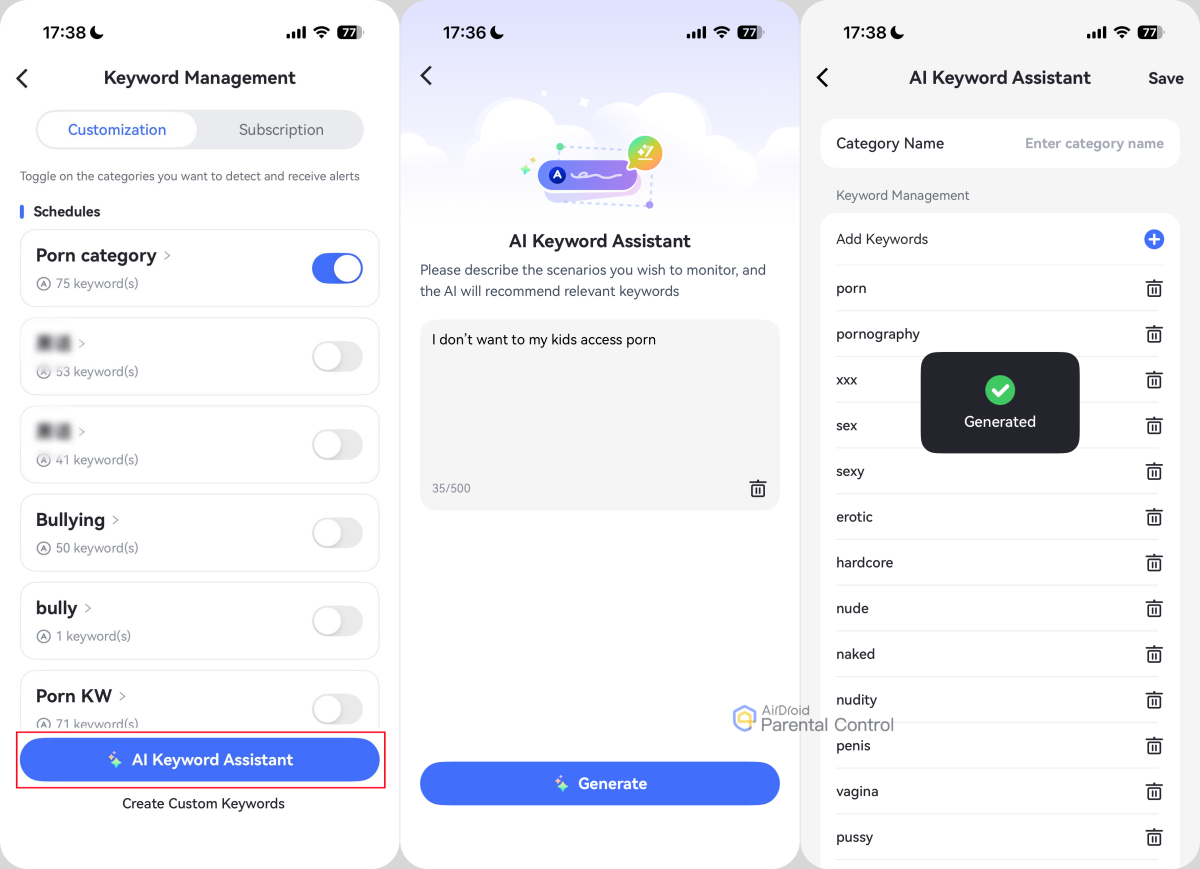
- When you type "I don't want my child to access porn content," it uses AI to generate thousands of keywords for this category automatically.
- It sends alerts instantly whenever these keywords appear on your child's social media and SMS.
- Meanwhile, it provides the context via screenshots triggered by detected keywords.










Leave a Reply.