AirDroid Parental Control
All-in-One Tool for Real-World Child Safety
- 📍Real-time location & route history
- 🔍Live surroundings check
- 🔔Geofence alerts on daily routes
- 🆘One-tap SOS with ambient audio

Stop the Panic Calling: 4 Rules to Get Your Child to Check In on Their Own
A parent on Reddit once asked, "How to handle kids not returning calls or texts?"
When your child doesn't answer the phone, it's easy to spiral into anxiety and fall into panic dialling, hoping they'll finally pick up.
While calling comes from a place of love and concern, it often achieves the opposite of what you want: your child feels suffocated. So, how can you turn the situation around?
You need a better agreement to move from chasing them to empowering them. So, in the next few minutes, we'll reveal 4 rules to help your child check in on their own.
Why Setting Rules Matter?
Before we jump right into the rules, let's look at why it is important to create check-in rules.
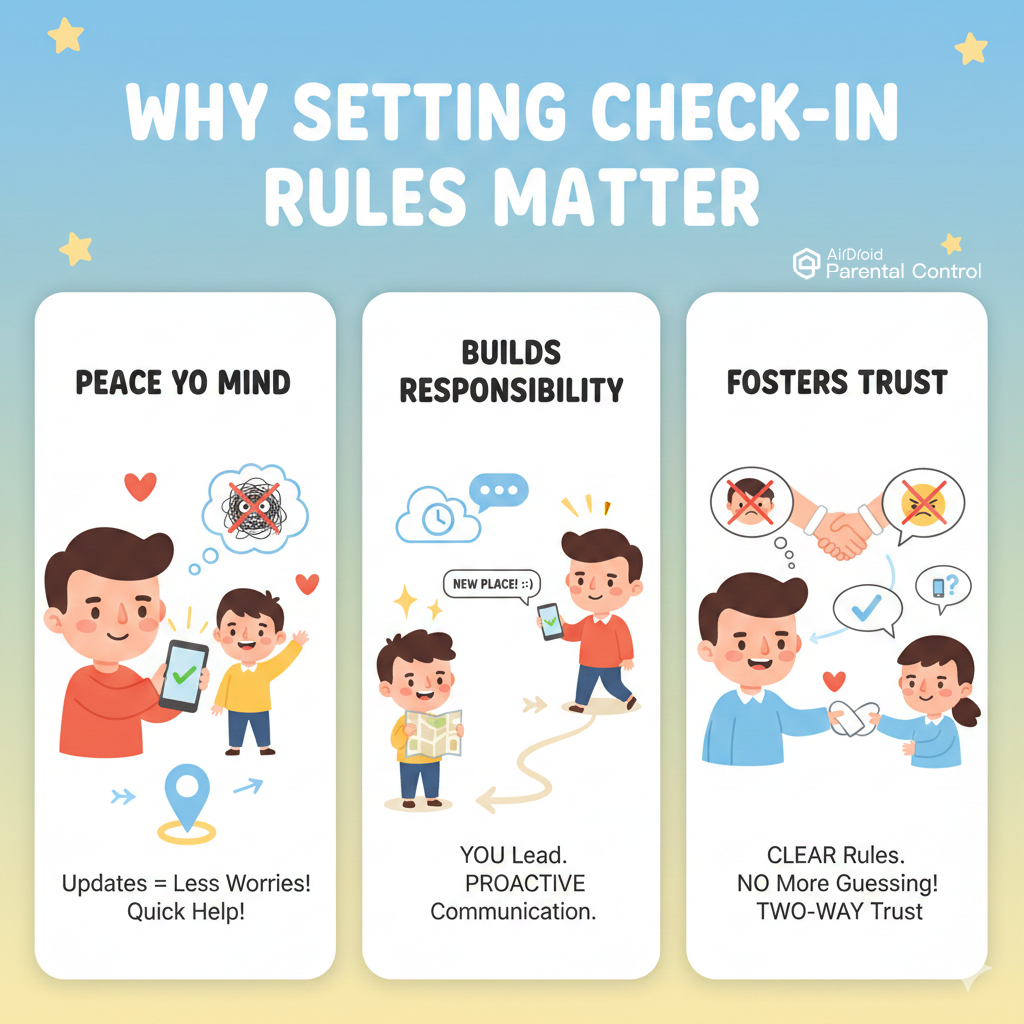
It gives parents a peace of mind:
When you can receive regular updates or responses, unnecessary worries about your child's potential dangers can be prevented. Additionally, it helps you identify and act quickly if real emergencies occur.
It cultivates the child's sense of responsibility
This is the biggest win. When you demand they answer every call, it's about control.
When you set rules like "Text me when you go to a new place," you are giving them responsibility and developing their habits of proactive communication.
It fosters mutual trust:
Rules are two-way agreements. Clarifying rules can avoid misunderstandings (e.g., children perceiving calls as "nagging," parents feeling ignored when no answer) that often lead to resistance or conflicts.
The Rules That Actually Work
Believe it or not, teens don't hate rules; they hate control. If you're now wondering where to start, we've got your back. Below are effective check-in rules you can use to get your child to check in on their own.
Rule 1. Set Flexible Check-In Times
If you want your child to check in on their own, the first step is to stop checking in on them all day. Instead, set a flexible check-in time.
And here is a tip: let them decide when they should update you about their movement. ("✅What time works for you to update me?" "❌Text me at exactly 5:00 PM.")
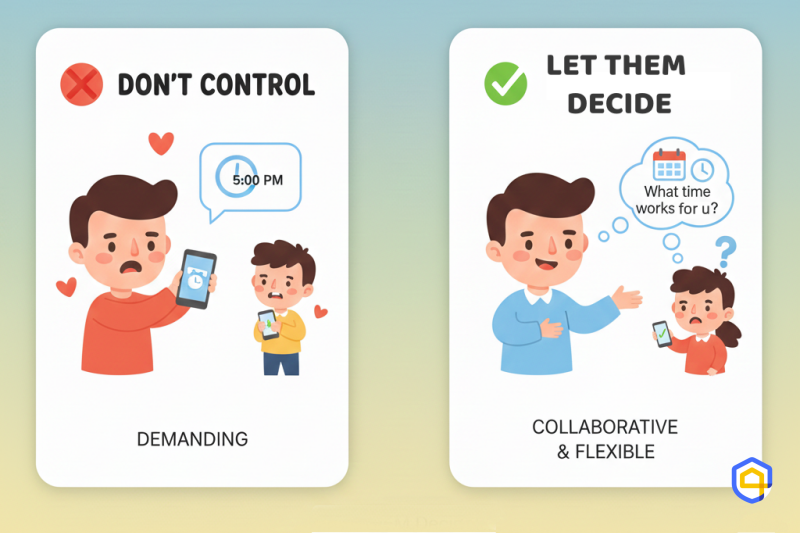
Surely, as a parent, you can adjust the check-in time based on your child's age.
- For primary school students: ask them to check in or text you after school or when they get to their destination.
- For tweens & teens: they are craving independence, so less is more. Just one check in time in a day (or one per outing) is enough.
Rule 2. Add Rewards
Also, let your child know you'll reward them handsomely if they always check in according to the agreed schedule.
This will greatly motivate them and is likely to be intrinsically driven, letting them stick to the check-in rules.
The reward can be a form of small treat, privileges, extra screen time, or anything, depending on their age and what motivates them.
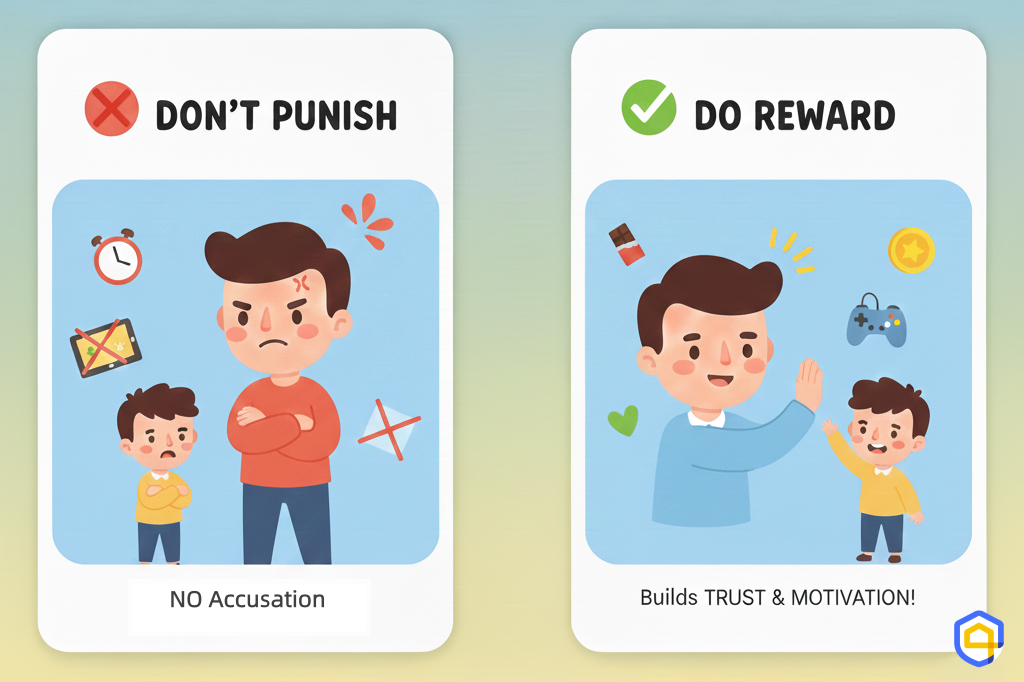
However, don't ever punish your child for not checking in according to schedule. This approach will ruin your relationship and even prevent them from communicating further with you.
Rule 3. Create Safe Words for Emergencies
A safe word is any word known only to the parent and child as a sign that a child is in danger or needs urgent help.
This is a life-saving strategy that every family should have. This gives your child a way to escape a dangerous situation where they don't feel safe speaking openly.
A Reddit user shared her mom's experience of being raped, explaining that there were several earlier chances to call her parents, but she didn't, because she feared the person around her would realize she was calling for help and put her life at risk.
Then, how to create a safe word?
The first is to ensure you keep it simple for ease of remembrance. Also, avoid using something that is random or too common.
Doing this lets you know when your child needs immediate assistance.
Rule 4. Lead by Example
Kids are fond of imitating their parents. Therefore, if your child calls and you're unable to pick up, you should send a text to let them know.
Also, make "check-ins" mutual. Text or check in with your child when you're out, returning home, or running late to pick them up.
This way, your kids will know the essence of the rule and always want to abide by it because they know you don't joke with it.
Tips for Communicating Rules with Your Child
Of course, check-in rules help a lot in daily life. But the hardest part of the process is communicating the rules effectively. Below are tips for communicating these rules with your child.
1Talk at a relaxed time
If you want to talk to your child about this rule, opt for a relaxed time rather than an argument or a time when the atmosphere is tense.
During relaxed hours, children tend to listen more and absorb what you're saying rather than push back.
2Speak for yourself
When you want to start communicating with your child, don't begin with words that look like you're blaming or accusing them. Instead, stick with words that will express your concerns and needs.
One of the best ways to do this is to always use statements that begin with "I" instead of "YOU." For example:
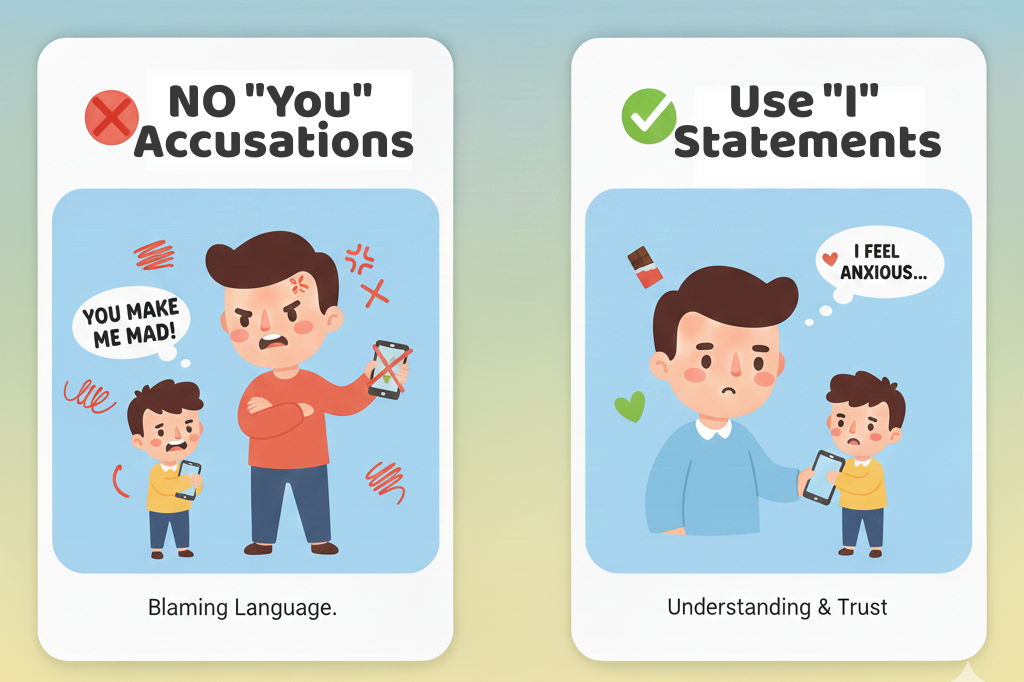
❌ Don't start with a statement like, "You make me mad whenever you leave a call unanswered. Can you just respond to calls as soon as you can next time?"
✅ Try starting with this statement, "I always feel anxious whenever you leave a call unanswered. Can you please call back or send a text immediately when you see the missed call?"
This way, your child would not feel accused and would better understand your perspective.
3Explain the purpose of the rules
Kids are more likely to follow check-in rules if they know why they exist. So, when communicating the rules, let them know what each rule is meant to achieve.
More importantly, be clear that check-in rules aren't about control, they're about safety and peace of mind.
4Give rooms for question
Let them ask questions about anything that is not clear to them. And invite them to help write rules. This shows that you value and respect their input. When they contribute to and follow the rule, they take ownership of it.
Conclusion
Getting children to check in on their own is one of the most effective ways to reduce unnecessary panic and anxiety for parents when a call goes unanswered. To get them to check in on their own, consider creating clear check-in rules.
Don't wait for the next scare to set these boundaries. Talk to your teen tonight. Invite their input, and lead by example!















Leave a Reply.