Trying to choose between Canopy and Covenant Eyes to stay away from porn content?
Both apps offer the porn blocking feature, but they're built for very different needs. Someone finds Canopy's AI blocking incredibly smart, while others love the accountability system in Covenant Eyes.
After 5 days of testing both on the same devices (iPhone 14 and Samsung Galaxy S20+), this comparison guide breaks down their features, pricing, strengths, and limitations — so you can decide which one actually fits your needs.
You want automatic, AI-powered porn blocking without involving other people.
You don't have a severe porn addiction but want to avoid accidental exposure to porn material.
You're a parent with minors and need to protect them from porn content.
You want control over your own or your child's screen time.
Choose Covenant Eyes If:
You are determined to quit porn addiction.
You need a trusted ally (friend or spouse) to help keep you on track.
You believe accountability works better.
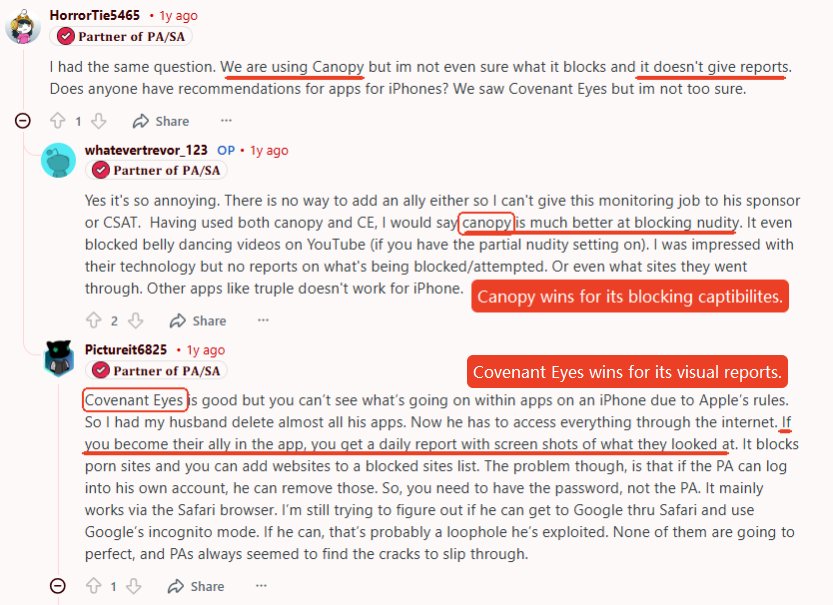
See what Reddit user said about Canopy and Covenant Eyes:
Quick Comparison Table
Core Mechanism
Real-time prevention
Accountability
Web Filtering
Screen Monitoring
Accountability Partner
Explicit Image Detection
Sexting Prevention
Blocked Site Alerts
Phone Usage Reports
Text-based log
Screenshot-based log
Ease of Use
Privacy Level
High
Moderate
Annual Pricing
$9.99 or $13.99 per month $95.9 or $119.9 per year
$18 per month $184 per year
Supported Devices
Android, iPhone, Mac, Windows, Chromebook
Android, iPhone, Mac, Windows
Show more
Canopy: Acting Like a Smart Shield
Canopy acts like a "smart shield." It uses AI to analyze images and text within websites and apps in real-time. Once it identifies porn related material, it blurs or blocks that specific content. This means you can browse most sites normally, with only the explicit parts hidden.
It analyzes pictures and texts on websites and apps using AI. Then, it blurs or blocks only inappropriate images and videos without blocking entire sites or other rest content.
However, my testing showed the AI filter is highly unstable.
On one hand, when I tried to view the text content on a site that may contain explicit images, Canopy blocked the site entirely instead of just hiding the images. This over blocking issue has been reported by many Play Store users.
On the other hand, the filter sometimes fails, allowing explicit pornographic images to load (shown as a picture below). This makes its AI protection feel unreliable.
2Sexting Prevention
Scans photos taken or saved on the device and shared in messaging apps. And then send instant notifications if any.
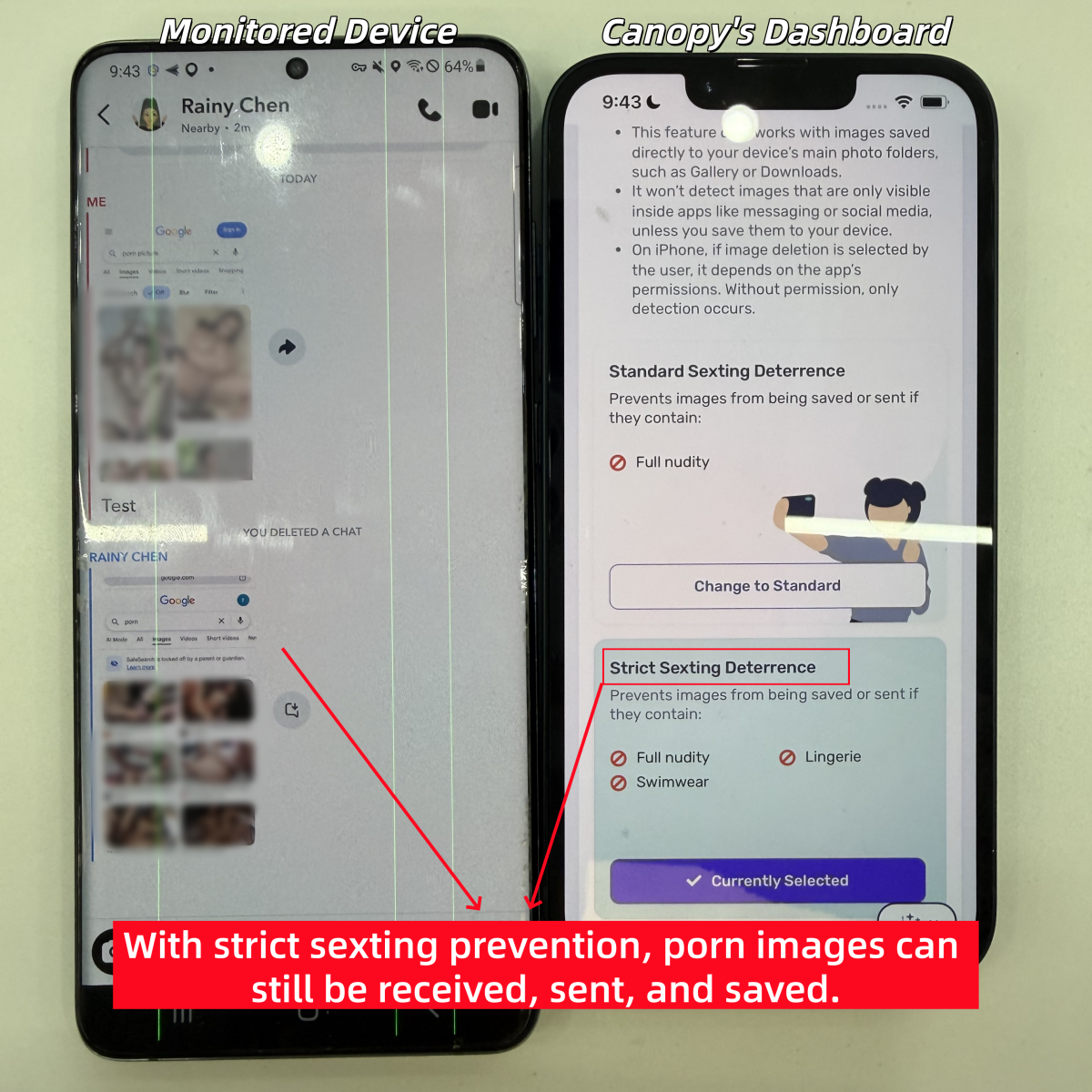
But this feature is not reliable in my testing. While enabling strict sexting deterrence, I was still able to send and receive explicit images in Snapchat (as shown below). And even more, I could save them to the device. Canopy failed to detect it and send alerts.
This result did not align with how the sexting prevention feature is advertised on Canopy's official site.
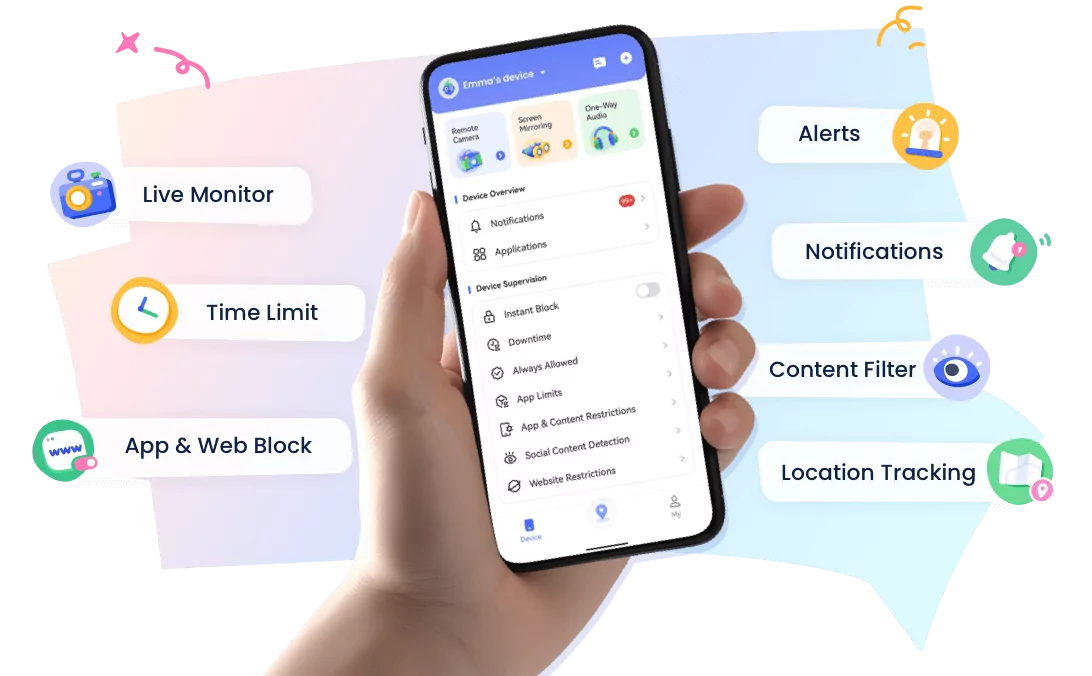
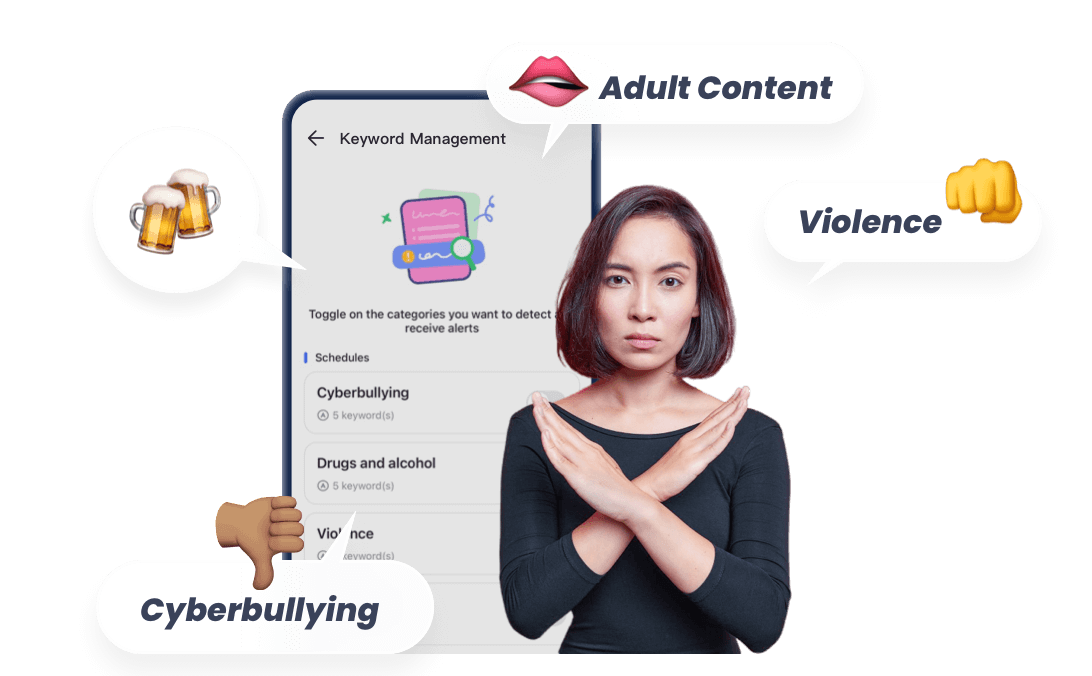
To detect explicit images or text content in social media, we recommend tools like AirDroid Parental Control. It allows you to set specific words for monitoring and sends alerts when they appear in social media or SMS.
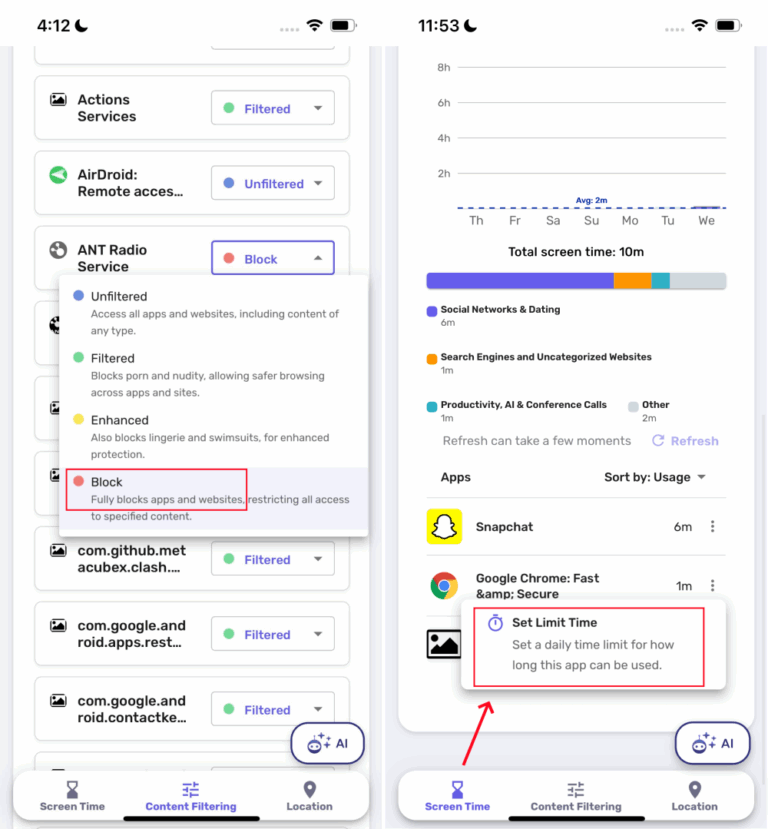
Canopy has a "Block" option to block specific apps, like Tinder, TikTok, or games.
Also, it offers a "Focus Time" feature. This works similarly to "Downtime," allowing you to pause the device's internet access during scheduled times throughout the day or week.
This works great on my Samsung. When I set "Block" for one app, Canopy blocked it immediately without delay! What confuses me is that to set an app time limit, I have to switch to the Screen Time reports page. It's not very convenient.
4Screen Time Reports
Canopy also provides reports on used apps to track and manage digital habits. However, as a porn blocker, it lacks the most important function: website browsing history tracking.
Furthermore, it takes several minutes every time I need to refresh the latest report.
5Location Tracking
Provides real-time GPS tracking to let parents know where their child is. Meanwhile, Canopy can send notifications if the child enters or leaves the saved places that parents added for geofencing.
Its real-time location responded quickly and loaded real-time location data. But compared to other parental control apps that offer full-screen maps, Canopy's map view is smaller.
Covenant Eyes: Acting Like an Accountability Partner
Covenant Eyes focuses on "screen monitoring and reporting." It captures screenshots of your activity and sends them to the ally, using a sense of shame and responsibility to curb behavior and quit porn.
Pros
Strong accountability system
Enforces "Restricted Mode" for YouTube
Monitors screen activities
Screenshot-based reports
Cons
Too expensive
Not easy to use
Blurry screenshots
Inaccurate content flagging
Hard to cancel subscription
Key Features & My Testing Results:
1Screen Accountability (The Flagship Feature)
Covenant Eyes takes random screenshots of the user's screen across their devices. Then, it uses AI to analyze these screenshots to detect explicit screen activities.
Once suggestive material was scanned, it flags and marks the screenshot as "Highlighted Activity" or "Explicit Screenshots."
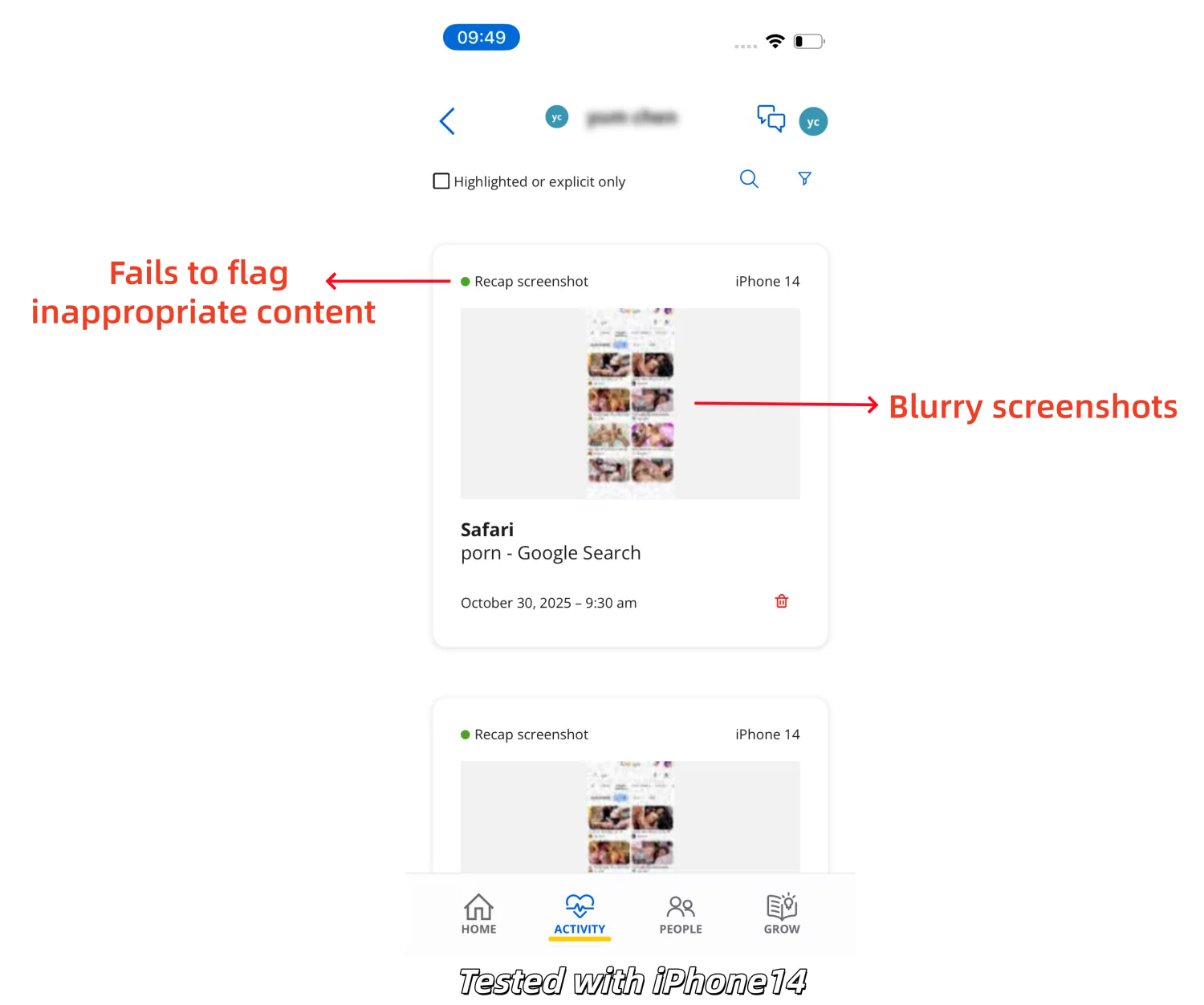
However, my testing revealed that this AI detection system is inaccurate. As the picture below, I googled for "porn images," and it still showed the screen activity as normal, without flagging. Moreover, all screenshots are too blurry to know what is being viewed.
Prefer clearer, real-time screen monitoring?
Tools like AirDroid Parental Control provide real-time, high-resolution screen viewing, making it easier to understand on-screen activity.
The heart of Covenant Eyes is the relationship with an accountability partner. After adding an ally, they can receive your reports via screenshots, check in on your progress, and provide accountability.
Therefore, Covenant Eyes is more suitable for someone who needs supervision and the power of "being seen" to overcome "porn addiction."
3Website Blocking
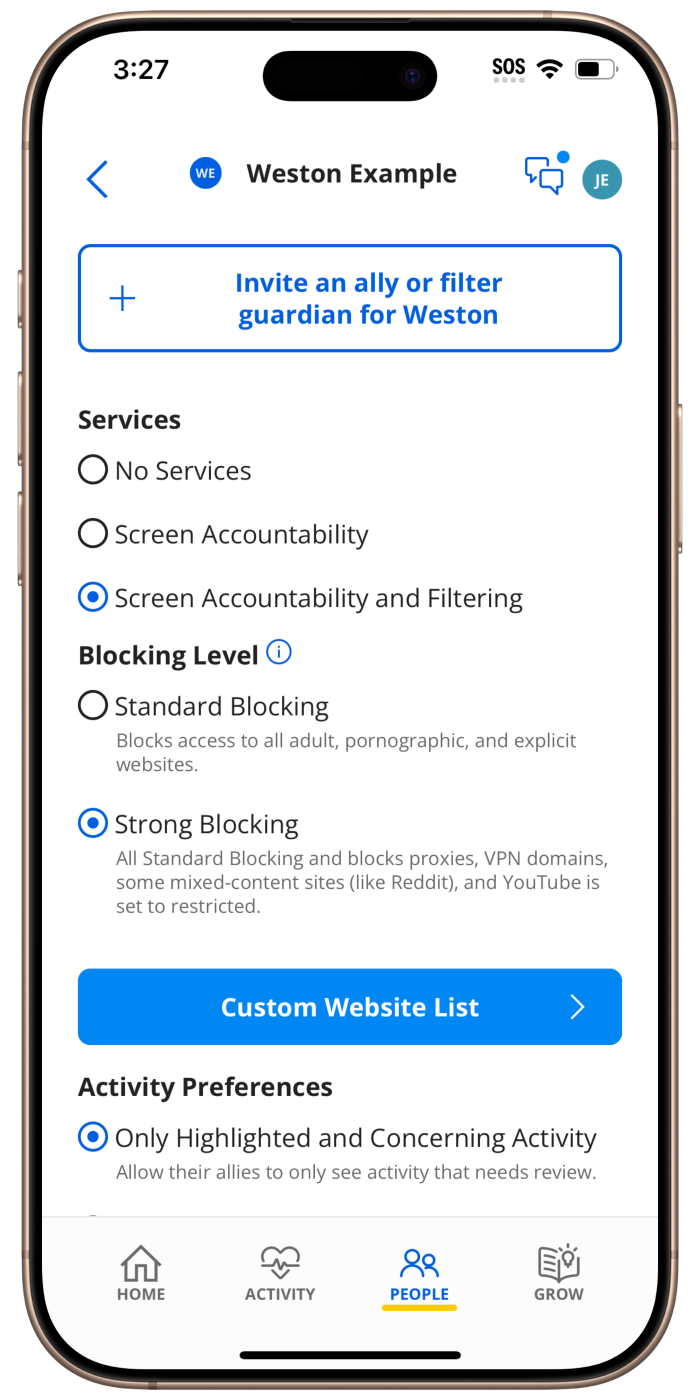
While accountability is its main focus, Covenant Eyes offers two web filtering levels: one is "Standard Blocking," and another is "Strong Blocking."
Both of them block access to adult websites, enforce SafeSearch. With Strong Blocking enabled, proxy and VPN domains and mixed-content sites (like Reddit) can also be restricted.
Additionally, you can customize which websites need to be blocked or allowed. Though it is less advanced than Canopy's AI filter, Covenant Eyes' web blocking is effective at blocking explicit sites.
4App Locking
This is an exclusive feature to Android devices. It lets you block specific apps with a PIN. This gives parents or accountability partners more control over access to potentially risky apps.
But note that this feature is not easy to find since it's tucked away in a secondary settings menu.
FAQs about Canopy and Covenant Eyes
Do these apps work inside social media apps?
Yes, but limited.
Canopy claims it can filter porn or suggestive content on social media apps. Covenant Eyes monitors social apps through random screenshots. If there is any explicit social activity, it will flag that screenshot.
However, both apps failed to filter or flag the porn content in my testing.
Can my child (or I) just delete the app to bypass it?
No. Both Canopy and Covenant Eyes have removal prevention. But note that if your child is using Covenant Eyes on mobile devices, the app can be uninstalled easily.
Are these apps better for families, or adults?
Both apps can be used for parental control as well as personal accountability. However, we recommend family to use Canopy for family use while Covenant Eyes for adults.
Elsa has worked on a number of iOS & Android solutions, she can always find her way around almost any application. She is an accomplished, skilled and versatile writer with more than 7 years of technical article writing experience.

















Leave a Reply.