Hidden Costs of Unmanaged Samsung Devices & How to Reduce Them
The "Invisible Drain": Why Free Devices Aren't Free
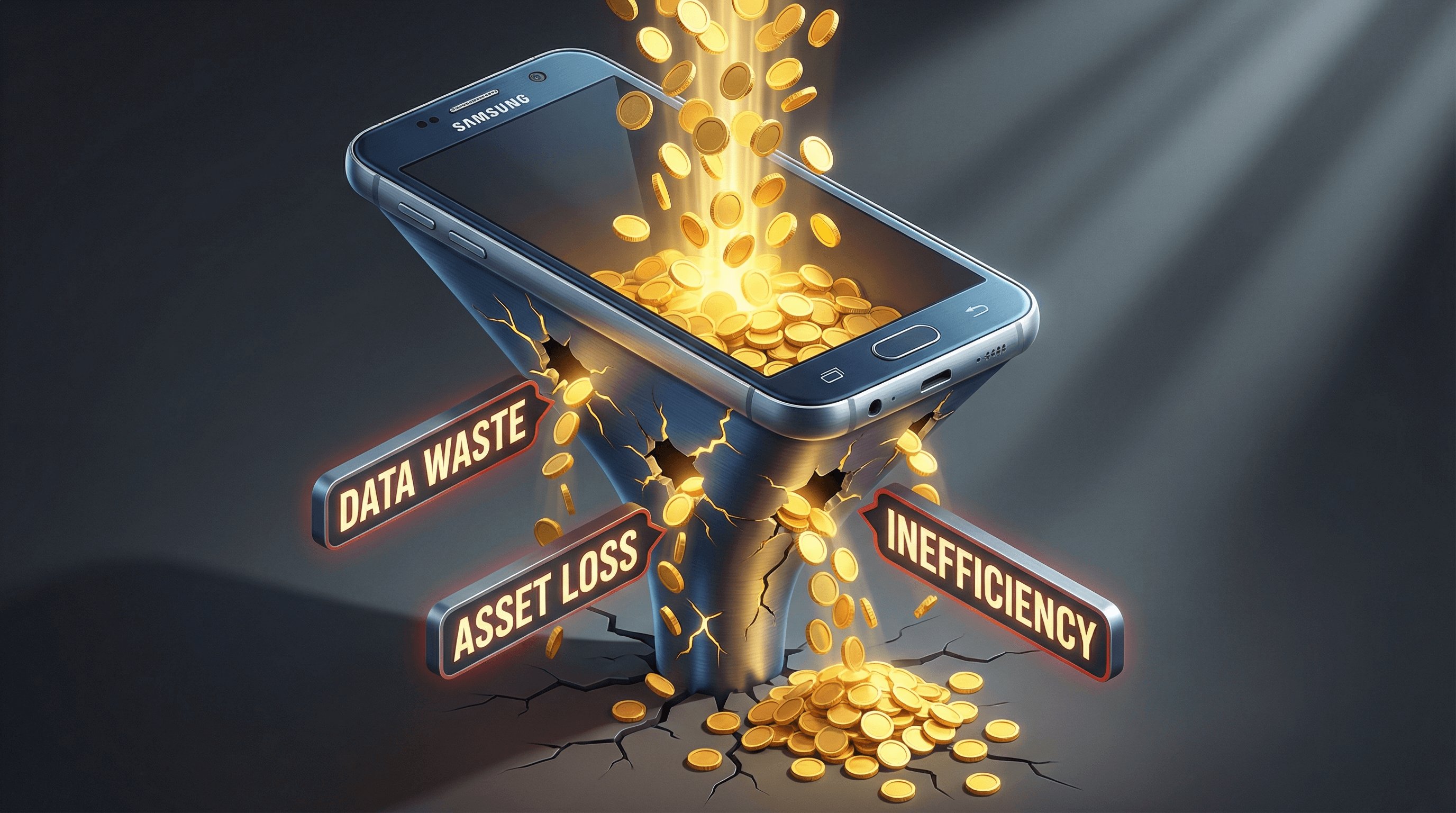
When enterprises deploy Samsung mobile devices, a widely held misconception is quietly eroding profits: many managers believe that by not deploying mobile device management (MDM) software, they can save tens of dollars per device per year in subscription fees and achieve “cost optimization.”
But reality is exactly the opposite — an unmanaged Samsung device fleet is like a “financial funnel full of holes.” Those seemingly “zero-cost” devices are silently consuming enterprise resources through three major channels: data usage waste, asset loss, and efficiency degradation.
The Misconception of Savings
Enterprise decision-makers often focus only on the “visible costs” of MDM software, while overlooking the “hidden losses” caused by unmanaged devices.
For example, a sales company with 300 Samsung devices may appear to save USD 15,000 per year by skipping MDM deployment, but could ultimately incur an additional USD 30,000–50,000 in costs due to excessive data usage, device loss, and reduced efficiency.
At its core, this kind of decision reflects a lack of understanding of the total lifecycle cost of mobile devices.
Where the Money Actually Goes
The hidden costs of unmanaged Samsung devices are mainly concentrated in three core scenarios:
Uncontrolled data usage: employees misuse corporate data plans, causing monthly communication bills to frequently exceed limits.
Asset loss: when devices are stolen or lost, companies not only lose the hardware value but also face the risk of sensitive data leakage;
Low efficiency: working hours are consumed by non-work-related applications, and IT troubleshooting takes too long, dragging down overall productivity.
These three “financial black holes” compound one another and have become a key reason why operating costs remain high for many enterprises.
1Hidden Cost #1: The Sky-High Mobile Data Bills
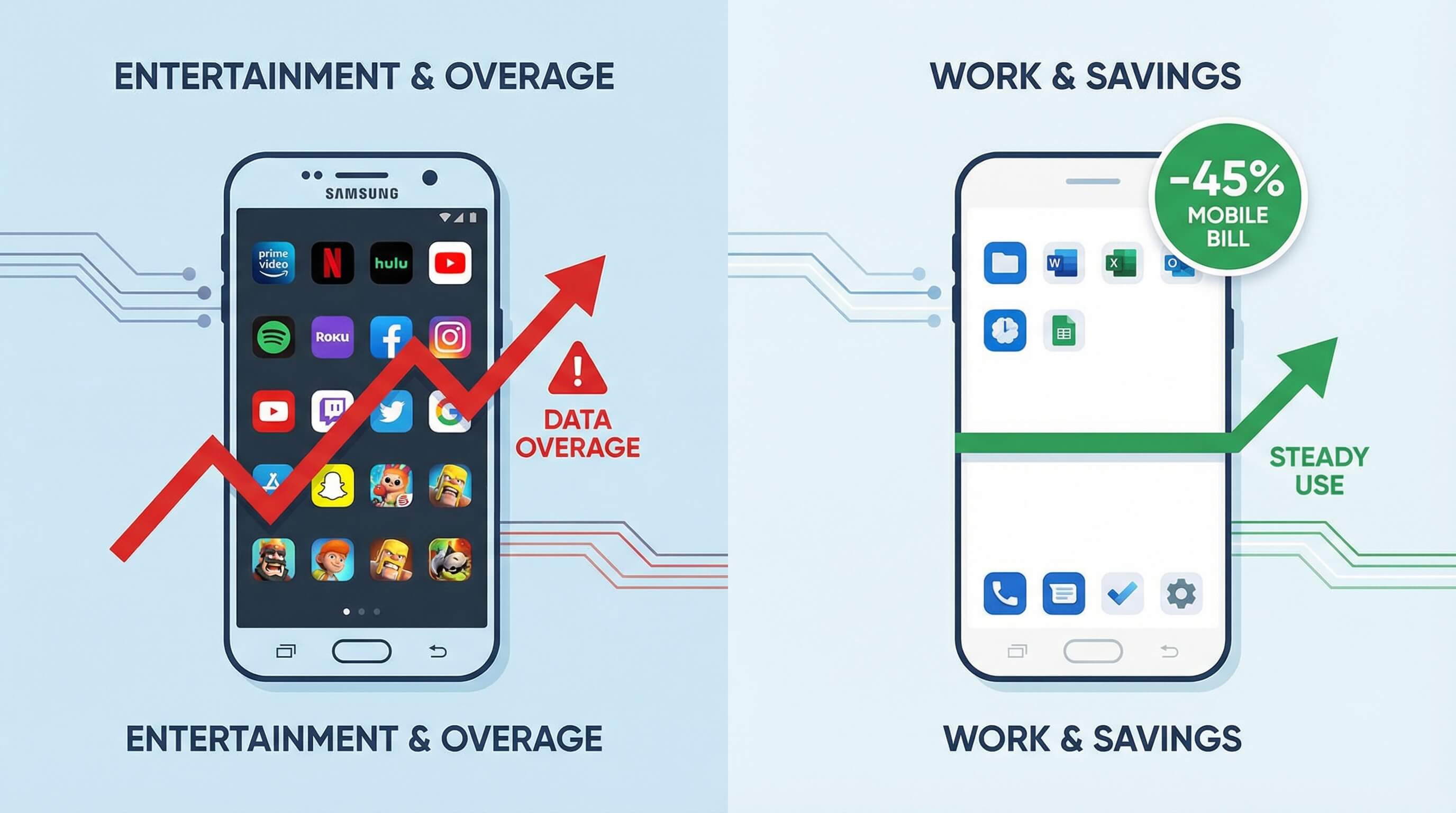
For enterprises that rely on Samsung devices for fieldwork, sales, inspections, and other operations, mobile data is a core operational resource. However, unmanaged devices often turn into employees’ “personal data pools,” directly driving up corporate communication costs.
Non-Work App Consumption
During working hours, a large number of Samsung devices are used for non-work activities such as watching YouTube or playing mobile games.
Internal statistics from a chain retail company show that on unmanaged Samsung in-store terminals, up to 70% of monthly data consumption is spent on non-work applications. On a Samsung Galaxy S24 with a 5G data plan, TikTok alone can consume 90% of the allowance within a single week, forcing the company to repeatedly purchase data add-on packages and resulting in thousands of yuan in additional communication costs each month.
Lack of automatic overage alerts
Without unified monitoring from MDM tools, enterprises rely entirely on “billing notifications” to perceive data consumption. When the finance department receives a communications bill that exceeds the budget by 40%, the data waste has already occurred and the loss is irreversible.
More problematically, due to the lack of detailed usage data, enterprises cannot identify which specific device or application caused the overage and can only passively absorb the additional costs.
How to Fix It:
Application Whitelisting
Application whitelist control: Use MDM tools to set application whitelists, allowing only core apps such as WeCom (Enterprise WeChat), work email, and business systems to access the network, directly cutting off data consumption from non-work applications.
AirDroid Strategy - Data Usage Reports:
AirDroid data usage management policy: With AirDroid Business data usage reports, administrators can monitor detailed data consumption for each Samsung device in real time—including per-app usage ratios, time-based distribution, and overage alerts.
Administrators can preset data caps (for example, 15 GB per month). When usage reaches 80%, an automatic email alert is sent; when it reaches 90%, non-work applications are directly restricted from accessing the network, eliminating data waste at the source.
One logistics company used this feature to reduce its mobile data bills by 45% within three months.
2Hidden Cost #2: Device Theft and Data Breaches

Samsung devices—especially high-end models like the S series and Note series—have significant hardware value. However, compared to the loss of the device itself, the potential damage from leakage of sensitive data stored on the device—such as customer information, sales data, and financial records—is far more severe.
The Cost of a Lost Device
If a Samsung Galaxy S25 worth USD 900 is stolen, the company faces not only the loss of hardware costs but also a potential chain reaction: complaints and compensation from customer data being sold, competitive disadvantages from business secrets being leaked, and administrative penalties for violating data protection laws. Statistics show that the average loss from a single mobile device data breach for small and medium-sized enterprises can reach USD 150,000, 160 times higher than the device’s hardware value.
Preventing Resale Value:
When an unmanaged Samsung device is lost, attackers can wipe or unlock it and resell the device for profit. This not only eliminates the company’s chance of recovering the asset but also turns the stolen device into a “mobile data leak source”—if encryption is not enabled, any sensitive data stored on the device can be directly stolen.
How to Fix It:
Remote "Bricking" (Device Wipe)
With AirDroid Business’s remote wipe feature, administrators can trigger a “corporate container data erase” as soon as a device is reported lost—removing only work-related customer information and business data while retaining the employee’s personal data, ensuring both data security and privacy compliance.
Knox Guard Integration
By combining Samsung’s hardware-level security feature Knox Guard, administrators can remotely lock a device’s IMEI number. Even if an attacker flashes or factory-resets the device, it cannot connect to carrier networks or be activated for use, completely eliminating its resale value.
A financial institution achieved a 100% “device neutralization rate” using this combined approach and has recorded zero data leakage incidents caused by device loss over the past three years.
3Hidden Cost #3: Productivity Leakage (Employee Time Wastage)
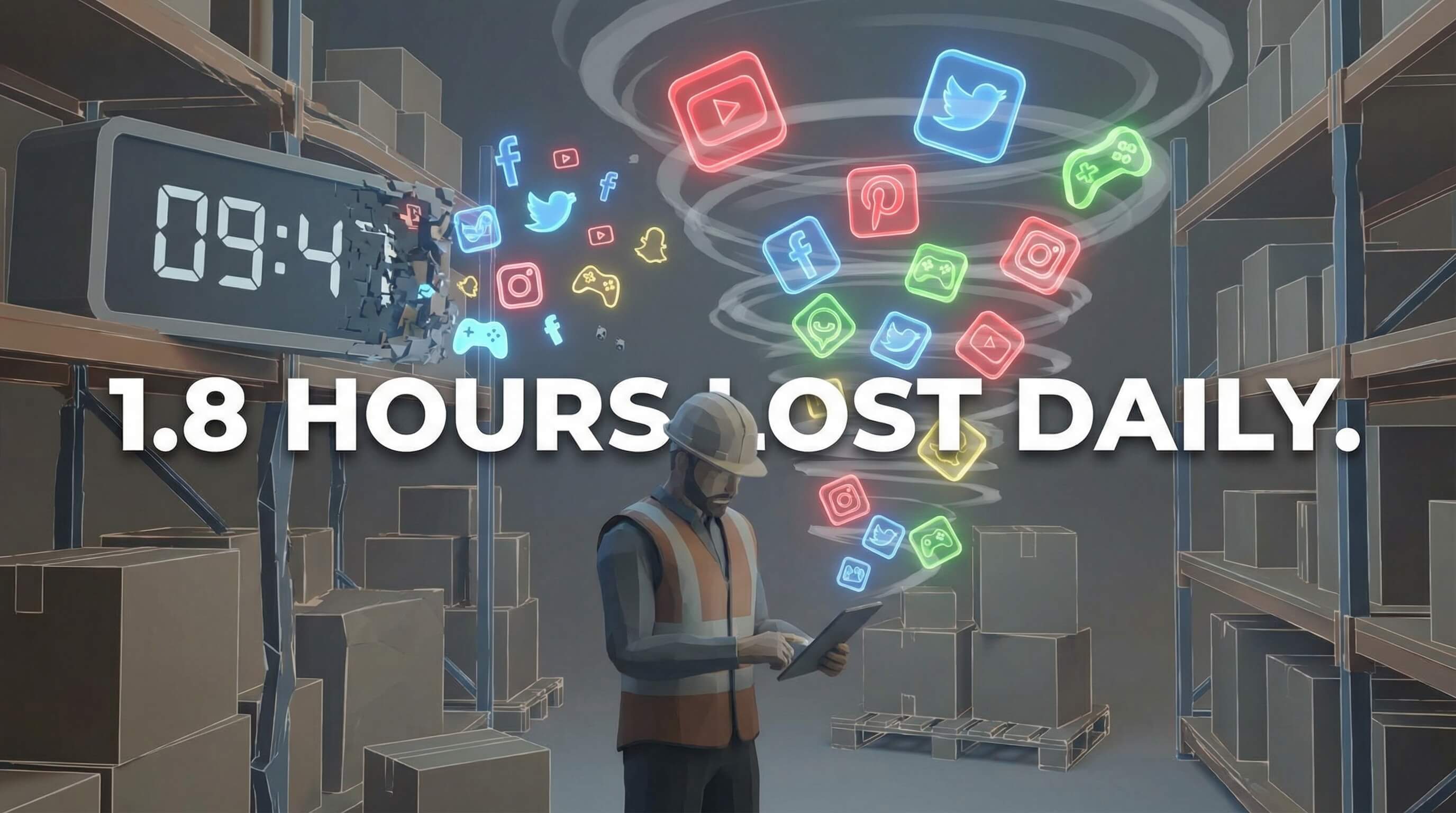
While Samsung devices’ high performance and rich app ecosystem boost work efficiency, they can also become tools for employee time-wasting. Non-work activities combined with inefficient IT support are seriously eroding enterprise productivity.
Digital Distractions
Mobile games and social media are “productivity killers” during work hours.
A manufacturing company’s time-tracking data shows that on unmanaged Samsung inspection devices, employees spend an average of 1.8 hours per day on non-work apps like Honor of Kings and WeChat Moments, directly causing a 35% drop in inspection task completion rates and extended project delivery timelines.
Manual Troubleshooting Time
Without remote support tools, IT teams must handle even simple Samsung device issues—such as network misconfigurations, app crashes, or permission settings—by having employees send devices back to headquarters or IT staff visit on-site. On average, each device takes 3.5 hours to resolve, during which business operations are forcibly interrupted, significantly impacting roles that rely on fieldwork.
How to Fix It:
Kiosk Mode:
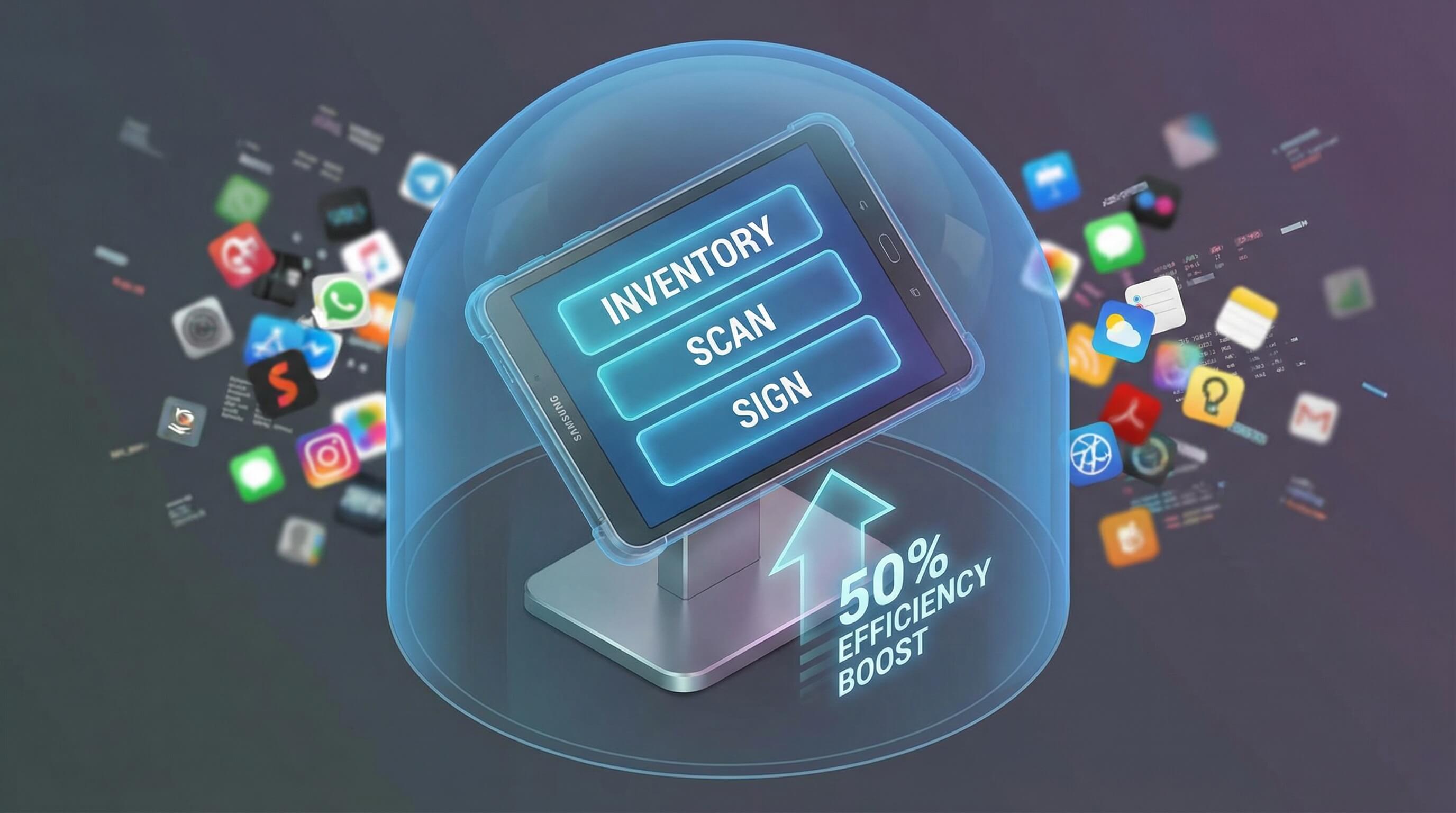
By using AirDroid to lock Samsung devices to a specific work interface, only core functions such as business systems and scanning tools are retained, while all entertainment and social apps are hidden. For example, a Samsung Galaxy Tab can be transformed into a dedicated in-store POS terminal or logistics scanning device, completely eliminating opportunities for time-wasting and increasing device usage efficiency by over 50%.
Remote Support:
Through the AirDroid console, IT administrators can perform remote silent troubleshooting on Samsung devices—without any employee intervention—remotely fixing network settings, reinstalling work apps, and clearing caches. This reduces the average issue resolution time to 12 minutes and decreases device downtime losses by 92%.
ROI Analysis: MDM is an Investment, Not an Expense
Many enterprises view MDM software as an “extra burden,” but the data shows that it is a strategic investment with clear returns—its return on investment far exceeds expectations.
Comparing Costs:
- 1. MDM subscription vs. single data breach fines: The annual MDM subscription for a Samsung device is around USD 50, while a single data breach (e.g., violating GDPR, which can reach up to 4% of global annual revenue) could instantly cost the company millions of dollars.
- 2. MDM subscription vs. 5% extra data overage: For a company with 1,000 Samsung devices and a monthly data budget of USD 12,000, a 5% overage amounts to USD 600 per month, or USD 7,200 annually. In contrast, the annual MDM subscription is only USD 50,000 and can keep overage rates under 1%, saving the company USD 64,800 per year from data overages alone.
The Verdict:
According to AirDroid Business customer case statistics, deploying MDM for a Samsung device fleet can reduce 20%-30% of annual miscellaneous operational expenses. For example, a pharmaceutical sales company with 800 Samsung devices implemented data usage control, anti-theft locking, and productivity enhancement measures, saving approximately USD 130,000 per year—2.6 times the MDM subscription cost—with a return on investment period of just 4.8 months.
Conclusion: Stop the Bleeding Today
Protecting a Samsung device fleet is not just about data security—it’s about the financial health of the enterprise. Unmanaged devices act as “hidden bleeding points,” continuously eroding profits through data waste, asset loss, and productivity drain. MDM tools are not an extra burden; they are a precision tool to plug leaks and boost operational efficiency, effectively saving money.
CTA: Start Managing, Start Saving. Try AirDroid Business’s data usage report feature now and uncover the “hidden costs” quietly draining your profits.



Leave a Reply.